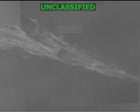
Geopolitical strategy is fundamentally a problem of resource allocation under conditions of severe friction and incomplete information. When the United States Southern Command executes a kinetic strike on a low-profile vessel in the eastern Pacific Ocean, killing two individuals designated as cartel operatives, the action represents a specific operational choice within a broader theater of operations. To evaluate this campaign—which has surpassed 67 total strikes and 223 cumulative fatalities since its inception in September 2025—analysts must strip away political rhetoric and examine the structural mechanics of maritime interdiction, the limits of kinetic force against distributed networks, and the economic efficiency of supply-chain disruption.
The Operational Mechanics of Kinetic Interdiction
The military campaign relies on a continuous targeting cycle designed to intercept maritime drug transport vectors off Latin America’s Caribbean coast and the eastern Pacific. The target profile typically consists of speedboats, low-profile vessels, and semi-submersible craft designed to minimize radar cross-sections and visual detection.
[Intelligence Acquisition] ---> [Target Verification Phase] ---> [Kinetic Execution] ---> [Post-Strike Damage Assessment]
The mechanics of this framework involve distinct variables:
- Detection Latency: The temporal window between satellite or aerial asset identification and intercept vector calculation.
- Payload Verification: The degree of certainty regarding cargo contents versus vessel signature characteristics.
- Kinetic Expenditure: The cost function of deploying precision munitions against low-value transport platforms.
Operating under the doctrine of an ongoing armed conflict with non-state cartel networks, the United States military utilizes the Joint Targeting Cycle to authorize these engagements. However, a structural divergence exists between traditional military targeting—which addresses sovereign state actors or recognized insurgencies with distinct military infrastructure—and transnational criminal organizations (TCOs). TCOs operate as adaptive cellular networks rather than hierarchical armies. Consequently, neutralizing an individual transit asset generates minimal systemic disruption to the broader enterprise.
The Cost Function and Supply Chain Elasticity
Evaluating the economic rationality of the campaign requires analyzing how drug markets respond to supply-side shocks. Cartels function as resilient distribution networks governed by classic supply-and-demand elasticity.
When the United States military destroys a low-profile vessel or speedboat, it imposes a capital loss on the trafficking organization. Yet, the marginal cost of building or acquiring a fiberglass low-profile vessel is negligible relative to the wholesale value of the cargo it carries. The elimination of transit assets introduces localized friction, but it fails to alter the underlying economic incentives of production.
Furthermore, supply-side interdiction encounters the balloon effect: suppressing trafficking vectors in the eastern Pacific or Caribbean frequently redirects transport volume to alternate corridors, including overland routes through Central America and Mexico. This structural reality undermines the kinetic strategy's primary objective. Fentanyl and synthetic precursors, which drive the vast majority of fatal domestic overdoses, are predominantly manufactured using chemical inputs imported from outside the hemisphere and smuggled across the southwestern land border rather than moved via maritime semi-submersibles. Targeting maritime supply lines addresses a secondary transit vector while leaving the primary land-based supply channels functionally intact.
Institutional Friction and Legal Oversight
The expansion of military operations beyond traditional domestic law enforcement boundaries introduces institutional and legal friction points that complicate long-term execution. Two primary forces shape this dynamic:
- The Scope of Executive Authority: The classification of cartels as combatants places maritime operations under the rubric of armed conflict, shifting authority from civilian Coast Guard interdiction to Department of Defense kinetic engagement.
- Independent Institutional Audits: Oversight mechanisms, such as the Pentagon inspector general’s evaluation of the Joint Targeting Cycle, focus on procedural compliance rather than strategic utility.
This oversight creates an operational paradox. While military lawyers and inspectors general evaluate whether forces adhere to predefined targeting phases, they do not measure whether the destruction of individual vessels achieves a measurable reduction in consumer-level drug availability or purity-adjusted street prices. Without a direct causal link between maritime strikes and domestic public health outcomes, the campaign operates as an isolated tactical intervention disconnected from macroeconomic suppression metrics.
The Regional Diplomatic Matrix
To scale the campaign beyond maritime borders, the executive branch has pursued bilateral agreements to authorize joint military operations on foreign soil. Securing host-nation consent across Latin America involves complex diplomatic bargaining. While announcements suggest agreements with partner nations like Colombia, Honduras, and Ecuador, parallel denials from sovereign governments—such as Guatemala's rejection of claimed ground-operation pacts—illustrate the fragility of regional coalitions.
Relying on foreign land-based interventions requires balancing domestic security priorities in partner nations against the political liabilities of foreign troop deployment. Sovereign states are hesitant to cede internal security jurisdiction to external military forces due to constitutional constraints and domestic political blowback. As a result, diplomatic efforts to institutionalize a multi-national land offensive face severe structural bottlenecks, limiting the campaign's ability to transition from coastal interception to upstream eradication at the source of production.
Strategic Execution
Shift analytical focus away from tactical body counts and asset destruction totals toward structural supply-chain analytics. Policy frameworks must measure success not by the volume of kinetic strikes executed, but by verifiable shifts in retail drug purity, wholesale acquisition costs, and border-crossing velocity. Absent a direct correlation between maritime interdiction and domestic availability indices, resources must be reallocated toward domestic demand reduction, precursor chemical tracking at point-of-manufacture ports, and intelligence-led financial disruptions that target the laundering infrastructure sustaining cartel operations.