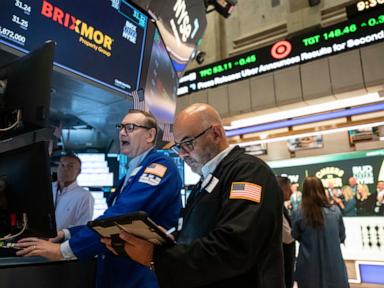
Equity markets operate through a web of global liquidity transmissions where localized sentiment in New York instantaneously recalibrates valuations across Asian exchanges. When Wall Street mega-cap technology corporations experience structural downward pressure, the shockwave does not dissipate across oceans. Instead, it concentrates into severe localized pullbacks, evidenced by sharp regional drops such as the Kospi declining by 4.6 percent. This dynamic exposes structural vulnerabilities in how international capital flows, index compositions, and high-frequency algorithms process macroeconomic risk.
To understand why a contraction in US technology equity prices triggers an outsized proportional collapse in South Korea, one must examine the institutional mechanics of cross-border capital allocation. Global institutional portfolios do not evaluate asset classes in isolation. They manage risk on a consolidated, multi-asset balance sheet framework. When tech valuations compress in the United States, margin requirements tighten, portfolio rebalancing triggers automatic equity sales, and risk-parity funds execute risk-off mandates. Asian export-oriented technology hubs sit directly downstream from these US liquidity pipelines.
The Transmission Channels of Global Equity Shocks
The propagation of financial stress from Western exchanges to Eastern markets relies on three distinct transmission vectors: supply chain co-dependency, index concentration weighting, and passive capital outflows.
The supply chain vector operates on direct revenue exposure. South Korean heavyweights like Samsung Electronics and SK Hynix are not isolated domestic entities; they are Tier-1 hardware suppliers embedded within the global semiconductor fabrication ecosystem. When US software and hardware giants face multiple contraction due to shifting interest rate expectations or overextended valuations, forward guidance deteriorates. A reduction in capital expenditure by US hyperscalers directly compresses projected earnings for Asian component manufacturers. The market prices this earnings degradation instantly, translating a software-led selloff in Nasdaq into a hard-asset liquidation in Seoul.
The index concentration vector amplifies this pain through market capitalization weightings. The Kospi index, much like the broader South Korean equity market, is structurally top-heavy. A small cohort of market-dominant conglomerates commands a disproportionate share of total index capitalization. When foreign institutional investors face redemption pressures or mandate shifts in their domestic markets, they liquidate the most liquid instruments available in emerging or developed-Asian portfolios. Large-cap technology and memory chip manufacturers serve as the primary liquidity window for foreign capital exiting the region. Selling occurs not necessarily because of localized operational deterioration, but because those specific equities possess the daily trading volume required to absorb large institutional block exits.
The passive capital outflow vector accelerates the decline via algorithmic feedback loops. Exchange-traded funds and passive index funds tracking regional baskets are programmed to rebalance automatically based on trailing volatility and drawdown metrics. As the index breaches predetermined technical thresholds, programmatic selling supersedes fundamental valuation. This creates a self-fulfilling downward spiral where price momentum feeds further algorithmic distribution.
The Structural Mechanics of the 4.6 Percent Kospi Contraction
A 4.6 percent single-day compression in a major national benchmark index represents a statistical outlier that signals a liquidity event rather than a routine pricing adjustment. Understanding the exact mechanics of this magnitude requires deconstructing order book dynamics during periods of systemic stress.
Market depth in regional exchanges during US-led selloffs often thaws rapidly. As overnight futures point toward a sharply negative opening bell, domestic market makers and institutional desks widen their bid-ask spreads to hedge against overnight gap risk. This structural widening of spreads reduces immediate market depth. Consequently, relatively modest sell orders encounter insufficient resting bids, forcing prices to drop precipitously to clear the order book imbalance.
Furthermore, retail participation in South Korea carries a high degree of margin utilization and leverage through retail trading accounts and derivative-linked securities. When index values breach crucial support levels, margin calls are triggered systematically. Retail brokers issue automated margin top-up notices, and failure to meet these requirements by specific intraday deadlines results in forced liquidation of equity holdings. This forced selling injects unpriced supply into a falling market, exacerbating the intraday descent and driving the headline index down toward the 5 percent threshold.
The interplay between foreign institutional capital flight and domestic retail margin unwinding creates a dual-pressure environment. Foreign investors remove foundational liquidity, while domestic leveraged accounts generate forced selling volume. The resulting liquidity vacuum explains why the percentage decline in the Kospi frequently outpaces the initial percentage decline of the US indices that catalyzed the move.
Macroeconomic Sensitivity and Currency Interplay
Equity contagion cannot be analyzed in a vacuum separate from foreign exchange markets. The valuation of the South Korean Won acts as a high-frequency shock absorber and a secondary transmission mechanism during global market stress.
When risk aversion surges globally, capital flees emerging and export-driven markets for safe-haven assets, primarily denominated in US dollars. The resulting depreciation of the Won against the dollar introduces a complex dynamic for foreign equity holders. For a US or European institutional investor, a declining local equity market compounded by a weakening local currency results in a double-digit percentage loss in hard-currency terms. This foreign exchange risk accelerates capital repatriation. Institutional mandates often require currency hedging or outright liquidation of foreign assets when currency volatility exceeds designated risk thresholds.
Consequently, foreign exchange depreciation and equity market selloffs become mutually reinforcing. The decline in stock prices weakens currency demand, while currency outflows depress local asset prices further. Policymakers and central bank interventions during these windows attempt to stabilize currency spot rates to stem the velocity of equity capital flight, though their efficacy remains bounded by global macroeconomic liquidity cycles.
Strategic Capital Allocation Under Global Contagion Regimes
Navigating markets characterized by high cross-border transmission of volatility requires shifting from static asset allocation models to dynamic risk-budgeting frameworks. Traditional diversification assumptions frequently fail during acute liquidity events because asset class correlations converge toward one during panics.
Investors attempting to insulate portfolios from US tech-driven contagion in Asian markets must evaluate the duration mismatch between underlying corporate fundamentals and short-term liquidity shocks. While memory chip demand and semiconductor fabrication cycles operate on multi-quarter structural horizons, daily equity pricing is dictated by transient liquidity constraints and Western market sentiment.
The strategic imperative for institutional portfolios involves pre-allocating liquidity buffers to exploit structural overreactions. When a 4.6 percent index drop occurs primarily due to foreign liquidity withdrawal and margin liquidations rather than permanent impairment of asset values, the risk-reward profile shifts dramatically for long-horizon capital. However, capturing this dislocation requires strict adherence to execution discipline, avoiding falling knives through staged accumulation rather than binary, all-in positioning.
Monitor the bid-ask spread expansion in regional index futures relative to historical medians, track foreign institutional net-selling streaks across consecutive sessions, and audit portfolio exposure to high-beta technology components whose valuations are pegged directly to US hyperscaler capital expenditure cycles. Execute capital deployment exclusively when algorithmic forced-selling exhaustion manifests as stabilizing volume profiles alongside narrowing intraday price ranges.