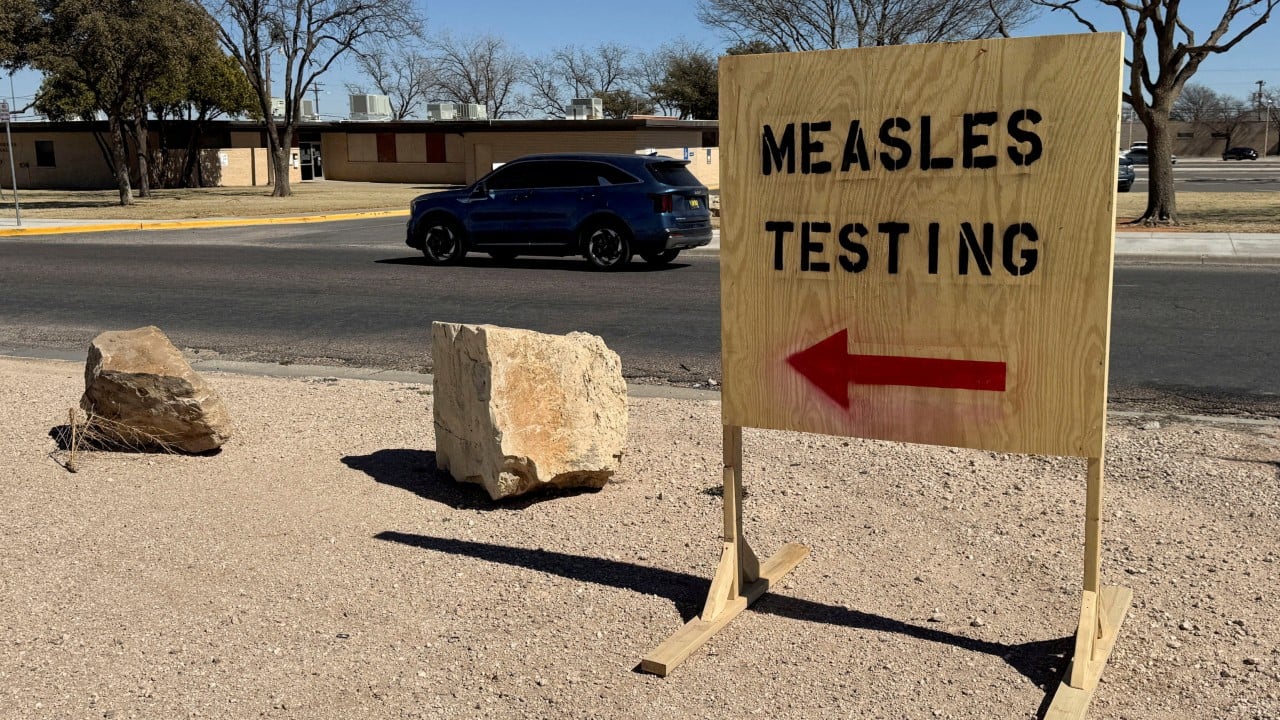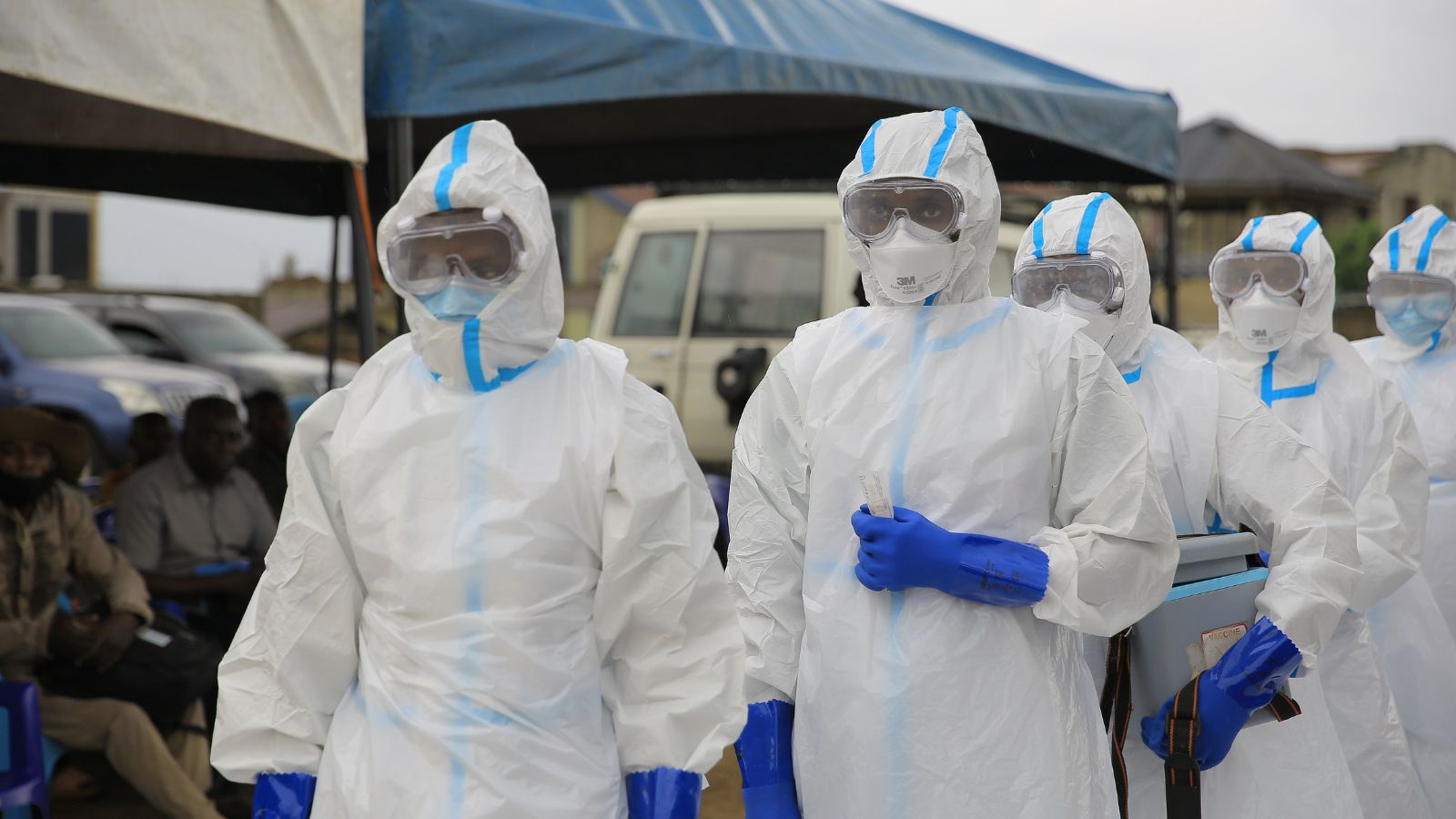
The Pan American Health Organization (PAHO) revoking the United States’ measles elimination status marks a structural failure in public health infrastructure rather than a sudden biological mutation of the pathogen. Elimination status is an epidemiological benchmark defined by the absence of endemic disease transmission—meaning a single chain of transmission lasting twelve months or longer—within a specific geographic area. Losing this designation signals that localized outbreaks are no longer isolated importations contained by rapid public health responses, but rather self-sustaining chains of viral propagation fueled by predictable gaps in population immunity.
To understand how an eradicated pathogen re-establishes endemicity, analysts must strip away political rhetoric and examine the underlying mathematical, operational, and behavioral mechanics of infectious disease control.
The Mathematical Mechanics of Transmission Collapse
Measles is governed by one of the highest basic reproduction numbers ($R_0$) among known human pathogens. In a completely susceptible population, a single infected individual generates between 12 and 18 secondary infections. This extreme transmissibility dictates the exact mathematical threshold required to halt sustained spread.
The Herd Immunity Threshold (HIT) is calculated using the formula:
$$HIT = 1 - \frac{1}{R_0}$$
Substituting the upper bound of measles transmissibility ($R_0 = 18$) into this equation yields a required population immunity rate of approximately 94.4%. When accounting for primary vaccine failure—roughly 3% of individuals do not develop protective antibodies after a single dose of the Measles, Mumps, and Rubella (MMR) vaccine, dropping to roughly 1% after two doses—the operational vaccination coverage required to maintain elimination sits squarely at 95%.
Standard public health reporting often obscures risk by presenting national or state-level averages. A state reporting a 95% vaccination rate appears compliant on paper, yet epidemiological spread does not occur across statistical averages; it occurs within localized social networks. When immunization rates drop below 90% within specific zip codes, school districts, or insular communities, the effective reproduction number ($R_e$) exceeds 1.0 locally. Once $R_e > 1$, exponential growth begins within that cluster, creating a reservoir of infection that continuously seeds neighboring regions and overwhelms contact-tracing capacity.
The Three Pillars of Elimination Failure
The loss of elimination status is rarely the result of a single catastrophic event. Instead, it stems from the compounding interaction of three operational breakdowns within the public health apparatus.
1. Spatial Clustering of Susceptibility
Infectious disease models demonstrate that non-random distribution of unvaccinated individuals dramatically accelerates outbreak velocity compared to uniform distribution. When unvaccinated individuals cluster geographically or socially—often driven by localized vaccine hesitancy, shared ideological frameworks, or systemic barriers to healthcare access—they create high-density pockets of susceptibility. An imported case introduced into a randomly distributed 92% immune population may cause a self-limiting chain of three or four cases. The exact same importation introduced into a clustered 92% immune population—where one neighborhood sits at 65% coverage and the surrounding area at 98%—triggers a prolonged, multi-month outbreak that breaches the twelve-month PAHO threshold.
2. Surveillance and Diagnostic Lag
Containing a virus with an incubation period of 10 to 14 days and an infectious window starting four days before the characteristic maculopapular rash appears requires near-instantaneous clinical recognition. Because measles had been absent from routine clinical practice for decades, a generation of frontline physicians has never treated an active case.
This clinical unfamiliarity creates a dangerous diagnostic lag:
- Misdiagnosis during the prodromal phase: Early symptoms (fever, cough, coryza, conjunctivitis) mimic common upper respiratory infections, leading to delayed isolation.
- Delayed laboratory confirmation: Suspected cases require reverse transcription-polymerase chain reaction (RT-PCR) testing or measles-specific IgM antibody assays. Delays in specimen transport and processing extend the window during which exposed contacts remain unquarantined.
- Nosocomial amplification: Because measles remains viable in the air for up to two hours after an infected patient leaves a room, an unrecognized case sitting in an emergency department waiting room acts as a super-spreading catalyst among immunocompromised and pediatric patients.
3. The Erosion of Rapid-Response Capacity
Maintaining elimination requires maintaining an expensive, standing infrastructure designed to fight fires that rarely break out. Over the past decade, local and state health departments have experienced chronic underfunding and workforce attrition, particularly among disease intervention specialists (DIS) responsible for contact tracing.
Containing a single measles case requires tracing every individual who shared airspace with the patient over a multi-day infectious window, verifying their immunization records, administering post-exposure prophylaxis (MMR vaccine within 72 hours or immunoglobulin within six days) to susceptible contacts, and enforcing 21-day quarantines for those who cannot be immunized. When a health department's contact-tracing capacity is saturated by multiple simultaneous introductions, containment fails, and transmission becomes continuous.
The Economic Cost Function of Outbreak Containment
A common analytical error in healthcare policy is treating vaccination programs purely as an expenditure rather than a high-yield risk-mitigation asset. The cost function of measles control is heavily asymmetric: preventive immunization costs fractions of a dollar per person compared to the massive capital expenditure required to contain an active outbreak.
When an outbreak occurs, direct and indirect costs escalate rapidly across four distinct categories:
- Public Health Mobilization: Personnel overtime, emergency operations center activation, laboratory reagents, and public communication campaigns. Studies of recent US outbreaks indicate that containing a single case costs local health departments between $30,000 and $50,000, with large multi-case outbreaks rapidly exceeding several million dollars.
- Clinical Care and Hospitalization: Roughly 20% of unvaccinated individuals who contract measles require hospitalization. Severe complications—including pneumonia (the leading cause of measles-related death in young children) and acute encephalitis (occurring in roughly 1 in 1,000 cases)—demand intensive care unit (ICU) resources, mechanical ventilation, and long-term neurological rehabilitation.
- Quarantine-Induced Productivity Loss: Enforcing 21-day home quarantines on exposed, unvaccinated individuals removes workers from the labor force and children from schools, forcing parents to take unpaid leave. In healthcare settings, exposed staff without documented immunity must be furloughed, creating acute staffing shortages precisely when clinical demand spikes.
- Long-Term Immunological Sequelae: Beyond acute illness, measles induces "immune amnesia," a biological mechanism wherein the virus infects and destroys memory B and T lymphocytes. This wipes out pre-existing antibodies against other pathogens, leaving survivors vulnerable to secondary bacterial and viral infections for two to three years post-recovery and driving up secondary healthcare utilization.
Distinguishing Known Mechanisms from Epidemiological Hypotheses
Rigorous analysis requires separating established empirical facts from working hypotheses regarding the trajectory of post-elimination measles in North America.
Established Facts:
- The MMR vaccine is exceptionally stable; the virus has not mutated to evade vaccine-induced neutralizing antibodies.
- Global measles incidence directly dictates domestic importation pressure. When vaccination campaigns falter globally—such as during major disruptions to routine pediatric healthcare—international travelers inevitably carry the virus into US ports of entry.
- States that have eliminated non-medical (philosophical or religious) exemptions for school entry consistently demonstrate higher kindergarten MMR coverage and lower outbreak incidence than states permitting broad exemptions.
Educated Hypotheses:
- The Post-Pandemic Routine Immunization Deficit: While catch-up campaigns have recovered much of the routine pediatric vaccination volume lost during recent healthcare disruptions, epidemiologists hypothesize that a specific cohort of children aged 4 to 8 remains systematically under-immunized, creating a persistent demographic vulnerability that will manifest as school-based outbreaks over the next five years.
- Waning Secondary Immunity: While two doses of MMR provide lifelong protection for the vast majority of recipients, a small subset of vaccinated adults may experience waning antibody titers decades after immunization. In an environment of endemic circulation, this cohort may experience mild, modified measles infections. Whether these modified cases can transmit the virus efficiently enough to sustain chains of transmission remains an active area of epidemiological modeling, though current evidence suggests transmission from twice-vaccinated individuals is rare.
Operational Limitations of Standard Interventions
No single policy intervention serves as a silver bullet for restoring elimination status, as every available lever carries distinct operational limitations:
- Strict School Mandate Enforcement: Eliminating non-medical exemptions reliably increases vaccination rates in public and private schools. However, this policy has zero impact on homeschooled populations, insular religious communities that operate outside standard educational oversight, or children under 12 months of age who are too young to receive their first routine MMR dose.
- Information and Counter-Messaging Campaigns: Public health communication campaigns aimed at correcting misinformation frequently fail when deployed in isolation. Behavioral science demonstrates that individuals entrenched in anti-vaccine networks exhibit high reactance to institutional authority; top-down messaging often reinforces distrust rather than altering behavior.
- Ring Vaccination: Deploying targeted vaccination rings around confirmed cases is effective when health departments detect the index case early. However, because measles is contagious before rash onset, the virus has typically already jumped two generations of transmission before the index case is diagnosed, rendering reactive ring vaccination too slow to stop spread in low-coverage areas.
Restoring Elimination: A Tactical Playbook
Regaining PAHO elimination status requires demonstrating at least twelve consecutive months without endemic transmission, backed by high-sensitivity surveillance data proving that the absence of reported cases reflects a true absence of disease rather than a failure to detect it. Public health systems must execute a targeted, four-step operational pivot to achieve this benchmark.
Step 1: Transition from Aggregate to Granular Surveillance
Health departments must abandon county- and state-level reporting metrics in favor of census-tract and school-level immunization mapping. By cross-referencing state Immunization Information Systems (IIS) with school enrollment registries, epidemiologists can identify exact geographic pockets where coverage falls below the 92% danger threshold. Resources—including mobile vaccination clinics and community health workers—must be deployed proactively to these specific micro-clusters before an importation occurs.
Step 2: Automate Electronic Health Record (EHR) Clinical Decision Support
To eliminate diagnostic lag in emergency rooms and urgent care clinics, hospital networks must integrate automated syndromic triggers into their EHR systems. Any patient presenting with a triad of fever, rash, and recent international travel—or residence in an identified low-coverage zip code—must trigger an immediate hard-stop alert instructing triage staff to mask the patient and route them directly to an airborne infection isolation room (AIIR), bypassing general waiting areas entirely.
Step 3: Leverage Trusted Micro-Influencers Over Institutional Authorities
In communities characterized by high institutional distrust, health departments must subcontract outreach to local pediatricians, community leaders, and faith-based figures who hold existing social capital. Operational budgets should shift away from broad media buys toward funding extended clinical consultation times, allowing primary care providers to address parental hesitancy through one-on-one motivational interviewing rather than rushed, transactional visits.
Step 4: Standardize Cross-Border and Interstate Data Sharing
Viruses do not respect municipal boundaries, yet US public health data remains fragmented across thousands of local jurisdictions. State health agencies must establish automated, real-time data pipelines to share exposure manifests—particularly involving commercial aviation, interstate transit, and regional healthcare networks—within 12 hours of a confirmed positive RT-PCR result. Without unified data velocity, contact tracing will perpetually lag behind viral spread.