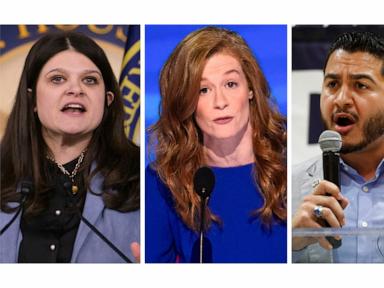
Political spending in open-seat senatorial campaigns operates under a strict diminishing-returns curve, where early ideological positioning creates path-dependent structural vulnerabilities. The 2026 Michigan U.S. Senate race—triggered by incumbent Gary Peters’ retirement—serves as the definitive empirical case study for this dynamic. While conventional political reporting framing the Mackinac Island primary debate focuses on intraparty friction as a thematic narrative, a mechanics-first analysis reveals a deeper structural failure: the three primary Democratic contenders are optimizing for mutually exclusive voter cohorts, while the Republican nominee faces an uncontested path that minimizes capital burn.
The structural asymmetry of this race is governed by an initial capital allocation imbalance. The National Republican Senatorial Committee (NRSC) and its allied independent expenditure arms have reserved $45 million in media buys targeting the Michigan general election, contrasted against $20 million reserved by Democratic committees. This $25 million baseline deficit means the eventual Democratic nominee will inherit an immediate airwave disadvantage, precisely when their financial resources have been depleted by an expensive, multi-factional August primary.
The Ideological Trilemma: Mapping the Primary Demographics
The Democratic primary features three distinct strategies, each attempting to maximize turnout across conflicting segments of the state’s electoral coalition. Because these segments possess irreconcilable policy preferences, optimizing for one voter cohort systematically alienates another, creating a zero-sum bottleneck.
       [Moderate Establishment]
           (Haley Stevens)
                /   \
               /     \
              /       \
             /         \
  [Institutional Shift]--[Progressive Mobilization]
   (Mallory McMorrow)        (Abdul El-Sayed)
The Institutional Moderate Paradigm
U.S. Representative Haley Stevens anchors her strategy in the traditional suburban-industrial coalition. Her framework relies on a high-propensity voter matrix: college-educated suburbanites in Oakland and Wayne counties, coupled with institutional labor endorsements. Her foreign policy positioning—explicitly pro-Israel—is engineered to preserve moderate independent support. The structural risk of this strategy is severe optimization decay in high-density progressive zones and minority-heavy municipal centers like Detroit and Dearborn, where foreign policy friction points reduce voter enthusiasm.
The Progressive Mobilization Architecture
Former public health official Abdul El-Sayed operates on a mobilization model rather than a persuasion model. Backed by institutional progressives like Senator Bernie Sanders, El-Sayed’s model depends on maximizing turnout among younger voters and the state's substantial Arab-American population. His platform—anchored by "Medicare for All" and aggressive corporate taxation—is explicitly designed to capture the deep dissatisfaction with the party’s national direction following the losses of 2024. However, this strategy carries an efficiency penalty: the progressive positions required to win this segment create a high-contrast target for the general election, lowering the candidate’s ceiling among the moderate swing voters who decide statewide outcomes in Michigan.
The Institutional Reform Compromise
State Senator Mallory McMorrow attempts to bypass this binary choice through a structural reform framework. By positioning herself as a constitutional defender against executive overreach while rejecting national leadership norms—specifically stating she would oppose Chuck Schumer for Democratic leadership—she seeks to capture anti-establishment sentiment without adopting progressive economic policy. The core vulnerability of this compromise is its lack of a natural, dedicated base; it risks being squeezed out by the superior capital and organizational infrastructure of the Stevens and El-Sayed operations.
The General Election Transmission Mechanism
The ultimate victor of the August 4 primary must instantly pivot to face Mike Rogers, the consolidated Republican nominee. Rogers enters the general election with a structural advantage that is frequently mischaracterized. Although Rogers lost the 2024 senatorial race to Elissa Slotkin by less than 20,000 votes while Donald Trump carried the state, his 2026 campaign operates under fundamentally different structural constraints.
In 2024, Rogers endured a competitive primary that drained his cash reserves, leaving his campaign financially exposed during the critical late-summer transition period. In 2026, his uncontested primary status yields two distinct structural advantages:
- Capital Preservation: Rogers can bank 100% of his early fundraising for general election deployment, avoiding the high-cost customer acquisition costs (CAC) associated with primary voter targeting.
- Message Consistency: He can run a unified, general-election-focused messaging framework centered on localized macroeconomic pain points—specifically tariffs, manufacturing supply chains, and energy costs—without having to alter his positions to appease a primary base.
The primary debate on Mackinac Island forces Democratic candidates into a high-visibility environment where they must sharpen ideological contrasts to win the nomination. This requirement creates an information-capture vulnerability. Every policy concession made by a candidate to secure their flank from primary rivals is recorded, indexed, and integrated into the NRSC’s $45 million general election media reserve.
The Margin-of-Error Matrix: Recent Special Election Data
To calibrate the viability of these strategies, analysts must evaluate the May 2025 special election for Michigan’s 35th State Senate District, where Democrat Chedrick Greene secured a 19-point victory over Republican Jason Tunney. While institutional party organs cited this as evidence of structural strength, a granular examination reveals a complex reality.
The 35th District—encompassing Saginaw and Bay City—voted for Donald Trump at the presidential level in 2024, but supported Democratic candidates down-ballot when those candidates fit a highly specific profile. Greene, a Marine veteran and former fire captain, overperformed by leaning heavily into a working-class, brand-agnostic economic message backed by the United Auto Workers.
The data indicates that statewide victory for a Democrat in Michigan requires a candidate who can separate themselves from national cultural flashpoints and run on localized, material economic protection. A primary process that forces candidates to litigate national foreign policy or abstract institutional reforms runs directly counter to the mechanism that delivered the 35th District victory.
Strategic Play for the August Primary and Beyond
The optimal strategic play for the Democratic apparatus requires immediate risk mitigation during the June-to-August window. The primary candidates must execute a "non-aggression pact" regarding specific high-contrast policy domains that carry general election penalties.
Because Rogers’ media apparatus is poised to deploy a $45 million war chest to define the nominee immediately after August 4, the primary winner must possess an unspent cash reserve equal to at least 40% of Rogers' immediate post-primary media buy to defend their brand architecture. If the primary candidates consume their capital in mutual political destruction over the summer, the general election will be effectively decided in the first three weeks of August, long before the national committees can reallocate funds to close the $25 million baseline deficit.