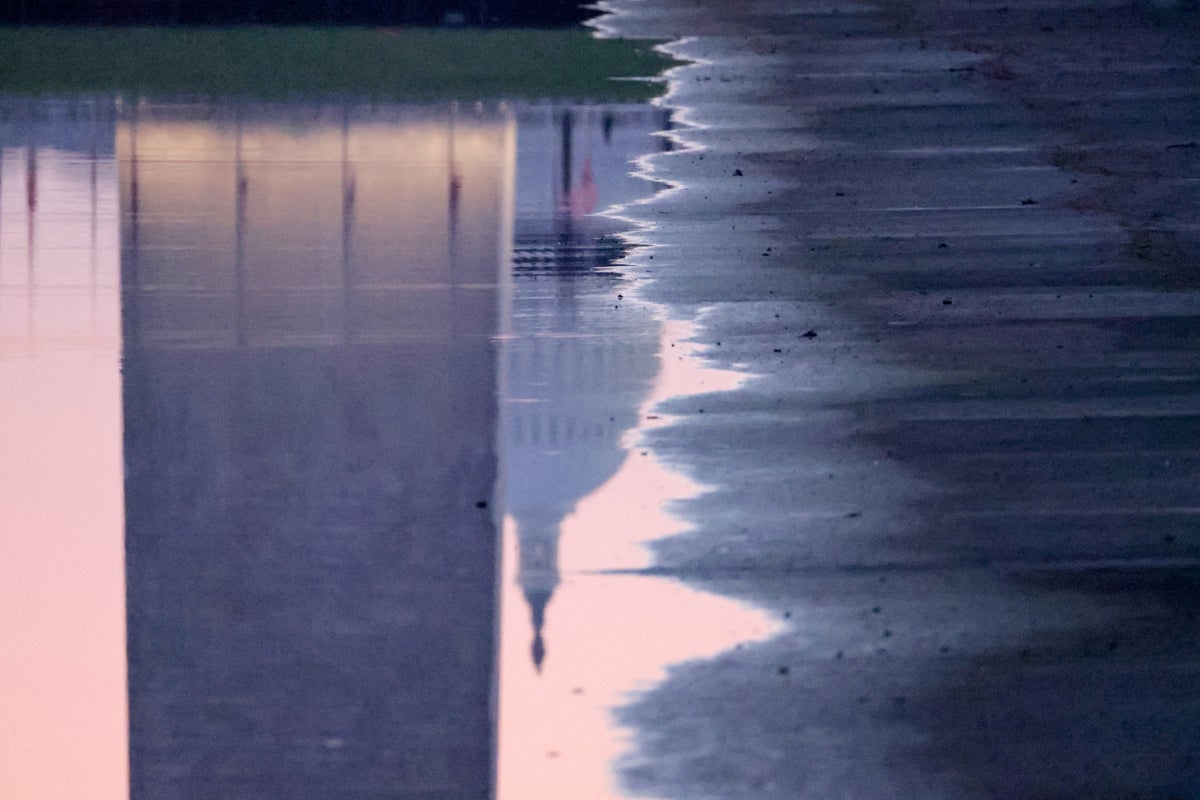
In June 2026, the Lincoln Memorial Reflecting Pool on the National Mall became the center of a high-profile controversy involving allegations of vandalism and structural damage. While political actors and executive officials attributed a peeling basin lining and rampant algae blooms to coordinated sabotage, a cold engineering and material science analysis reveals a far more predictable reality. The degradation of the reflecting pool’s new $14.7 million coating was not primarily a failure of public security, but rather a textbook failure of polymer chemistry, municipal project acceleration, and thermodynamic reality.
To understand why the pool's "American flag blue" lining peeled and why the basin was choked with algae within weeks of completion, we must look past political rhetoric and examine the underlying physical, chemical, and operational mechanisms.
The Triad of Coating Failures: Adhesion, Moisture, and Cure Time
To assess the physical peeling of the Reflecting Pool's lining, we must examine the specific mechanics of industrial polymer coatings applied to massive concrete substrates. The project utilized a dark blue sealant applied over a seven-acre concrete basin. For any industrial polymer—typically an epoxy, polyurea, or elastomeric polyurethane—to bond permanently to a century-old concrete slab, three conditions must be strictly controlled: substrate preparation, moisture vapor transmission, and the curing window.
Substrate Preparation and Mechanical Anchor Profile
Concrete is highly porous and inherently alkaline. Before applying a high-performance coating, the surface must undergo abrasive blasting or acid etching to achieve a specific Concrete Surface Profile (CSP), typically between CSP 3 and CSP 5. This profile creates a microscopic "anchor" for the polymer to grip.
If a fast-track project bypasses rigorous mechanical profiling, the coating relies solely on chemical adhesion. Over a 7-acre surface area, any variation in concrete density, residual contaminants, or previous coatings will cause immediate adhesion failures.
The Moisture Vapor Transmission (MVT) Bottleneck
Concrete slabs-on-grade constantly absorb groundwater from the soil beneath them through capillary action. When a non-breathable, impermeable rubberized or polymeric membrane is sealed over the top of a damp slab, a physical phenomenon known as osmotic blistering occurs.
- The Mechanism: Solar radiation heats the dark blue surface of the pool, raising the temperature of the concrete slab.
- The Result: Water trapped inside the porous concrete vaporizes. Because the vapor cannot escape through the impermeable blue liner, vapor pressure builds up at the concrete-coating interface. Once this hydrostatic pressure exceeds the tensile bond strength of the coating, the liner delaminates, forming water-filled domes that stretch, tear, and float to the surface.
Accelerated Project Timelines and Incomplete Curing
The Department of the Interior awarded a no-bid contract on April 3, 2026, with work wrapping up in June—an exceptionally compressed timeline for a project of this scale. Polymeric coatings require precise environmental conditions to cure. If applied during periods of high relative humidity, or if water is introduced into the pool before the polymer chains have fully cross-linked, the material remains plasticized and structurally weak.
A weak, under-cured coating has low tear strength. Under these conditions, minor mechanical stresses—such as the thermal expansion of the concrete, water turbulence, or a cyclist touching a pre-existing loose edge—will cause the material to rip cleanly away from the floor. What appeared to observers as clean, "knife-like" cuts can actually be the tensile failure of an elastomeric sheet tearing under the immense hydraulic tension of moving water.
The Algae Equation: Dark Coatings as Solar Heat Sinks
The rapid onset of dense green algae blooms immediately following the pool’s refilling was attributed by some officials to intentional fertilization. However, the biological explosion in the basin is easily explained by fundamental thermodynamics and ecological physics.
[Solar Radiation] ➔ [Dark Blue Coating] ➔ [High Thermal Absorption] ➔ [Elevated Water Temps] ➔ [Rapid Algae Growth]
Thermal Absorption of "American Flag Blue"
The original light grey concrete of the reflecting pool reflected a significant portion of incoming solar radiation. By painting the bottom a dark blue, the solar reflectance index (SRI) of the basin was drastically lowered.
Dark blue surfaces act as highly efficient solar absorbers, transferring thermal energy directly into the standing water column above them. Algae growth rates are heavily temperature-dependent; elevated water temperatures significantly accelerate the metabolic and reproductive rates of unicellular algae, turning a manageable baseline population into a runaway bloom within days.
The Self-Defeating Chemical Intervention
To combat the sudden algae blooms, maintenance crews applied massive quantities of hydrogen peroxide ($H_2O_2$) directly to the pool. While hydrogen peroxide is a common algaecide, it is also a powerful oxidizing agent.
When poured into a basin lined with a fresh, potentially under-cured organic polymer, $H_2O_2$ attacks the chemical bonds of the coating itself, accelerating the breakdown of the polymer matrix, further weakening the material, and causing widespread peeling.
Operational Lessons in Public Infrastructure
The failure of the Reflecting Pool rehabilitation project underscores the structural hazards of bypassing standard procurement and engineering protocols.
| Failure Mode | Direct Cause | Operational Safeguard |
|---|---|---|
| Delamination | Trapped moisture vapor and poor concrete profiling | Mandatory moisture testing (ASTM F1869) and mechanical shot-blasting prior to application |
| Algae Blooms | Dark-colored lining absorbing solar heat and raising water temperature | Use of light-colored coatings with high Solar Reflectance Index (SRI) |
| Premature Tearing | Project fast-tracking leading to incomplete curing under humid conditions | Strict adherence to manufacturer curing windows, free from political or holiday-driven deadlines |
To prevent future failures of this magnitude, public works must treat historic monuments as complex engineering systems rather than aesthetic canvases. Future interventions on the National Mall must prioritize material compatibility, rigorous environmental testing, and realistic curing schedules over accelerated timelines and non-standard material choices.

