The physical integrity of the International Space Station (ISS) depends on a complex balance of pressure containment, material science, and international engineering alignment. When NASA ordered five astronauts to take refuge inside a docked SpaceX Crew Dragon capsule, the action highlighted a long-standing operational risk: a structural air leak in the Russian segment that suddenly grew worse. The incident exposed a clear difference in risk management styles between NASA and Roscosmos when handling structural fixes in a microgravity environment.
To understand the crisis, one must analyze the architecture of the Zvezda service module, specifically the Promeshutochkaya Kamera (PrK) transfer tunnel. This 43-foot-long module serves as the primary structural and life-support core of the Russian Orbital Segment. The PrK tunnel connects Zvezda to docking ports for arriving spacecraft. It represents a single point of vulnerability where structural fatigue meets critical atmospheric boundaries.
The Mechanics of Structural Decay
The air leak inside the PrK tunnel is not a sudden failure, but the result of gradual structural aging. First identified via anomalous baseline pressure drops, the degradation has progressed through clear mechanical phases:
- Micro-fissuring: Microscopic cracks formed in the aluminum-magnesium alloy hull of the PrK, driven by over two decades of thermal cycling. As the station moves between orbital dawn and dusk every 90 minutes, it experiences extreme temperature swings that cause continuous expansion and contraction.
- Stress Concentrators: Docking maneuvers and structural vibrations create localized mechanical stress, concentrating physical loads around joints and hatches.
- Atmospheric Loss Acceleration: The structural degradation recently escalated. The baseline decay rate doubled from approximately one pound of air per day to two pounds per day. This sudden change indicated a structural shift or the opening of secondary leak paths.
[Thermal/Mechanical Stress] ──> [Micro-Fissuring] ──> [Pressure Decay Acceleration]
                                                               │
                                         [NASA Safe-Haven Order] <── [Roscosmos Sawing Intervention]
The Operational Protocol of Safe-Haven Maneuvers
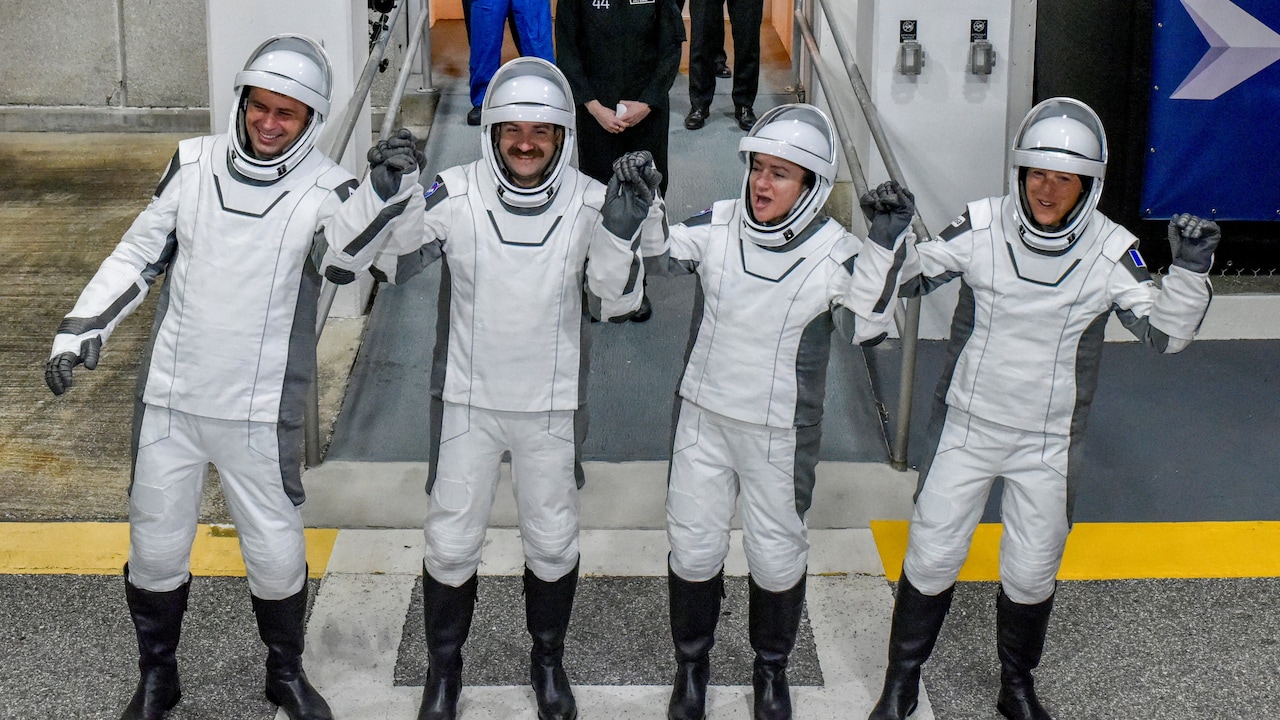
When structural repairs are attempted on a compromised pressure vessel, mission control agencies implement strict risk-mitigation frameworks. The decision to move five crew members—the four personnel of SpaceX Crew-12 (Jessica Meir, Jack Hathaway, Sophie Adenot, and Andrey Fedyaev) along with NASA astronaut Christopher Williams—into the Crew Dragon spacecraft followed a standardized safety checklist.
The process relies on a strict safety protocol designed to protect human life from sudden depressurization. First, the crew isolates the compromised zone by closing the structural hatches that separate the US Orbital Segment from the Russian Orbital Segment. Next, the astronauts move into their designated return vehicles, which act as independent lifeboats with dedicated life support systems. Finally, the crew dons pressurized flight suits and prepares for emergency undocking. This ensures that if a hull breaches completely during a repair, the crew can immediately return to Earth.
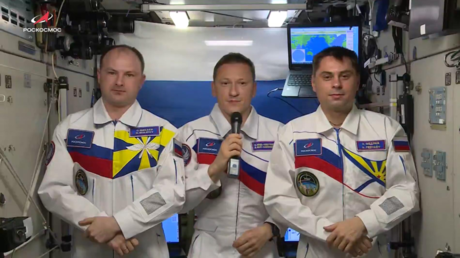
The two remaining crew members, cosmonauts Sergey Kud-Sverchkov and Sergei Mikayev, stayed in the Russian segment to work on the hull. This split showed how different agencies calculate operational risk during an active emergency.
Technical Contradictions in Repair Methods
The safe-haven order was triggered by a direct technical disagreement between NASA and Roscosmos engineers regarding how to handle the metal fatigue.
The structural issue involved two distinct leak points. Roscosmos specialists successfully sealed the first site using a two-component metal sealant called Germetal-1. However, the second leak point was located on the more complex, conical section of the transfer chamber.
To access and repair this second crack, Russian cosmonauts planned to use a mechanical saw to cut through internal structural elements. This choice highlight a deep division in engineering approaches between the two space agencies.
The Roscosmos Position
Russian engineers favored direct physical intervention. They viewed mechanical cutting as a necessary step to reach the root of the leak, relying on localized sealing materials like Germetal-1 to patch the structural wall. They argued that the risk of hull failure during the procedure was low enough to justify working without pausing station operations.
The NASA Position
NASA engineers viewed using a mechanical saw on a stressed, thinning pressure vessel as an unacceptable risk. The vibration and force of the saw could easily cause a crack to grow uncontrollably, leading to rapid, catastrophic decompression. Because of this risk, Houston Mission Control ordered the safe-haven procedure, keeping the crew isolated until Roscosmos paused the repair work to re-evaluate the data.
Structural Interdependence and the Limits of Isolation
This incident highlights the physical realities of a shared space station. While closing hatches can temporarily isolate a pressure drop, the ISS cannot be permanently split into independent halves. The environmental control, life support, propulsion, and power systems are deeply interconnected across both segments.
The PrK tunnel can be sealed off when it is not being used for docking, but leaving it isolated indefinitely creates a logistical bottleneck. It cuts off access to vital docking ports and limits the station's overall orbital maneuvering capabilities, which rely on thrusters located on the Russian segment.
Furthermore, temporary patches like composite sealants do not fix the underlying metal fatigue caused by decades of use. They merely slow down the leak rate, delaying a permanent engineering solution.
Long-Term Strategic Planning for Orbital Lifespans
The structural issues in the Zvezda module show that the ISS is nearing the end of its operational life. Patching older components becomes less effective over time, making a clear decommissioning strategy essential.
The current strategy relies on commercial space stations to replace the ISS. Private aerospace companies must deploy modular, commercial habitats before the ISS reaches structural failure. The timing is tight; these commercial stations must be fully operational and verified before the ISS is safely guided out of orbit and deconstructed.
Engineers face a difficult challenge: they must keep the aging ISS structure safe while avoiding invasive repairs that could make the damage worse. Future operations will require a unified, data-driven approach to risk, ensuring both space agencies agree on safety margins before attempting structural repairs on the hull.