The camera light turns red. In that moment, a story stops being a private tragedy and becomes a public commodity. We watch Megyn Kelly sit behind her microphone, the professional polish of her studio reflecting a world where reputations are built and dismantled in forty-minute intervals. She isn't just delivering news; she is dissecting a motive.
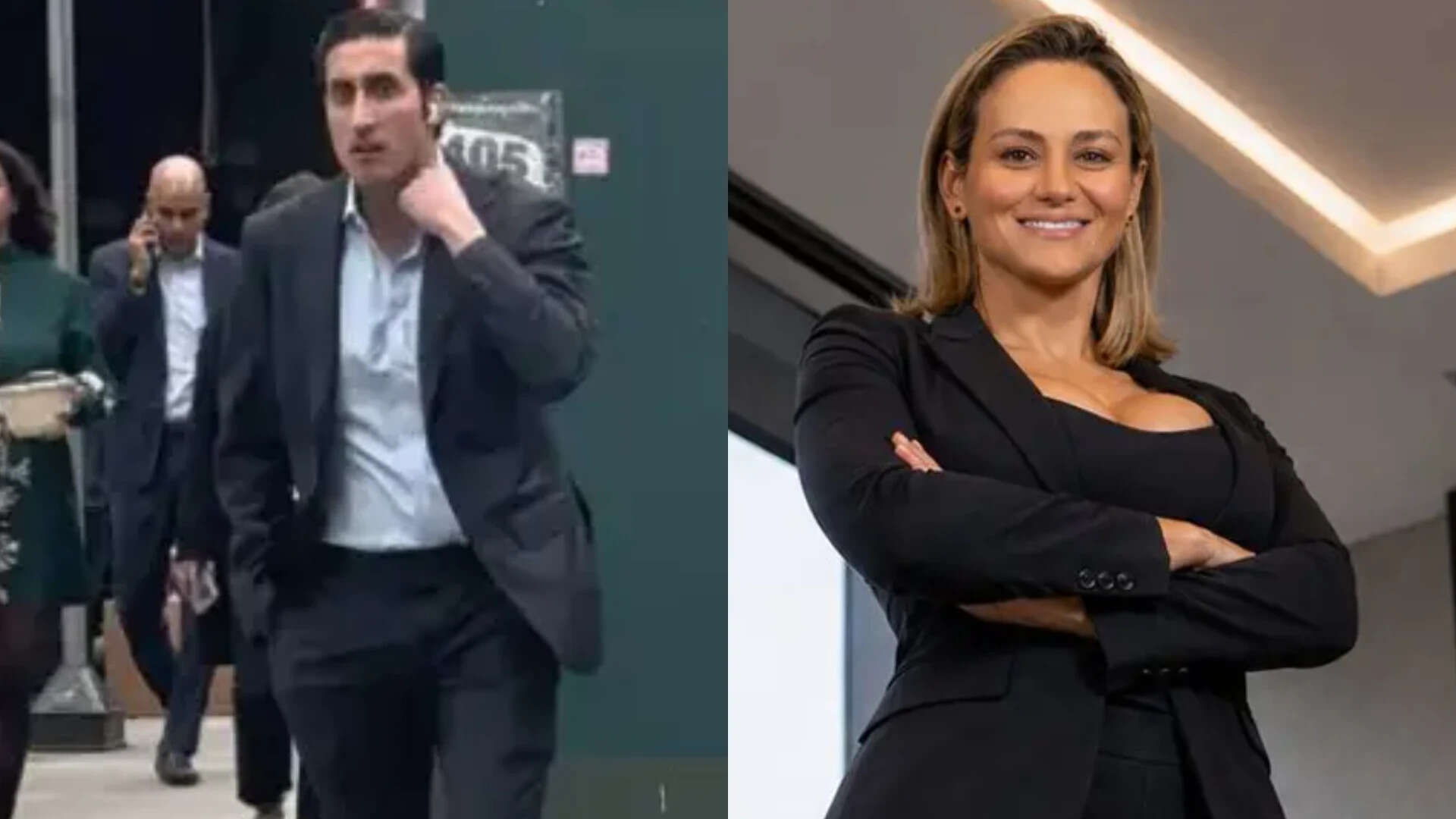
The subject on the table is the legal collision between Lorna Hajdini and Chirayu Rana. On the surface, it is a sexual assault lawsuit, a document filed in a court of law meant to seek justice for a violation of the most intimate kind. But as Kelly leans into the microphone, she voices a skepticism that has begun to ripple through the digital ether. She doesn't see a victim. She sees a fabrication.
Justice used to happen in wood-paneled rooms where twelve strangers weighed the heaviness of a witness’s breath. Now, it happens in the comments section. It happens on podcasts. It happens in the split second it takes for a viewer to decide if a woman "looks the part" of a victim.
The Aesthetic of Credibility
Lorna Hajdini is, by any standard definition, striking. In the flat, clinical world of tabloid reporting, her appearance is often the first thing mentioned—sometimes the only thing. It is a strange, cruel paradox of our culture: we demand that women be beautiful to be noticed, but then we use that beauty as a weapon against their credibility.
Megyn Kelly’s critique hinges on a specific, uncomfortable brand of logic. She suggests that the narrative presented by the lawsuit doesn't align with the optics of the players involved. To Kelly, and to many who follow her lead, the details of Rana’s alleged actions feel scripted. They feel like a "made-up" story designed to capitalize on a movement or a moment.
This is the invisible stake of the conversation. When a high-profile figure like Kelly casts doubt on a lawsuit, she isn't just talking about Hajdini. She is setting the bar for what we are willing to believe. She is suggesting that because a story fits a certain trope—the predatory man, the wronged woman—it must be a work of fiction.
Consider the weight of that doubt.
A lawsuit is a series of cold, numbered paragraphs. It mentions dates, times, and specific behaviors. In the case of Hajdini versus Rana, the allegations describe a profound breach of trust. Yet, the public discourse has largely bypassed the "what" to focus on the "why." Why now? Why him?
The Performance of Truth
Human beings are wired for pattern recognition. We like stories that make sense. When a story feels too "perfect"—too much like a plot from a courtroom drama—our internal alarms go off. This is the psychological phenomenon known as the "uncanny valley" of truth. If a set of facts aligns too neatly with our preconceived notions of villainy and victimhood, we start to look for the strings.
Kelly’s skepticism taps into a growing cultural fatigue. We have seen the pendulum swing from "believe all women" to a sharp, cynical "verify everything." In this middle ground, people like Lorna Hajdini find themselves in a secondary trial. The first trial is in the courtroom. The second is in the court of public perception, where the rules of evidence don't apply and the judge is anyone with an internet connection.
Chirayu Rana, meanwhile, exists in the center of this storm as a Rorschach test. To some, he is a man whose life is being picked apart by an opportunist. To others, he is the latest example of power gone unchecked.
The reality of these situations is rarely a straight line. It is usually a jagged, messy scribble. It involves messy human emotions, blurred lines of consent, and the terrifying realization that two people can walk out of the same room with two entirely different versions of what happened inside it.
The Cost of the Counter-Narrative
When we talk about whether someone "made up" a lawsuit, we are talking about the ultimate betrayal of the social contract. To weaponize the legal system for personal gain or a vendetta is a unique kind of sin. It devalues the currency of actual victims. This is the drum Kelly beats—the idea that the truth is being diluted by those seeking a payout or a headline.
But there is a flip side.
The fear of being called a liar is the primary reason why most survivors never step forward. They look at the screens. They see the way Hajdini’s face is analyzed. They hear the tone of voice used to describe her claims. They realize that to seek justice is to invite a forensic audit of one’s soul.
Every time a public figure declares they "believe" a lawsuit was fabricated before a single piece of evidence is tested in court, the wall for the next person gets a little higher. The shadow gets a little longer.
We are living through an era where "truth" is often whatever aligns with our tribal loyalties. If you believe the system is rigged against men, you will find every reason to believe Kelly is right. If you believe the world is inherently dangerous for women, you will see Hajdini as a martyr for the cause.
The Empty Chair
Imagine the room where the alleged incident took place. Remove the lawyers. Remove the cameras. Remove the pundits and the podcast hosts. In that silence, there are only two people and the memory of a moment.
That is the emotional core we often forget. Behind the headlines about "attractive" litigants and "made-up" claims, there are lives being fundamentally altered. There is a man whose career and reputation are on a precipice. There is a woman who has put her name on a document that will follow her for the rest of her life.
The tragedy of the modern media cycle is that it requires us to pick a side before we even understand the game. We are asked to judge the sincerity of a woman we have never met based on the opinion of a woman we only know through a screen.
The facts of the Hajdini-Rana case will eventually come out. Depositions will be taken. Emails will be read. The legal machinery will grind forward, indifferent to the noise. But the noise is what stays with us. The noise is what teaches us how to treat the person next to us when they tell us something that makes us uncomfortable.
Megyn Kelly sits in her studio, confident in her intuition. Lorna Hajdini waits for her day in court, carrying the weight of public derision. Chirayu Rana prepares his defense, knowing that even a "not guilty" verdict doesn't always mean "innocent" in the eyes of the world.
We watch, we click, we judge.
We forget that when the cameras finally turn off, the people in the story still have to live with the wreckage. We are not just consuming news; we are participating in a ritual of dismantling. We are looking for the lie because the truth is often too quiet, too complicated, and too painful to fit into a headline.
The gavel hasn't fallen yet, but the verdict is already being whispered in a million different directions. The only certainty is that in the fight between a cold fact and a hot take, the human being in the middle is the one who loses the most.
The red light on the camera flickers out. The studio goes dark. But the doubt remains, hanging in the air like a heavy fog that refuses to lift.