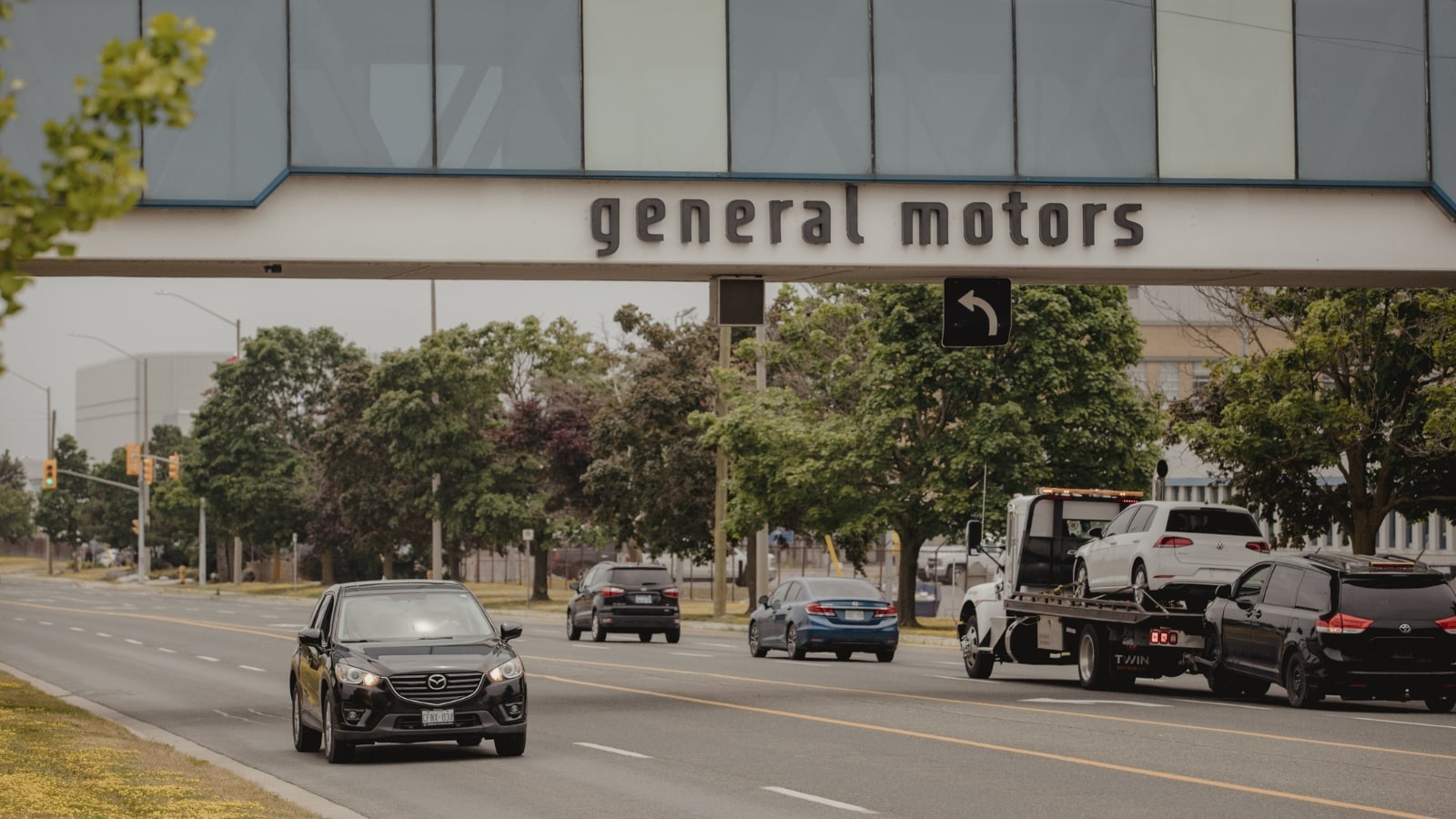
Protecting assembly line throughput from external shocks without sinking massive amounts of working capital into stagnant inventory remains the primary operational paradox of modern manufacturing. General Motors addressed this structural vulnerability by establishing a $4.5 billion revolving purchasing facility with intermediary Procura Auto Parts, backed by a banking syndicate including JPMorgan Chase and Banco Santander. Rather than traditional direct stockpiling or rigid just-in-time logistics, this mechanism uses financial engineering to decouple physical component security from immediate balance sheet liability.
Deconstructing this arrangement reveals how large-scale industrial enterprises can manipulate credit structures, supplier relationships, and working capital metrics to absorb systemic volatility.
The Mechanics of Off Balance Sheet Component Warehousing
Traditional inventory management forces a binary choice between holding cost and shortage risk. Holding physical stock ties up liquidity, incurs warehousing expenses, and risks obsolescence. Lean just-in-time delivery eliminates holding costs but exposes production lines to catastrophic shutdowns when exogenous variables—such as geopolitical trade friction, weather events, or cyberattacks—disrupt component flows.
The Procura agreement bypasses this binary via a tripartite credit structure. Procura acts as an intermediary vehicle that fronts cash to vital Tier-1 and Tier-2 suppliers, paying them to manufacture and warehouse critical parts explicitly designated for General Motors.
- The Credit Engine: A banking syndicate extends capital to Procura.
- The Intermediary Layer: Procura executes prepayments to suppliers, securing production priority and inventory allocation.
- The Deferred Settlement: General Motors reimburses the facility only when the components are withdrawn from the warehouse and introduced into the active production sequence, with a final repayment boundary set for July 2029.
This architecture shifts the holding burden. Suppliers retain physical warehousing responsibility while third-party banking capital funds the asset creation.
The Cost Function of Synthetic Inventory Security
Insulating an enterprise from supply shocks through financial engineering is not free. The economics of the Procura facility rely on specific pricing variables disclosed in regulatory filings. General Motors pays an annual interest rate calculated as the Secured Overnight Financing Rate plus 1.55%, alongside a 0.25% annual commitment fee applied to the average daily unutilized portion of the credit facility.
Evaluating this cost requires weighing it against the alternative: assembly plant downtime. Idling a high-volume manufacturing plant incinerates capital through fixed overhead, contractual labor obligations, and lost market share. Paying a financing spread over SOFR functions essentially as an insurance premium. The enterprise trades a predictable, annualized interest expense to eliminate the tail risk of unpredictable, multi-million-dollar operational stoppages.
The cash flow timing further optimizes working capital metrics. Because the prepayments are structured as unsecured debt obligations or tracked off the primary cash flow statement until actual inventory consumption occurs, reported free cash flow remains protected during the accumulation phase. This preserves liquidity metrics for equity markets while physical components sit sequestered in supplier warehouses.
Structural Vulnerabilities and Counterparty Risk
Every financialized supply chain strategy introduces systemic dependencies. The reliance on an intermediary entity like Procura, coupled with a multi-bank lending syndicate, creates specific points of failure that standard direct-procurement models avoid.
Interest rate sensitivity presents the primary financial hazard. Because the pricing mechanism is pegged to the Secured Overnight Financing Rate, macroeconomic monetary policy shifts directly alter the cost of maintaining the inventory shield. If benchmark rates climb, the cost of keeping components pre-funded escalates proportionally, transforming a cost-effective insurance policy into a margin drag.
Counterparty insolvency represents another latent risk vector. If the intermediary or key members of the banking syndicate face liquidity freezes during a broader economic contraction, the revolving nature of the facility could lock up. Furthermore, suppliers participating in the arrangement must maintain the operational capacity to store and manage dedicated stock without compromising their own balance sheets, introducing friction if supplier distress ripples upward.
Operational Deployment Strategy
For enterprises evaluating similar architectures to secure vulnerable inputs—whether rare earth minerals, specialized semiconductors, or complex sub-assemblies—replication requires three distinct prerequisites:
- High-Volume Leverage: Intermediary financing syndicates only back structures where the parent company possesses enough production volume to guarantee eventual inventory drawdown.
- Component Vulnerability Indexing: The facility should never fund commoditized parts; it must be strictly ring-fenced for single-source or high-constraint components where substitution latency is infinite.
- Rigorous Usage Forecasting: Because unused credit lines incur commitment fees, demand forecasting must tightly align with production schedules to minimize the deadweight loss of unutilized facility fees.
Establish an automated review cycle matching the revolving facility's drawdown rate against actual assembly line consumption velocity to prevent inventory accumulation from outpacing real-world absorption capacity.