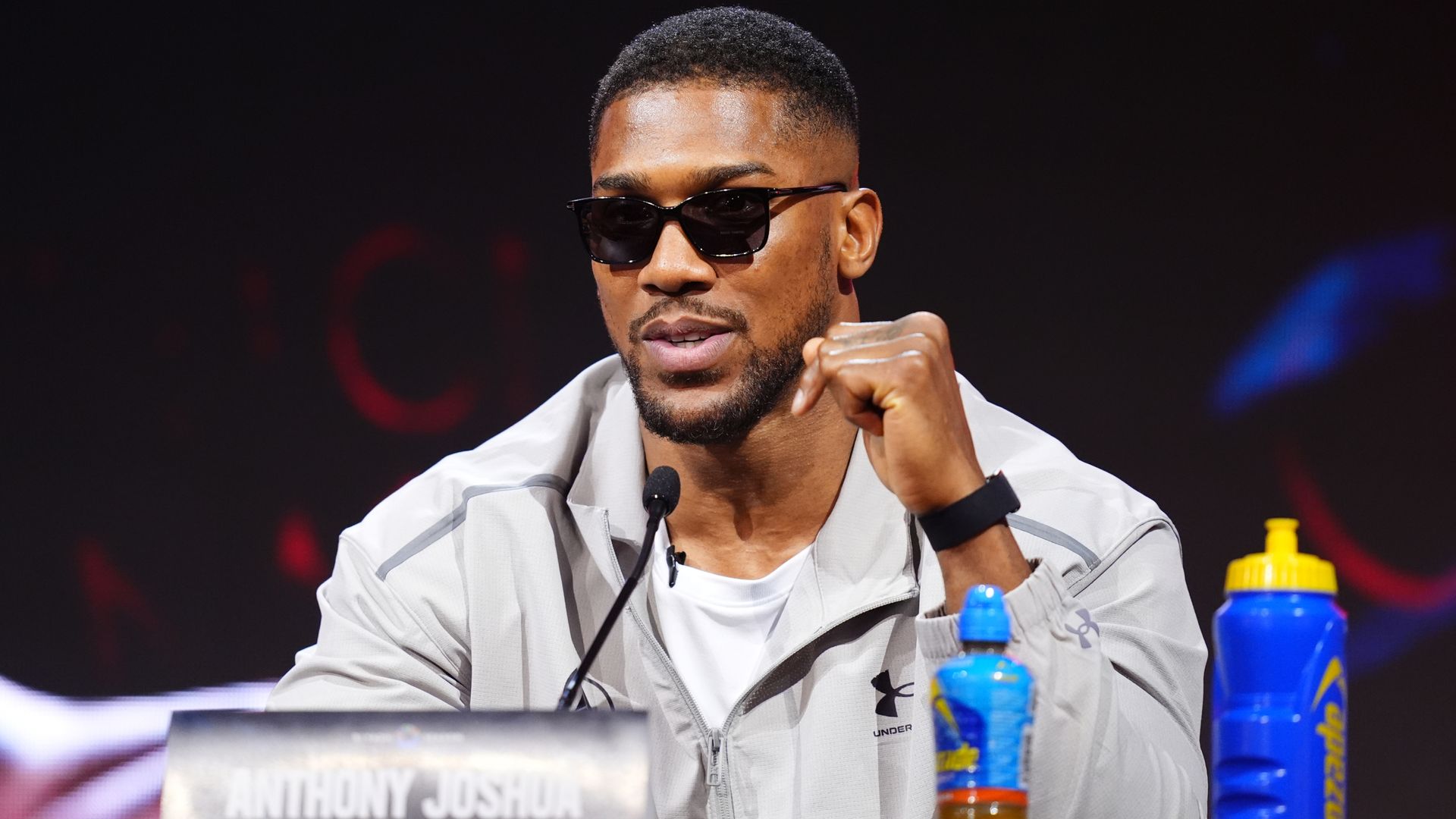
Anthony Joshua is returning to the boxing ring, but his motivation has completely shifted. He isn't just fighting for belts, money, or legacy anymore. He is fighting for survival, duty, and the families of the dead.
In December, a catastrophic car accident in Nigeria changed everything. The crash killed Sina Ghami and Latif Ayodele. They weren't just guys in his training camp. They were his long-term friends. His brothers. Joshua walked away from the wreckage near Lagos with minor physical injuries, but the mental toll was massive. Many inside the boxing community wondered if the 36-year-old former heavyweight champion would ever lace up the gloves again. Even his longtime promoter, Eddie Hearn, had major doubts about whether Joshua could mentally recover from such a trauma.
He answered those doubts directly during a press conference in London. He isn't quitting. Instead, he plans to use the sport as a mechanism to survive his grief.
The Duty of a Soldier
When a tragedy like this hits, most people expect a fighter to talk about their own pain. Joshua is doing the opposite. He is intentionally locking his own feelings away to focus on the people who lost their children.
"I have to put my emotions to the side because I focus on the parents," Joshua said. "My emotions can come at a later stage, but I really look at their parents and I understand it must be most difficult for them."
It is a grueling way to handle trauma, but it is his chosen strategy. He doesn't want the narrative to be about his survival or his comeback trail. He wants it to be about the mothers and fathers who are sitting in empty rooms.
"So I don't make it about me, I make it about them. I make it about the mums and the dads of the two boys," Joshua explained. "I'm just there for their parents. It's about being a good soldier for them because I've got to look after them."
This isn't just pre-fight hyperbole. It's a survival tactic. For elite athletes, finding a purpose that sits outside of their own ego can be a massive performance enhancer. Joshua calls boxing "therapeutic." It gives him a reason to wake up and take hits when his mind is likely wandering back to that road in Nigeria.
An Unlikely Alliance with Oleksandr Usyk
Grief changes people. It breaks down old rivalries. In the months following the accident, Joshua found comfort and guidance from the most unexpected source possible: Oleksandr Usyk.
Usyk beat Joshua twice in the ring, taking his belts and derailing his career. By all traditional boxing logic, they should be bitter enemies. Instead, they became allies. The two heavyweights have been quietly training together in Valencia, Spain.
Usyk didn't just offer technical boxing tips. He gave Joshua something deeper. He taught him the power of prayer and pushed him to rebuild his shattered self-belief. Usyk told Joshua flat out that he still has what it takes to become the undisputed heavyweight champion.
At first, Joshua couldn't believe it. "I had to take time to think about that and at first I was like, 'F**** hell!'" Joshua admitted. "But I get it. Why not? He sees it, I know I can do it, so let's just f**** go for it."
That training stint in Spain helped Joshua map out his next moves. He isn't just aiming for a single win. He wants the whole mountain. He demanded a clear roadmap to the undisputed title, and he is ready to do the dirty work to get there.
The Road Through Jeddah and Wembley
The journey back starts on July 25 in Jeddah, Saudi Arabia. Joshua is stepping into the ring against Kristian Prenga.
Prenga is an obscure Albanian heavyweight with a 20-1 record and 20 knockouts. On paper, it looks like a routine tune-up fight for Joshua. It is supposed to be an easy night to get his rhythm back after a brutal layout. But Prenga isn't playing the role of the scared underdog. At the London press conference, Prenga acknowledged the tragedy but warned that the mental baggage would cost Joshua in the ring. "I feel sorry for him and his team," Prenga said, "but I think it's definitely going to affect him."
Joshua knows the risks. He knows he isn't the same fighter who got knocked out by Daniel Dubois inside five rounds back in September 2024. He has been through hell since then.
If he gets past Prenga, the stakes skyrocket. Joshua is locked into a collision course with Tyson Fury, scheduled for October or November 2026 at Wembley Stadium. It is the biggest fight in British boxing history.
Fury has already started the psychological warfare, mocking Joshua's past losses and using Dubois' success to trash his rival. Joshua didn't bite. He dismissed Fury's talk as desperate riding of other people's coattails. He knows his real battle isn't on a microphone. It's in his own head.
The fight with Fury will conclude a lucrative two-fight deal with Saudi Arabia's boxing boss, Turki Alalshikh. Joshua has made it clear that he isn't looking for an exit strategy. He intends to fight for at least three more years.
How to Compartmentalize Severe Trauma
What Joshua is attempting to do is incredibly dangerous, but highly effective for high-pressure individuals. Psychologists call it extreme compartmentalization. When you cannot process a loss, you build a wall around it and focus entirely on an external mission.
If you are dealing with your own massive setback or loss, Joshua's approach offers a brutal but practical framework for moving forward.
- Shift the focus outward: When your own mind is a dark place, tie your daily actions to the well-being of someone else.
- Accept unexpected help: Don't let pride stop you from learning from former rivals or people who have beaten you in the past.
- Build a strict roadmap: Vague goals lead to spiraling thoughts. Write down the exact steps required to execute your plan and follow them blindly.
Joshua's next chapter isn't a sports story. It's a grief story played out under stadium lights. July 25 will show whether being a "good soldier" is enough to carry a man through the darkest period of his life.