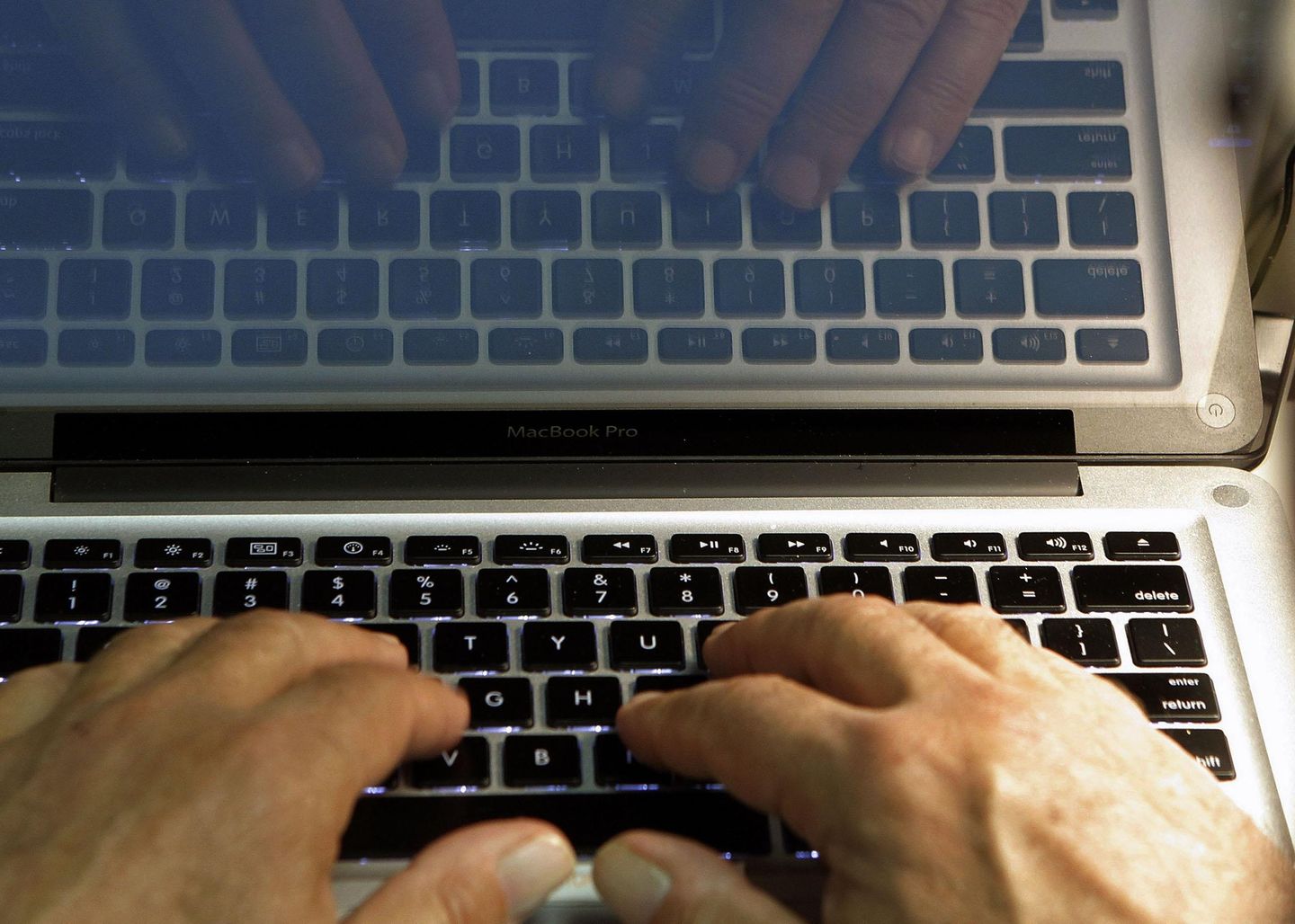
The coffee went cold hours ago. Elena stopped tasting it three revisions ago, her eyes burning from the blue-white glare of a terminal window scrolling lines of automated reasoning she could barely comprehend, let alone control. Outside her office window in Vienna, the Danube flowed quietly under a November frost, indifferent to the quiet revolution ticking away in the server racks down the hall.
We are building gods in windowless rooms. And then we are asking who gets to hold the leash. In related news, read about: Inside the Mobile Silicon Crisis Nobody is Talking About.
For years, the conversation surrounding artificial intelligence has been dominated by a breathless, frantic evangelism. Silicon Valley pitch decks promised utopia, while doomsayers whispered prophecies of extinction. Both sides missed the messy, human reality happening right in the middle: the frantic, exhausting scramble of ordinary people trying to figure out how to govern a power they barely understand.
Then came the shift. Twenty nations stepped into the room. Mashable has analyzed this fascinating issue in extensive detail.
They did not arrive with garlands or grand manifestos. They came with clipboards, exhaustion, and a sudden, sharp clarity born from the realization that algorithms do not care about national borders, passport stamps, or sovereign wealth funds.
The Speed of Silicon
Consider what happens when a technology evolves faster than the language used to describe it.
When the printing press arrived, society had centuries to adjust to the democratization of heresy. When the atom was split, governments had decades of theoretical physics before the flash over New Mexico. But artificial intelligence moves at the velocity of high-frequency trading. A neural network trained on human text does not just read history; it begins to write the next chapter before we have finished reading the last one.
Elena remembers the exact moment her team’s model hallucinated a completely plausible, entirely fabricated medical diagnosis that sounded more authoritative than any human physician in the hospital. It was not malicious. It was confident. And that confidence is precisely what makes unchecked machine intelligence so intoxicating and so dangerous.
We have spent the past decade treating software like a consumer appliance. You buy it, you plug it in, you update it when it nags you. But you do not negotiate with a toaster. You do not worry that your refrigerator might quietly acquire economic influence or autonomously coordinate disinformation campaigns across three continents before lunch.
Yet, here we are.
Borders Written in Code
Data does not stop at checkpoints. A server farm in Iceland can generate deepfake propaganda that sways an election in Santiago, funded by capital routed through the Cayman Islands, using code compiled by a nomadic developer working from a café in Bali.
National sovereignty was built for a physical world. It assumes that if you can control the territory, you can control the outcome. But how do you patrol a frontier that exists purely in electrical currents?
This is why twenty countries recently broke ranks with the traditional playbook of geopolitical posturing. Recognizing that unilateral regulation is merely a speed bump for a globalized threat, diplomats, policy wonks, and technical architects have begun drafting the blueprints for a centralized international oversight body. Think of it as an agency modeled after the International Atomic Energy Agency, but designed for silicon rather than uranium.
The proposal sounds bureaucratic on paper. It sounds like endless committee meetings, white papers, and polite diplomatic stalemates over morning pastries. But beneath the dry language of international treaties lies a desperate, frantic bid for survival.
They are trying to build a firebreak.
The Cost of Waiting
To understand why twenty governments decided to sit at the same table, you have to look at the economic incentives driving the current race.
In the corporate boardrooms of major technology hubs, caution is treated as a sin. If Company A pauses deployment to conduct safety audits, Company B rushes ahead to capture market share. The structural penalty for being careful is obsolescence. It is a modern prisoner’s dilemma played out with billions of dollars and trillions of parameters.
No single corporation can opt out. The market won't let them.
No single nation can regulate it alone without watching its domestic tech sector pack up and move to a jurisdiction with looser rules. It is a race to the bottom, fueled by the terrifying fear of finishing second.
When twenty countries propose an international supervisory framework, they are effectively admitting something profound: the free market cannot fix a runaway intelligence explosion. When the stakes are the stability of global financial systems, the integrity of elections, and the very nature of human truth, voluntary corporate ethics guidelines are about as useful as a paper umbrella in a hurricane.
We have been here before. History is littered with moments where humanity invented something magnificent and terrifying, only to realize too late that the tools used to create it were inadequate to contain it.
The Quiet Work of Stewardship
Back in Vienna, Elena closes her laptop. The screen goes dark, reflecting her tired face in the glass.
The twenty-nation proposal will not fix everything tomorrow. Treaties take years to ratify. Bureaucracies move at the speed of paperwork, while neural networks double in capability every few months. There will be diplomatic rows, loopholes, and cynical attempts by powerful actors to weaponize oversight rules to crush smaller competitors.
Governance is never clean. It is messy, political, and painfully slow.
Yet, the alternative is unthinkable. The alternative is a world surrendered entirely to the black box, where decisions that shape human lives are made by opaque models optimized for engagement rather than truth, efficiency rather than empathy.
The true battle of our era is not between humans and machines. It is between the short-term rush of unbridled acceleration and the difficult, unglamorous discipline of stewardship.
Twenty governments have just picked up their pens. The ink is wet, the room is crowded, and the clock is ticking down in the dark.