Industrial land development in the American Southeast operates under an increasingly constrained physical ledger. As digital infrastructure demands expand across municipal boundaries, the spatial footprint required for high-density compute facilities collides directly with regional timberlands and river basins. The resulting friction between industrial capacity expansion and watershed preservation has forced a structural pivot in how capital projects handle environmental mitigation. Rather than treating local ecology as a static compliance check, modern digital infrastructure strategy increasingly internalizes multi-decade habitat management as a structural prerequisite for long-term operational license.
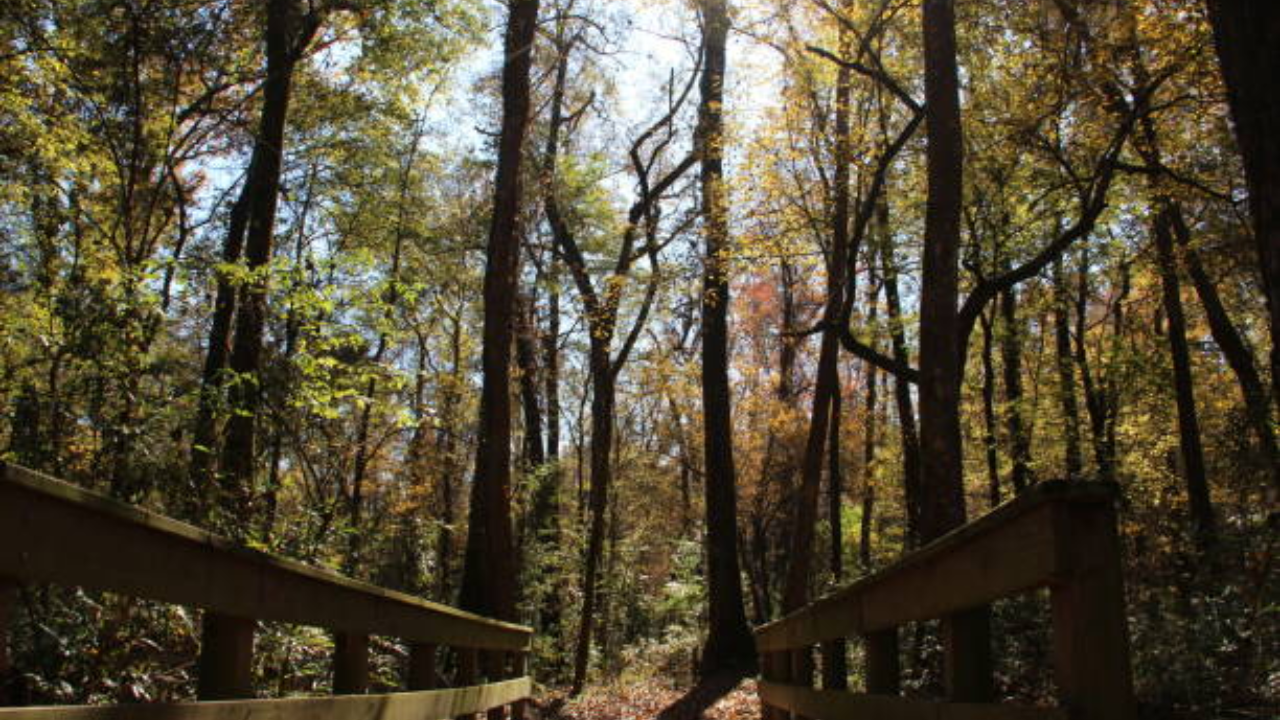
The launch of the ten-year forest restoration initiative at the Towaliga Preserve in Henry County, Georgia, managed by the Southern Conservation Trust and funded by QTS Data Centers, offers an empirical blueprint for this transition. Deconstructing the mechanics of this arrangement reveals how private capital, municipal zoning mandates, and long-term biological stewardship intersect.
The Spatial and Economic Mechanics of Infrastructure Mitigation
The physical intervention at the Towaliga Preserve covers 132 acres within a broader 403-acre protected parcel. To understand the economic rationale, one must examine the cost function of industrial scaling. Large-scale data center campus developments, such as the Fayetteville campus expansion tied to this initiative, trigger municipal tree replacement ordinances and local zoning stipulations. Historically, these requirements were satisfied via short-term transactional offsets or minimal perimeter landscaping—approaches characterized by high failure rates among newly planted saplings and negligible ecological recovery.
The Towaliga framework alters this economic equation by shifting capital expenditure from reactive compliance to structured, multi-phase ecological engineering. The project divides the 132-acre intervention zone into two distinct operational tiers:
- Active Structural Intervention (77 Acres): Comprising early-successional, degraded forest recovering from historical logging and agricultural clearing, this tier undergoes staged mechanical thinning and mulching to reduce canopy competition and prepare the substrate for native species reintroduction.
- Targeted Preservation and Maintenance (52 Acres): Comprising mature forest stands, this tier receives continuous invasive species treatment to eliminate aggressive non-native flora that choke out indigenous understory growth.
By coupling corporate capital allocation directly to these multi-year biological milestones, the arrangement internalizes the long-term cost of habitat degradation rather than externalizing it onto municipal watersheds.
The Failure Modes of Traditional Reforestation
Conventional corporate environmental programs frequently suffer from structural design flaws that limit their net ecological yield. Most initiatives rely on the plant-and-forget model, where capital is deployed solely for initial acquisition and planting, followed by zero operational oversight. Without subsequent canopy management, early-stage secondary forests in regions like Henry County are routinely overrun by aggressive invasive species, including Chinese privet, Chinaberry, and Oriental bittersweet. These species monopolize soil nutrients and solar radiation, suppressing native oak, hickory, and pine saplings.
The Towaliga framework addresses this bottleneck through temporal sequencing and active site preparation. Rather than deploying capital in a single fiscal year, the project spans an explicit ten-year horizon. The operational timeline is strictly phased:
- Initial Site Diagnostics and Infrastructure Removal (Fall 2026): Clearance of physical obstructions, including thousands of linear feet of legacy barbed-wire fencing that impedes mammalian migration corridors.
- Mechanical Manipulation: Staged thinning and mulching across the 77-acre degraded tract to optimize light penetration and soil moisture distribution.
- Chemical and Biological Suppression (2027): Systematic targeting of invasive vegetation prior to final planting vectors.
- Controlled Reintroduction (Winter 2027-2028): Planting of verified native stock calibrated to local soil and hydrological profiles.
This sequential execution minimizes capital waste by ensuring that saplings are introduced only after the competitive pressure of invasive species and poor substrate conditions has been actively neutralized.
The Integration of Empirical Forestry Research
A core vulnerability of large-scale land restoration is the assumption of uniform ecological response across heterogeneous terrain. Microclimates, soil compaction levels, and drainage variations ensure that a planting strategy optimized for one acre will underperform on another.
To mitigate this variance, the initiative integrates an applied research feedback loop established during Phase 1 of the partnership, which saw the successful planting of 12,140 native trees across 23 former agricultural acres. Collaborating with the University of Georgia, researchers established dedicated monitoring plots containing hundreds of individual specimens across dozens of native species.
This setup functions as an operational testbed. By tracking longitudinal survival rates, root penetration metrics, and stress responses under variable hydrological conditions—particularly given the 1.5 miles of the upper Towaliga River transecting the property—the management team gathers empirical data to calibrate the larger Phase 2 rollout. If specific varietals exhibit high mortality under localized drainage stress, subsequent planting phases dynamically adjust species distribution ratios. This transforms conservation from a static aesthetic exercise into an adaptive, data-driven system.
Watershed Integrity as an Operational Boundary
The ecological health of the Towaliga Preserve directly impacts regional water security. The property sits within a sensitive drainage basin where surface runoff, soil infiltration rates, and riparian buffer integrity dictate downstream water quality. Industrial data center operations demand substantial baseline infrastructure inputs, and while energy consumption dominates public discourse, local hydrological management is equally critical for thermal regulation and facility support systems.
By securing 1.5 miles of the upper Towaliga River corridor, the preservation and restoration framework functions as a natural filtration and erosion-control asset. Mature bottomland and mesic hardwood forests along riverbanks stabilize soil banks, reduce sediment loading into the waterway, and enhance aquifer recharge. Consequently, the capital investment in land restoration delivers a double dividend: fulfilling mandatory industrial mitigation requirements while reinforcing the regional hydrological baseline upon which adjacent communities depend.
Strategic Allocation of Capital for Long-Term Stewardship
The ultimate viability of corporate-backed conservation hinges on institutional continuity. A ten-year implementation window represents an intermediate milestone rather than a terminal endpoint. Once active intervention phases conclude, the long-term burden of monitoring, invasive suppression, and public land management shifts to permanent institutional stewardship entities like the Southern Conservation Trust.
For capital allocators and infrastructure strategists, the Towaliga model demonstrates that environmental compliance can be decoupled from short-term public relations campaigns and integrated into core operational risk management. By aligning industrial expansion permits with multi-year, scientifically monitored habitat restoration, developers establish a predictable framework that satisfies regulatory demands, insulates against community pushback, and secures ecological resilience across high-growth regional corridors.