Geopolitical leverage functions through predictability and execution speed. When the executive branch of a security guarantor stalls a critical military procurement package, the structural integrity of a regional defense architecture begins to degrade long before any shots are fired. The informal clearance of a roughly fourteen billion dollar arms package for Taiwan by the United States Congress faced an extended administrative freeze ahead of major diplomatic summits. This dynamic exposes deep vulnerabilities in the mechanics of deterrence, weaponizing timing as an instrument of statecraft and reshaping how Beijing calculates the costs of incremental pressure.
The mechanics of this delay affect the target state through three distinct vectors: procurement friction, domestic political fracture, and signal degradation across allied perimeters.
The Procurement Bottleneck and the T-Dome Architecture
Modern air defense relies on multi-layered integration rather than point solutions. The stalled package centers on components vital to Taiwan's layered defense network, widely designated as the T-Dome. This framework integrates multiple capabilities:
- Low and Medium Altitude Defense: Systems such as the National Advanced Surface-to-Air Missile Systems designed to neutralize cruise missiles, unmanned aerial vehicles, and tactical aircraft.
- High-Altitude Interception: PAC-3 Missile Segment Enhancement interceptors built to track and destroy incoming ballistic trajectories.
- Battle Management Command: The Integrated Battle Command System acting as the digital nervous system that links disparate radar networks and launchers into a unified fire-control grid.
The operational risk lies in the lag between legislative authorization, contract notification, manufacturing pipelines, and final deployment. Defense acquisition is not an off-the-shelf retail transaction; production timelines for advanced missile segments span years. Halting the administrative notification process compresses the window Taiwan has to achieve operational readiness, creating a dangerous vulnerability gap during a period of rising cross-strait pressure.
Domestic Political Friction and Fiscal Paralysis
The delay directly alters domestic calculus within Taipei's legislative arena. Washington has continuously pressed Taipei to scale defense expenditures toward ten percent of its gross domestic product, while local administrations have pledged intermediate benchmarks, passing a special defense budget of nearly twenty-five billion dollars to absorb pending and notified military hardware.
When multi-billion-dollar packages remain indefinitely frozen at the executive level in Washington, domestic political skeptics gain immediate leverage. Opposition factions argue that committing capital to procurement programs that face arbitrary administrative holds represents a misallocation of resources and brands the security guarantor as unreliable. The freeze thus transforms an external diplomatic tactic into an internal catalyst for legislative gridlock, undermining bipartisan consensus on national defense readiness.
The Deterrence Deficit and Beijing Calculus
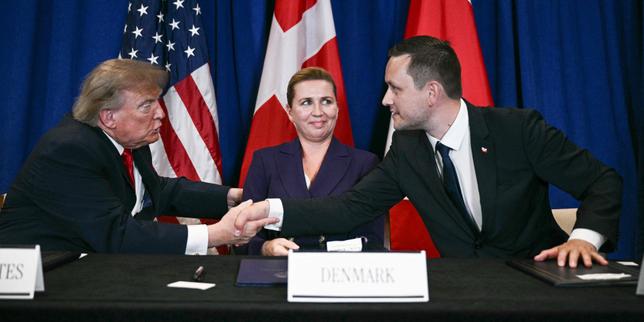
From the perspective of strategic theory, consistency is the primary currency of deterrence. When the timing of weapons transfers becomes subject to bargaining around bilateral presidential summits, the signaling mechanism inverts.
Beijing interprets administrative pauses not as bureaucratic friction, but as successful feedback confirming that pressure yields concessions. Treating defense notifications as transactional leverage points encourages a gray-zone strategy where incremental coercion achieves political objectives without triggering a kinetic response. Each successful postponement establishes a revised baseline, shifting the normalization boundary further in favor of the coercive power and degrading the credibility of long-standing security commitments.
Regional allies such as Japan and South Korea monitor these friction points closely to calibrate their own alignment postures and defense planning. Because the island's industrial base anchors the global supply chain for advanced semiconductor fabrication, any perceived erosion of its security umbrella introduces systemic risk across global markets.
To restore strategic equilibrium, the security guarantor must decouple routine defense notifications from summit-level diplomacy. Re-establishing a deterministic, rules-based procurement pipeline eliminates the margin for gray-zone exploitation, aligning administrative execution with the stated requirements of regional deterrence.