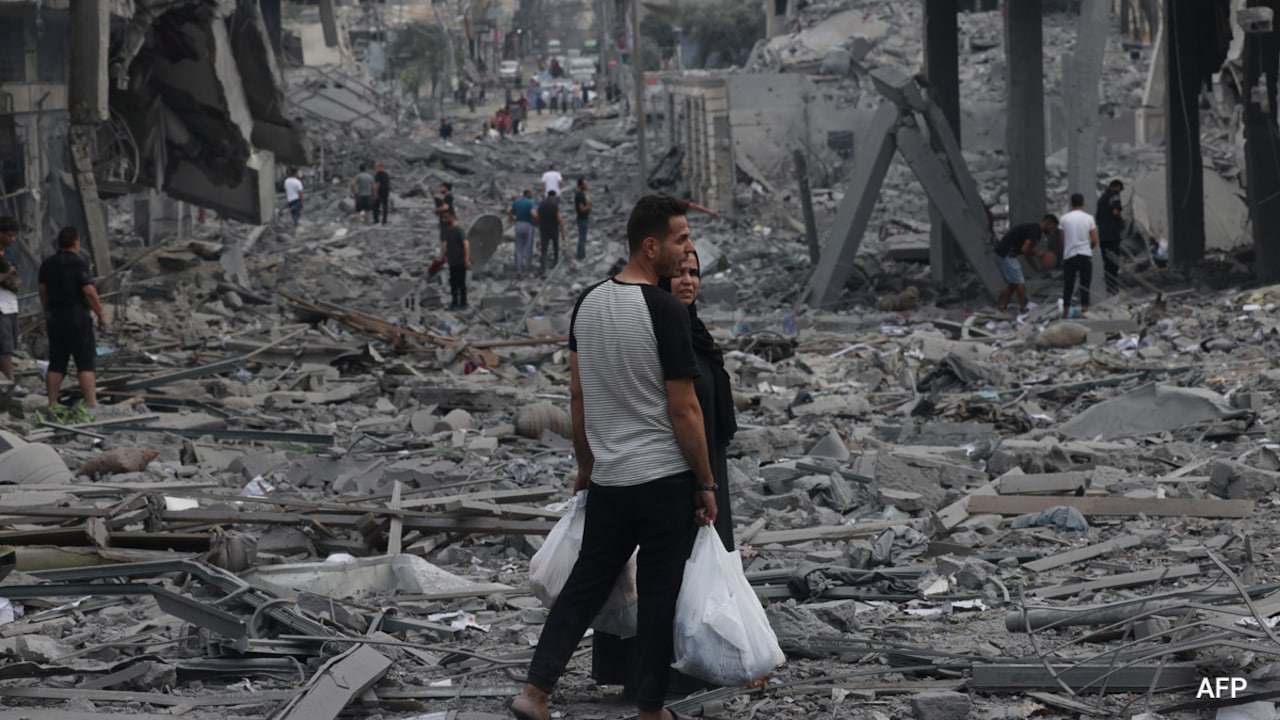
Diplomatic interventions by mediating states operate under predictable institutional limits when structural military incentives diverge from negotiation frameworks. The joint condemnation issued by Turkey, Egypt, and Qatar regarding Israeli military actions in the Gaza Strip exposes the structural limitations inherent in multi-party mediation when core security paradigms remain unaligned. Diplomatic communiques of this nature are frequently evaluated as expressive signals of discontent rather than functional instruments of behavioral modification. Understanding why these joint statements fail to constrain military operations requires examining the underlying mechanics of asymmetric deterrence, sequencing impasses, and the utility functions governing the primary actors.
The Sequencing Dilemma and Asymmetric Costs
The breakdown of compliance mechanisms stems directly from irreconcilable demands regarding the chronological order of disarmament and territorial withdrawal. International diplomatic initiatives, including frameworks endorsed by external powers, depend on synchronized execution matrices. When parties hold divergent risk tolerances, synchronization collapses.
The structural parameters of the current impasse rest on two competing operational vectors:
- The phased disarmament model proposed by international mediators, which demands incremental weapon confinement tied to proportional military pullback.
- The immediate conditionality model maintained by Israel, which insists on total demilitarization prior to any permanent cessation of force projection.
This divergence creates a zero-sum calculation. For the mediating triad of Ankara, Cairo, and Doha, maintaining the integrity of an agreed-upon roadmap is essential for regional stability and institutional credibility. For the Israeli security establishment, ongoing tactical operations serve a distinct preventive utility—suppressing the reconstitution of adversary military infrastructure regardless of diplomatic milestones. Because the perceived cost of halting operations outweighs the diplomatic cost of defying a joint statement from mediators, public condemnations fail to alter tactical execution on the ground.
The Functional Limits of Mediation Triangulation
Mediation architecture requires leverage. When mediators possess economic, military, or diplomatic choke points over the belligerents, compliance follows. When mediators rely entirely on normative appeals, compliance becomes optional.
Turkey, Egypt, and Qatar occupy distinct functional roles within the negotiation matrix, yet their collective pressure suffers from systemic constraints:
- Egypt controls the immediate geographic interface of the southern border, granting it operational relevance in humanitarian logistics and security enforcement.
- Qatar maintains financial channels and political communication lines with non-state leadership, positioning it as an indispensable conduit for text negotiation.
- Turkey provides regional diplomatic weight and domestic political signaling aimed at broader coalition shaping.
Despite these capabilities, none of the three states possess the leverage required to impose structural costs on Israeli military planners. Economic ties between Israel and certain mediating capitals persist independently of periodic diplomatic friction, and security alignments with global superpowers insulate the primary actors from regional coercion. Consequently, joint statements function as rhetorical containment strategies rather than enforcement mechanisms. They signal to domestic and international audiences that the mediators are actively recording violations, but they lack the teeth to shift the target's calculus.
Strategic Realities of Continuing Friction
As military operations persist alongside stalled diplomatic roadmaps, the utility of the negotiation architecture diminishes. Tactical engagements designed to degrade remaining infrastructure guarantee that confidence-building measures cannot take root. Each cycle of strikes reinforces retaliatory expectations, hardening positions against phased concessions.
The international community faces a structural bottleneck where institutional bodies, such as peace oversight boards, are forced to arbitrate disputes without executive enforcement authority. Without a mechanism to bridge the gap between phased disarmament demands and immediate security imperatives, trilateral communiques will continue to serve as diagnostic markers of a fractured peace process rather than remedies for its collapse.
Strategic actors must therefore anticipate prolonged operational friction. The absence of enforcement mechanisms ensures that future diplomatic interventions will encounter the same systemic walls, leaving the trajectory of the conflict dictated entirely by field-level tactical decisions rather than regional negotiation tables.
For further visual context on how these international mediations are reported and discussed globally, you can view this coverage on Gaza Ceasefire NewsX World Report.
http://googleusercontent.com/youtube_content/1