Ink on paper rarely stops an army.
Yet, in the quiet, climate-controlled corridors of modern diplomacy, a different kind of ammunition is being loaded into briefcases. It does not smell of cordite or diesel. It smells of fresh toner, coffee, and the sharp, metallic tang of bureaucratic urgency.
Picture a desk in Kyiv. Outside, the winter air bites through double-paned glass, carrying the muffled, rhythmic thud of artillery miles away. Inside, a strategist stares at an illuminated screen. On that monitor is a spreadsheet. Rows and columns of corporate registrations, shipping manifests, shell companies registered in sun-bleached tax havens, and tanker registrations fluttering across the gray Baltic Sea.
This is the new front line. And the weapon of choice is a piece of American legislation known colloquially as the Graham law.
To understand why a bundle of stapled pages can strike fear into the hearts of oligarchs thousands of miles away, we have to look past the abstract language of international relations. We have to look at how global commerce actually breathes.
Money is not a static pool. It is a living, nervous system. It craves liquidity, anonymity, and above all, predictability. When a senator thousands of miles away drafts a statute designed to target the financial arteries of a foreign power, that nervous system contracts. Suddenly, a cargo ship floating off the coast of Greece is no longer just a vessel carrying oil; it is a liability. A wire transfer moving from a bank in Frankfurt to a subsidiary in Dubai becomes a tripwire.
Ukraine is preparing to present its wish list.
The phrase sounds bloodless, bureaucratic, almost polite. It conjures images of holiday catalogs or corporate budget meetings. But translate that phrase into the human reality it represents, and the tone shifts entirely. This list is a ledger of demands aimed at choking the remaining lifeblood out of a war machine that feeds on gray-market loopholes.
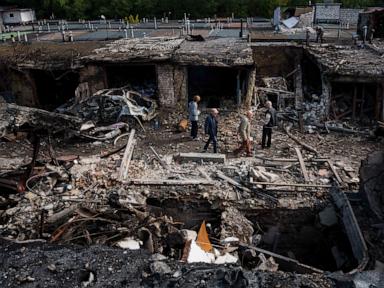
Consider what happens when a country fights for its survival against a much larger aggressor. Every barrel of oil sold above a price cap, every microchip smuggled through a third-party nation like a ghost in the machine, and every dual-use technology component that slips past customs becomes an extra month of war. It buys another shell. It pays another mercenary. It lengthens the winter.
So, when Ukrainian officials sit down to compile this list under the framework of the Graham law, they are not engaging in academic exercise. They are sketching out the coordinates for financial airstrikes.
The Graham law framework is built on a simple, ruthless premise: extraterritorial choke points. It targets not just the belligerent state, but anyone who helps keep its economic lungs inflated. It says to a bank in a neutral country: choose. Do you want access to the global dollar-dominated financial system, or do you want to process transactions for a sanctioned commodity broker?
There is no middle ground. That is the beauty and the terror of modern financial statecraft. It removes the luxury of neutrality.
Walking through the streets of Kyiv during an air raid alert teaches you something profound about time. Minutes stretch. Sound becomes directional. You learn to listen for the specific whine of a drone engine versus the heavy, concussive boom of an interceptor missile.
Now, apply that same hyper-awareness to the global supply chain.
For months, sanctions have leaked like old plumbing. Ships turned off their transponders in the dead of night, slipping into dark fleets that ferry petroleum from shadowed ports to eager buyers. Insurance policies were written by fly-by-night firms with no credit history and no fear of Western regulators. It was a game of cat and mouse played across millions of square miles of open ocean.
The upcoming presentation of the new sanctions wish list aims to shut off the lights in that game.
The targets are specific. They are not vague ideological concepts. They are maritime insurers who look the other way. They are software vendors whose industrial automation tools end up welded into the guidance systems of cruise missiles. They are family offices shielding wealth acquired through state-sanctioned monopolies.
When Ukraine places these entities under the microscope, it forces Western allies, particularly the United States, into a corner of commitment. Passing laws is easy; enforcing them requires political willpower that often fractures under the weight of rising fuel prices and inflation anxiety back home.
This is where the human element reclaims the narrative.
We often talk about geopolitics as if it were a game of chess played by gods who feel no pain. But the pieces bleed. Every month that sanctions remain porous, the war drags on. Every billion dollars of unfrozen revenue that finds its way back into the treasury of the aggressor translates directly into ruined infrastructure, displaced families, and grief that will echo through generations.
When the Ukrainian delegation hands over their dossier, they are asking a fundamental question of the democratic world: How serious are you about the rules you wrote?
The answer will not be found in speeches or joint communiqués. It will be found in the fine print of executive orders, the willingness of compliance officers to freeze multi-million-dollar accounts, and the tenacity of investigators tracking shell companies through the Cayman Islands and Cyprus.
The paper is ready. The ink is dry. Somewhere in a brightly lit room, a bureaucrat is turning the page, ready to read out names that will soon vanish from active portfolios across the globe.
The war is fought with iron and fire in the mud of the eastern steppes. But its outcome may ultimately be decided by a signature on a document in Washington, born from a desperate, calculated list compiled in Kyiv.
The pressure is building. The architecture of enforcement is tightening its bolts. And as the list is presented, the invisible walls around illicit capital begin to close in, proving that sometimes, the sharpest weapon in a modern war is the stroke of a pen that cuts off the money.