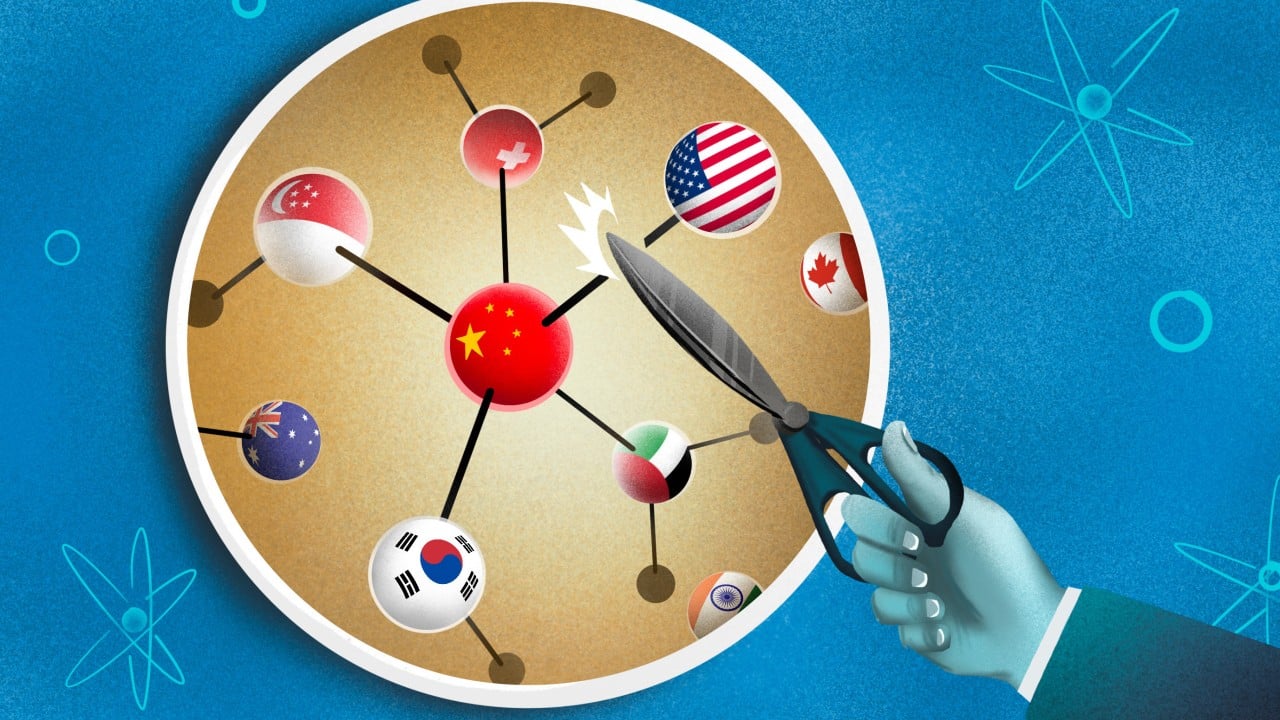
The global race for computational supremacy is entering an aggressive phase of state-directed capitalization. France’s capital injection of €1.55 billion—subdivided into a €1 billion expansion of the national quantum strategy and €550 million designated for the microelectronics sector—is a calculated counterweight to aggressive state-backed capital allocations worldwide. This sovereign intervention directly responds to the United States' recent deployment of $2 billion in equity stakes across nine domestic quantum entities.
Evaluating the structural efficacy of this funding requires moving past broad geopolitical assertions. Instead, the initiative must be assessed through industrial logic: the economic mechanics of state-backed deep-tech ecosystems, the hardware realities of fault-tolerant quantum architectures, and the structural dependencies tying quantum software to physical microelectronics manufacturing.
The Economics of State-Directed Deep Tech: The Champion Production Function
Deep-tech innovation operates under an inverted risk profile relative to traditional enterprise software. Early-stage quantum development requires immense upfront capital expenditures ($\text{CapEx}$), suffers from prolonged horizons before reaching product-market fit, and faces binary technical execution risks. Under standard market conditions, private venture capital is structurally disincentivized from funding these foundational phases due to fund lifecycle constraints.
Sovereign funding addresses this structural market failure by shifting the economic incentives. It transforms binary technical risk into managed operational execution.
+-----------------------------------------------------------------------+
|                       Sovereign Funding Engine                       |
+-----------------------------------------------------------------------+
|  [State Capital Injection] ---> [Absorption Capacity & CapEx Base]     |
|                                            |                          |
|                                            v                          |
|                               [Private Capital Co-Investment]         |
|                                            |                          |
|                                            v                          |
|                                [Milestone-Gated Competition]          |
+-----------------------------------------------------------------------+
                                             |
                                             v
+-----------------------------------------------------------------------+
|                           Industrial Output                           |
+-----------------------------------------------------------------------+
|                     [Validated Sovereign Champions]                   |
+-----------------------------------------------------------------------+
Capital Co-Investment Dynamics
Sovereign capital operates as non-dilutive financing that expands an ecosystem's absorption capacity. This injection reduces risk for private capital markets, triggering commercial investment. This mechanism is demonstrated by the French quantum hardware developer Alice & Bob, which simultaneously secured capital from the French government and NVentures, the venture capital arm of Nvidia. State capital establishes the physical infrastructure and baseline operational runway, allowing private venture funds to price asset valuations based on commercial scaling rather than existential hardware risks.
Downstream Accountability via Milestone-Gated Competition
Unconditional public grants frequently insulate companies from market realities, creating inefficient monopolies. France addresses this structural risk through the PROQCIMA framework, administered by the Ministry of the Armed Forces. The framework functions as an algorithmic tournament:
- Initial Phase: Five domestic quantum hardware developers are selected for baseline capitalization.
- Year Four Bottleneck: The field is narrowed to three firms based on strict hardware benchmarks, primarily logical qubit fidelity.
- Year Eight Down-select: Funding concentrates entirely onto the top two remaining entities.
This framework prevents permanent reliance on state aid. By forcing competing firms to hit explicit milestones to avoid elimination, the state creates an artificial market. This structure drives operational discipline and ensures public capital concentrates behind the most viable technical architectures.
Deconstructing the Error-Correction Bottleneck: The Cat Qubit Hypothesis
The core bottleneck in quantum computing is not scaling the raw quantity of physical qubits, but managing environmental decoherence. Physical qubits are highly susceptible to noise, which introduces two distinct failure modes: bit-flips and phase-flips.
The standard approach to building a Noisy Intermediate-Scale Quantum (NISQ) system requires an exponential overhead of physical qubits to construct a single error-corrected logical qubit. For traditional superconducting architectures, this ratio frequently exceeds $10,000:1$. This overhead creates massive physical challenges for cryogenic infrastructure and wiring, making early commercialization highly impractical.
The French quantum strategy relies heavily on the "cat qubit" architecture pioneered by Alice & Bob and later adopted by other global platforms. This approach introduces an asymmetrical error-correction architecture that alters the fundamental cost function of quantum scaling.
Asymmetrical Noise Elimination
Cat qubits utilize continuous-variable states within superconducting cavities to naturally suppress bit-flips at the hardware level. By embedding quantum information into states that are topologically protected against phase decay, the system reduces a two-dimensional error tracking problem to a one-dimensional problem:
$$\text{Total Error} = \gamma_{\text{bit-flip}} + \gamma_{\text{phase-flip}}$$
Because the physical architecture forces $\gamma_{\text{bit-flip}} \to 0$, the software layer only needs to correct for phase-flips.
Resource Requirement Reductions
Eliminating one axis of quantum errors alters the physical-to-logical qubit ratio. Recent peer-reviewed validations from the French National Institute for Research in Digital Science and Technology (Inria) indicate that cat qubit architectures can achieve fault tolerance with up to a 200-fold reduction in physical hardware requirements compared to symmetrical superconducting topologies.
Consequently, the PROQCIMA mandate of delivering a 128-logical-qubit system by 2030, followed by an industrial-scale 2,048-logical-qubit platform by 2035, moves from an unrealistic engineering goal to a viable development path. The required physical footprint shrinks from millions of physical components to tens of thousands.
The Co-Dependency Matrix: Why Quantum Fails Without Microelectronics
A common mistake in technology policy is treating quantum computing and semiconductor manufacturing as separate industries. Quantum processors do not operate in isolation. They are part of a heterogeneous computing matrix that depends on advanced classical microelectronics for control loops, signal processing, and error-correction execution.
+-----------------------------------------------------------------------+
|                    Heterogeneous Computing Matrix                     |
+-----------------------------------------------------------------------+
|                                                                       |
|   +--------------------------+         +--------------------------+   |
|   |   Superconducting QPU    | <=====> | Cryogenic Control Chips  |   |
|   |  (Sub-Kelvin Environment)|         |   (ASICs / Gas-Phase)    |   |
|   +--------------------------+         +--------------------------+   |
|                                                      ^                |
|                                                      |                |
|                                                      v                |
|                                        +--------------------------+   |
|                                        | Classical Interconnect   |   |
|                                        |  (Silicon Photonics)     |   |
|                                        +--------------------------+   |
|                                                      ^                |
|                                                      |                |
|                                                      v                |
|                                        +--------------------------+   |
|                                        | Ultra-Low Latency FPGA   |   |
|                                        | (Real-Time Translation)  |   |
|                                        +--------------------------+   |
|                                                                       |
+-----------------------------------------------------------------------+
France's allocation of €550 million to microelectronics is a necessary structural link to its €1 billion quantum investment. Without advanced local chip design and fabrication capabilities, the quantum strategy would face a severe supply chain bottleneck.
Cryogenic Control Infrastructure
Superconducting and spin-qubit processors operate inside dilution refrigerators at sub-Kelvin temperatures. Traditional architectures route individual coaxial cables from room-temperature classical controllers to each physical qubit inside the refrigerator. As systems scale toward thousands of physical qubits, this approach fails due to thermal leakage and physical space constraints.
Resolving this bottleneck requires placing classical complementary metal-oxide-semiconductor (CMOS) control chips inside the cryogenic environment. These custom Application-Specific Integrated Circuits (ASICs) must execute real-time error-correction loops while consuming minimal power to avoid warming the quantum processor. The €550 million microelectronics fund provides the specialized capital required to design these custom cryogenic mixed-signal circuits.
Interconnects and Silicon Photonics
Routing high-bandwidth, low-latency data between the quantum processor and classical acceleration layers requires custom silicon photonics. Photonic interconnects enable high-speed data transmission without introducing thermal noise into the quantum system. France’s capital allocation targets these exact micro-optical interfaces, establishing the foundational manufacturing capabilities required to package quantum processing units (QPUs) alongside classical central processing units (CPUs) and graphics processing units (GPUs).
Systemic Vulnerabilities within the French Sovereign Blueprint
While France’s €1.55 billion deployment is structurally sound, it operates within strict macroeconomic and technical limits. Identifying these constraints is essential to evaluating its long-term viability.
- The Talent Supply Bottleneck: Capital is elastic; highly specialized human labor is highly inelastic. Developing fault-tolerant quantum computers requires deep expertise across microwave engineering, cryogenic material science, quantum error-correction theory, and advanced semiconductor lithography. If France cannot expand its talent pipeline or attract international engineers, this capital injection will hit diminishing returns, inflating local wages rather than speeding up development timelines.
- Geopolitical Scale Disparities: While €1.55 billion is a significant commitment for a single European nation, it is small compared to the total capital deployed by global rivals. The United States’ $2 billion direct equity program, paired with the multi-billion-dollar R&D budgets of hyperscalers like Amazon, Google, and Microsoft, creates an asymmetrical competitive landscape. Furthermore, China's state-directed capital deployment into massive national laboratories operates on a larger scale. France cannot win a brute-force capital battle; its success depends entirely on maintaining a structural efficiency advantage through targeted architectural bets like cat qubits.
- Fabrication Dependencies: France possesses strong chip-design capabilities and specialized manufacturing through facilities like STMicroelectronics in Crolles. However, it lacks domestic, cutting-edge extreme ultraviolet (EUV) lithography foundries capable of sub-3nm production. If the control architectures for future quantum systems require advanced node classical chips, France will remain dependent on foreign foundries like TSMC or Intel, leaving its tech stack vulnerable to global supply chain disruptions.
Strategic Action Plan
To maximize the return on this €1.55 billion capital deployment, French industrial policymakers and ecosystem executives must execute a highly targeted operational playbook.
First, policymakers should adjust the PROQCIMA framework to mandate open API architectures for all state-funded hardware prototypes. This ensures that regardless of which hardware architecture wins the down-selection process, the domestic software ecosystem can develop applications on a unified abstraction layer. This open approach prevents technical fragmentation and accelerates commercial adoption across key industries like cryptography, logistics, and molecular discovery.
Second, the €550 million microelectronics allocation must be prioritized toward packaging technologies rather than raw wafer fabrication. Developing advanced multi-chip module (MCM) packaging that integrates cryogenic ASICs, silicon photonics, and superconducting QPUs into a single system will yield a higher strategic advantage than attempting to compete with global foundries on generic, small-node logic chips.
Finally, France must leverage its position within the EuroHPC joint undertaking to position its emerging quantum processors as the primary acceleration layer for Europe’s supercomputing network. By embedding French-designed quantum prototypes directly into existing continental high-performance computing centers, the state can secure an immediate, high-volume institutional customer base. This integration will provide the continuous operational telemetry required to refine and stabilize fault-tolerant systems ahead of the 2032 industrialization deadline.