The Arctic is no longer a frozen moat. For generations, Canadian defense policy treated the polar north as an impassable barrier of pack ice, permafrost, and sheer isolation. That strategic luxury has evaporated. While Ottawa debates procurement budgets in comfortable committee rooms, great power competition has crept directly into the Northwest Passage. Russia is reopening Soviet-era installations along its northern coast at an alarming pace, and Beijing has formally branded itself a near-Arctic state while deploying dual-use research vessels across northern waters.
Canada’s foreign minister recently acknowledged that threats to the northern sovereign perimeter have shifted significantly. That official admission understates a profound structural failure. The reality on the ground and in the water is far more dangerous. Canada faces an operational vacuum in the high north, characterized by aging patrol fleets, sparse communications infrastructure, and a defensive posture designed for the Cold War rather than the multi-domain friction of the present decade.
The Sovereignty Myth of the Northwest Passage
International law treats the Northwest Passage with contested ambiguity. Washington views the winding waterways through the Canadian archipelago as an international strait open to transit passage for global shipping. Ottawa insists these waters constitute internal Canadian sovereignty. For decades, this diplomatic disagreement mattered little because thick multi-year ice rendered the route commercially unviable and practically impassable without heavy nuclear icebreakers.
Those days are gone. Accelerated warming has turned the Arctic Ocean into an increasingly accessible maritime highway. Commercial cargo ships, resource extraction tankers, and foreign research vessels now probe these northern thresholds with growing frequency.
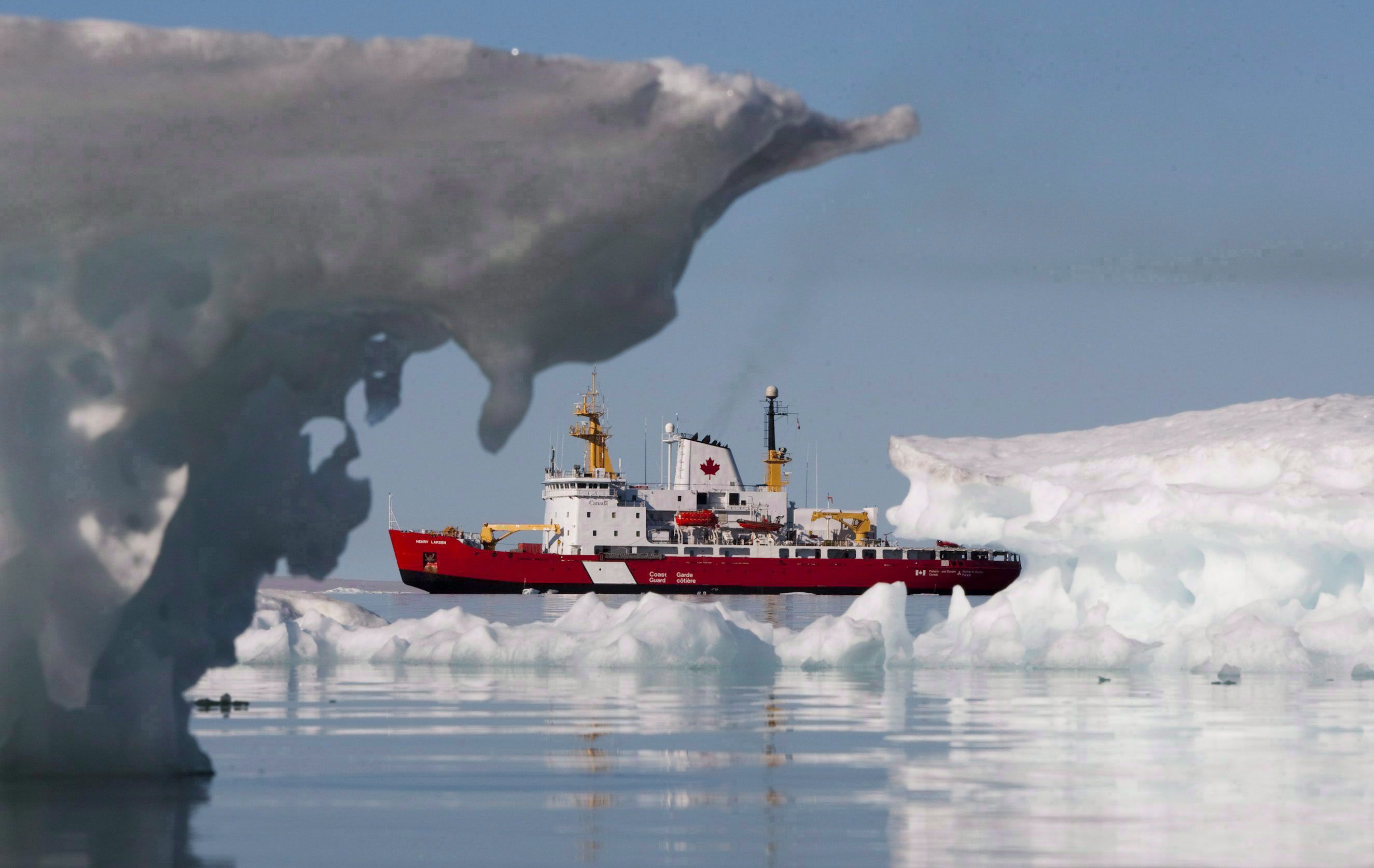
Canada cannot police what it cannot reach. The Royal Canadian Navy possesses surface combatants optimized for open ocean blue-water warfare, but these hulls lack the double-hulled ice-strengthening required to operate safely in heavy polar pack ice during shoulder seasons. The handful of Arctic and Offshore Patrol Ships brought into service suffer from well-documented operational limitations, slower speeds, and restricted winter capabilities. When a foreign vessel enters Canadian claimed waters without prior notification, the response time from southern bases measured in days or weeks underscores an administrative illusion of control.
Dual-Use Ambitions and Polar Infrastructure
The strategic calculus in the polar north has transformed because infrastructure now serves dual purposes. When foreign actors build deep-water ports, satellite tracking stations, or advanced airstrips along high-latitude coastlines, civilian scientific utility masks immediate military value.
Moscow's northern military district has consolidated dozens of reinforced bases equipped with coastal defense missile systems, electronic warfare units, and dedicated Arctic brigades. This militarization of the Eurasian Arctic creates a powerful operational asymmetry. Russia can project power, monitor maritime traffic, and enforce its own administrative rules along the Northern Sea Route with absolute confidence.
Across the polar cap, Beijing’s long-term strategy relies heavily on the Polar Silk Road initiative. By investing in resource extraction projects, satellite ground stations in remote northern territories, and heavy icebreaker construction, Beijing secures both raw materials and strategic footholds. These investments give external powers persistent operational awareness across North America's back door.
Canada’s northern infrastructure remains threadbare. Inuvik and Iqaluit possess limited deep-water docking capabilities. Communications rely heavily on aging satellite constellations that experience frequent degradation at high latitudes, leaving vast blind spots where radar surveillance fails to detect low-flying threats or surface vessels running dark.
The Cost of Deferred Maintenance
Decades of bipartisan complacency in southern capitals fostered an institutional culture that viewed the Arctic exclusively through an environmental or Indigenous lens, entirely divorcing geography from geopolitics. Sovereignty requires persistent presence. Presence requires sustained capital expenditure, resilient supply chains, and hardened logistics networks capable of supporting personnel in sub-zero environments where equipment failure spells immediate disaster.
Proposals to upgrade continental defense through NORAD modernization focus heavily on aerospace warning systems, yet they routinely underfund maritime domain awareness. Detecting a stealth cruise missile or an advanced drone over the Beaufort Sea is impossible if the sensor network beneath it is intermittent or nonexistent.
The human element compounds the deficit. The Canadian Rangers, local Indigenous volunteers who serve as the eyes and ears of the north, perform heroic reconnaissance work with minimal modern kit. They operate snowmobiles and small boats across vast territories without the secure digital communications, autonomous surveillance drones, or rapid-response transport required to counter modern state-sponsored incursions. Relying on local militias to deter hybrid warfare operations in an era of great power rivalry is an abdication of state responsibility.
Beyond the Rhetoric of Renewal
Transforming the northern posture requires abandoning incrementalism. Patching together legacy procurement programs that take twenty years from concept to delivery will ensure Canada remains permanently a decade behind shifting threats.
A serious defense strategy must begin with absolute maritime dominance in domestic waters. That means committing to a heavy, continuous icebreaker fleet capable of year-round operations, not just summer science missions. It requires establishing forward-operating logistics hubs with permanent fuel depots, sheltered dry docks, and redundant satellite communication relays located far above the 60th parallel. It demands integration with allied partners who share common security concerns, while maintaining strict sovereign command over Canadian territory.
The ice is retreating, and the window to secure the northern frontier is closing with it. Pretending that diplomatic statements substitute for hard power leaves a vast, resource-rich continent dangerously exposed at its most vulnerable edge.