The WhatsApp notification chimes at 3:14 AM. It is a digital ghost, a robotic collection agency server programmed to strike when human defenses are at their lowest. In a dimly lit apartment in the Flores neighborhood of Buenos Aires, the screen illuminates a face mapped with exhaustion.
Another interest rate hike. Another penalty fee.
This is the sound of modern economic survival in Argentina. It is not the dramatic crash of a stock market ticker or the theatrical shouting of politicians on television. It is quiet. It is internal. It is the rhythmic, suffocating heartbeat of a population drowning in the mathematics of survival.
For decades, international observers have viewed Argentina through the lens of macroeconomics. They talk of sovereign defaults, IMF negotiations, and monthly inflation indices that look like typographical errors to the rest of the world. But numbers on a spreadsheet do not feel panic. People do.
To understand how a country transitions from a nation of proud workers to a society functioning on borrowed time, one must look past the central bank. You have to look at the grocery receipt. You have to look at the plastic cards resting in millions of wallets, transforming from tools of convenience into instruments of financial captivity.
The Mirage of the Plastic Lifeline
Consider a hypothetical citizen named Elena. She is not a statistic; she is a composite of a thousand voices echoing through the suburbs of Córdoba and the high-rises of the capital. Elena is a primary school teacher. She has a degree, a stable job, and a mid-tier credit card issued by a reputable bank.
Three years ago, Elena used her card for major purchases. A refrigerator. A flight to visit family. Today, she uses it to buy milk, cooking oil, and pain relievers.
This shift is where the trap snaps shut. When a society begins using credit not to acquire assets, but to bridge the gap between yesterday's wages and today's cost of living, the economic ecosystem enters a terminal phase. The technical term for this is the financialization of consumption. The human term is desperation.
Imagine walking up a downward-moving escalator. As long as you sprint, you stay in place. If you pause to breathe, you slide backward. In Argentina, the escalator is moving at supersonic speed. When inflation hovers in the triple digits, money loses its function as a store of value. It becomes a hot potato. You must spend it the hour you receive it, or watch its purchasing power evaporate before your eyes.
But wages do not move with the same velocity. They crawl.
When the salary runs out on the tenth day of the month, the credit card ceases to be a luxury. It becomes the only thing keeping the refrigerator full. Elena swipes the card knowing she cannot pay the full balance at the end of the month. She tells herself she will pay the minimum.
That minimum payment is a deal with a very patient devil.
The Geometry of the Spiral
The math of a rolling debt spiral in a high-inflation environment is counterintuitive, cruel, and nearly impossible for the human brain to naturally calculate.
When you pay only the minimum balance on a credit card in a stable economy, you incur a penalty interest rate. In a hyper-inflationary environment, that interest rate is compounded by macroeconomic risk premiums. The annual nominal rate can easily surpass 100 or 150 percent.
Let us break down the anatomy of this arithmetic. If you owe 100,000 pesos and can only pay a minimum that barely covers the newly accrued interest, the principal remains untouched. The following month, you are charged interest on the interest.
Within six months, the original cost of a week's groceries morphs into a sum equivalent to a luxury television. Within a year, it resembles a small fortune.
[Month 1: Grocery Purchase] ---> [Month 2: Minimum Payment Paid]
                                            |
                                            v
[Month 4: Debt Multiplies]  <--- [Month 3: Compound Interest Added]
Then comes the secondary trap: the informal lenders.
When the bank finally cuts off the credit line, when the plastic is declined at the supermarket checkout, the narrative does not stop. People still need to eat. This is where the unregulated financial underworld thrives.
Neighborhood loan sharks, unregulated digital fintech apps, and predatory payroll lenders step into the vacuum. They do not require credit checks. They do not ask for pay stubs. They offer instant cash via a smartphone app.
The terms? Weekly interest rates that would make a medieval monarch blush.
The psychological toll of this transition is devastating. Debt changes its form. It ceases to be a contractual obligation and becomes an existential state of being. It alters the biochemistry of the human brain. Chronic financial stress floods the system with cortisol, impairing long-term decision-making. You stop planning for next year because you are terrified of next Tuesday.
The Ghost in the Living Room
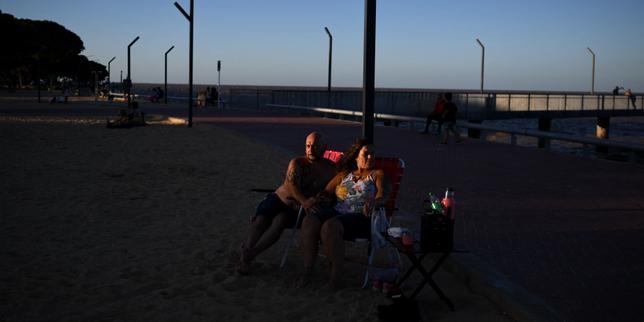
Walk through the commercial districts of Buenos Aires and you will see a strange paradox. The restaurants are often full. The theaters in Calle Corrientes still draw crowds. To the casual tourist, the city feels vibrant, almost defiant in its prosperity.
This is an economic illusion born of trauma.
When people realize their savings will be inflated into worthlessness by next month, and when they realize they can never save enough to buy a home or a car, their behavior shifts. They spend what they have immediately. They buy experiences. They buy dinners. They buy temporary escapes.
But behind the closed doors of those charming, European-style apartments, the conversation changes. Couples argue not about infidelity or ambition, but about the electricity bill. Parents lie awake wondering if the school uniform can be patched one more time.
The stigma of debt acts as a powerful silencer. In Argentine culture, middle-class identity is fiercely guarded. To admit that you can no longer afford the basic markers of that life—therapy, a weekend barbecue, private health insurance—is an admission of systemic failure. So, people suffer in isolation.
They hide the collection notices. They screen their phone calls. They experience sudden, unexplained panic attacks while standing in line at the bakery, staring at a price list that was updated twice in the same week.
The crisis is no longer just financial; it is a public health emergency written in prescriptions for clonazepam and sleepless nights. The country is running on a deficit of peace.
The Structural Illusion of Choice
It is easy for detached commentators to view this situation and preach fiscal discipline. They suggest budgeting apps. They recommend cutting out gourmet coffee. They write columns about living within one's means.
This advice is a luxury of stable currencies.
How do you budget when the price of public transport rises by 40 percent overnight? How do you practice fiscal discipline when your child’s medication doubles in price between the time you leave work and the time you reach the pharmacy?
The traditional economic textbooks assume rational actors making choices in a predictable environment. Argentina has rendered those textbooks obsolete. Here, the rational choice is often to take on debt today to buy goods that will be unaffordable tomorrow. It is a calculated gamble against time, and the house always wins.
The consequence is a profound fracturing of the social contract. When hard work, education, and steady employment no longer guarantee basic physical security, the foundational myth of a meritocratic society crumbles. The youth look across the ocean, planning migrations to Madrid or Miami. The elderly look at their pensions and realize that a lifetime of contributions has been reduced to the price of a few bags of flour.
Beyond the Ledger
The sun rises over the Rio de la Plata, casting a golden hue over a city waking up to another day of economic gymnastics.
Elena gets ready for school. She will teach her students about history, about the glorious past of a nation that was once one of the wealthiest on earth. She will smile, maintain order, and project an aura of stability.
But her phone rests in her purse, a heavy, silent weight.
She knows that at some point today, the screen will light up again. The automated messages will return. The balance will grow.
The true cost of Argentina’s economic volatility cannot be measured by the value of the US dollar on the black market, nor can it be captured by the latest decree from the presidential palace. It is measured in the quiet desperation of a population that has traded its future for the survival of the current afternoon.
The spiral continues to spin, turning silently, collecting its interest in human spirit.