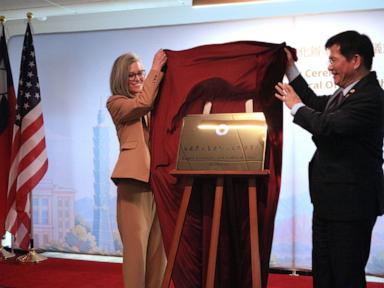
Arizona has officially welcomed a new Taiwan representative office, signaling a direct diplomatic and economic push that brushes aside sharp warnings from Beijing. This development underscores a deepening partnership between the desert state and the self-governing island, driven largely by massive semiconductor investments and high-stakes technological supply chains.
The arrival of the Taipei Economic and Cultural Representative Office in Phoenix marks a notable milestone in subnational diplomacy. Local leaders view the move as a practical necessity for managing billions of dollars in industrial projects, particularly the massive fabrication plants rising in the Phoenix metropolitan area. Beijing, which views Taiwan as part of its territory, routinely condemns official exchanges between foreign governments and Taipei, urging partners to honor existing diplomatic frameworks. Yet, Arizona officials chose to prioritize local economic growth and international trade ties over warnings from across the Pacific.
The Silicon Anchor Behind the Expansion
You cannot understand this diplomatic friction without looking at the physical dirt being moved in North Phoenix. Semiconductor manufacturing has turned the American Southwest into a critical node for global technology. Taiwan Semiconductor Manufacturing Company is pouring tens of billions of dollars into regional facilities, aiming to secure advanced chip production on American soil.
When a multi-national corporate presence of this magnitude takes root, administrative support must follow. Engineers, executives, logistics coordinators, and legal teams move back and forth across the Pacific constantly. A local representative office cuts through bureaucratic red tape, handling visas, trade documentation, and cultural integration for the influx of technical talent.
State policymakers recognized that managing a relationship of this scale requires more than occasional trade delegations. It demands permanent on-the-ground representation. While federal authorities handle foreign policy in Washington, individual states increasingly flex their economic muscles to secure critical industries. Arizona simply decided that the immediate benefit of a secure technological supply chain outweighed the diplomatic friction with Beijing.
Geopolitical Ripples at the State Level
Foreign policy is traditionally the exclusive domain of national capitals. State capitals like Phoenix usually focus on water rights, state taxes, and highway maintenance. That traditional division of labor is eroding.
As global supply chains fracture and nations race for technological dominance, subnational governments find themselves on the front lines. Governors and mayors now routinely negotiate directly with foreign entities to secure factories, supply agreements, and foreign direct investment. This trend puts local leaders in the awkward position of navigating complex international disputes that they have little training or constitutional authority to resolve.
When
Arizona Defies Beijing With Taiwan Office Strategy
news, business
polytope
Geopolitics rarely unfolds with dramatic explosions. Instead, it happens quietly in state legislative offices, corporate boardrooms, and trade delegations thousands of miles away from traditional capitals. When Arizona decided to establish a formal Taiwanese representative office, local politicians largely framed it as an economic victory. After all, the state has transformed into a massive semiconductor manufacturing hub. Billions of dollars in foreign direct investment from firms like Taiwan Semiconductor Manufacturing Company changed the local economy overnight.
Yet, Beijing viewed the move differently. Warnings were issued. Diplomatic channels buzzed with standard objections regarding sovereignty and diplomatic norms. Arizona leadership ignored the warnings.
This clash reveals a fundamental shift in modern statecraft. Subnational diplomacy is bypassing traditional federal bottlenecks. Governors and state lawmakers are no longer waiting for permission from national foreign ministries to secure their economic futures.
The Semiconductor Anchor
Geography dictates much of this story. Phoenix and its surrounding suburbs became the epicenter of an American manufacturing renaissance. Supply chain vulnerabilities exposed during the pandemic forced a complete rethinking of microchip dependency. If the United States wanted secure access to advanced processors, domestic fabrication plants were non-negotiable.
TSMC broke ground on massive facilities in north Phoenix. Billions poured into concrete, specialized machinery, and engineering infrastructure. Thousands of Taiwanese engineers and executives relocated to the American Southwest. Cultural enclaves expanded. Taiwanese restaurants, grocery stores, and community groups sprouted across the desert landscape.
A diaspora requires administrative support. Consular services, visa processing, commercial dispute resolution, and cultural liaison work cannot be handled efficiently from distant embassies on the East Coast. Establishing a physical representative office in Phoenix was a logistical necessity for Taiwan. For Arizona, facilitating that office was the cost of doing business with its most important industrial partner.
Diplomatic protocols dictate that only national governments maintain official embassies. Taiwan operates under a unique framework globally, using Taipei Economic and Cultural Representative Offices to manage relations. Beijing opposes any official recognition or semi-official presence that grants Taiwan international space.
When the warning arrived from Chinese diplomatic representatives, state officials faced a choice. Yield to foreign pressure and jeopardize a fragile, multi-billion-dollar industrial pipeline, or push forward and accept the diplomatic friction.
Economic gravity won.
State officials recognized that national security arguments regarding microchips superseded traditional diplomatic etiquette managed by foreign capitals. When a local economy depends on foreign technology transfers worth a small fortune, local politicians will protect those supply chains regardless of geopolitical turbulence.
Subnational Statecraft
State-level diplomacy is expanding rapidly. Governors routinely travel to international trade hubs to court investment. They sign memoranda of understanding with foreign regions, provinces, and economic zones.
This decentralization creates new headaches for federal foreign policy planners. A unified national stance on foreign relations becomes difficult to maintain when individual states forge independent economic alliances.
Arizona is not alone in this trajectory. Several other states maintain robust, de facto diplomatic ties with Taiwan, focusing heavily on agricultural exports, educational exchanges, and technology partnerships. However, the scale of Arizona's semiconductor integration raises the stakes significantly. Semiconductors are the oil of the twenty-first century. Control over their production dictates global economic power.
Beijing understands this reality. By warning Arizona, the central government in China attempted to draw a hard line against the normalization of subnational engagements with Taiwan. The failure of that warning signals a new era. Local leaders are calculating that economic self-interest outweighs the threat of symbolic retaliation.
The Economic Realities and Risks
Unchecked optimism masks the underlying structural risks of this strategy. Rapid industrial expansion places immense strain on local resources. Water availability in the Arizona desert remains a persistent, existential concern. Chip manufacturing consumes staggering amounts of ultra-pure water and electricity.
Local infrastructure struggles to keep pace with population inflows. Housing prices have climbed, pricing out longtime residents. The social contract between local communities and incoming multinational corporations frays when the economic benefits are unevenly distributed.
Furthermore, geopolitical volatility introduces constant anxiety into corporate boardrooms. If tensions across the Taiwan Strait escalate into active military conflict, the physical security of personnel and facilities in both Taiwan and Arizona faces immediate peril. Supply chains could fracture overnight. Corporate insurance policies and risk management frameworks can only absorb so much systemic shock.
State lawmakers and economic development agencies rarely discuss these worst-case scenarios. Their mandate is quarterly growth, job creation numbers, and ribbon-cutting ceremonies. Long-term geopolitical exposure is treated as a federal problem, even as local actions directly provoke international friction.
The Broader Global Ripple
The precedent set in the American Southwest reverberates globally. Other regional governments watch to see whether defying great power pressure carries unbearable economic costs. If Arizona successfully maintains its commercial and diplomatic bridge to Taiwan without suffering catastrophic retaliation, other states and provinces will follow suit.
Diplomacy is descending from the clouds of national capitals down to the gritty realities of municipal and state governance. National borders still matter on paper, but capital, technology, and talent flow through alternative channels.
The warning from Beijing was clear. Arizona's response was equally clear. In the modern contest for technological supremacy, local economic survival trumps distant ideological demands, reshaping how international relations function on the ground.