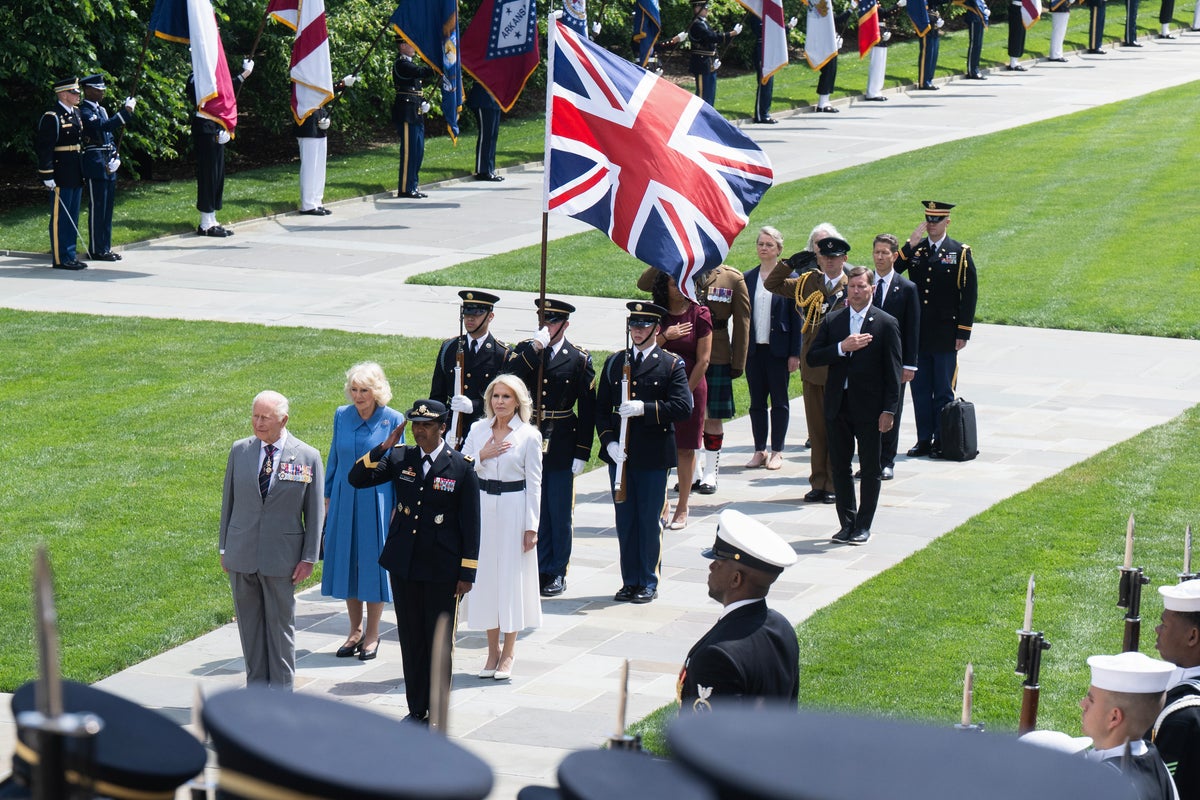
Protocol is the invisible glue that holds international relations together. When it works, you don't notice it. When it fails, it’s all anyone talks about. King Charles III just finished his high-stakes visit to the United States, a trip designed to solidify the "Special Relationship" in a post-Brexit, 2026 geopolitical climate. Everything went smooth until the final day at Arlington National Cemetery. A small, technical error during the wreath-laying ceremony turned what should've been a somber moment of respect into a frantic cleanup job for British and American diplomats.
If you think a misplaced step or a late cue doesn't matter, you haven't studied history. Diplomatic blunders at Arlington are rare because the site is sacred. It's the highest ground of American sacrifice. Usually, the Old Guard—the 3rd U.S. Infantry Regiment—runs these events with the precision of a Swiss watch. But a timing mismatch between the Royal entourage and the military honor guard led to a visible moment of confusion that left the King standing alone, waiting for a cue that didn't come.
It wasn't a catastrophe. Nobody’s declaring war over it. Still, the optics were rough. In the world of high-level state visits, optics are the only thing that actually matters.
Why the Arlington Ceremony Went Wrong
The ceremony at the Tomb of the Unknown Soldier is governed by a strict, minute-by-minute script. You don't just walk up and drop flowers. Every heel click and every breath is rehearsed. The problem started when the King’s motorcade arrived roughly three minutes ahead of the scheduled "sync point."
In the real world, being early is a virtue. In diplomacy, it’s a nightmare. The military transition wasn't ready. The commander of the relief was still in mid-process, and the King was ushered toward the carpet before the ceremonial "mark" had been cleared. You could see the hesitation on the King’s face. He’s a man who has spent seven decades mastering the art of standing in the right place. To see him looking around for guidance was a jarring departure from the usual royal polish.
The Breakdown of Communication
State visits involve two massive bureaucracies trying to dance together. You have the State Department’s Office of the Chief of Protocol and the Buckingham Palace Master of the Household’s department. They use different radio frequencies, different jargon, and often, different expectations of "on time."
The specific error involved the "Hand of Honor." This is the moment the wreath is passed from the military aide to the visiting dignitary. Because the King arrived at the steps early, the aide was still positioning the wreath. Charles reached out, realized the wreath wasn't there, and had to pull his hand back. It was a three-second window of awkwardness. It felt like an eternity on a live global broadcast.
The Real Impact of Ceremonial Errors
Critics might say we’re overanalyzing a simple human mistake. They're wrong. These events are choreographed to project stability and mutual respect. When the choreography breaks, it suggests a lack of coordination behind the scenes.
The Arlington National Cemetery incident became a metaphor for the trip's minor frictions. Throughout the week, there were quiet whispers about trade disagreements and environmental policy misalignments. When the King stood awkwardly on those white marble steps, the media didn't see a timing error. They saw a symbol of two nations slightly out of step.
History of Diplomatic Miscues
Charles isn't the first to face a "hot mic" or a "wrong step" moment.
- The 1991 "Talking Lectern": When Queen Elizabeth II visited the White House, the lectern was set for the much taller President George H.W. Bush. All the cameras saw was a talking hat.
- The 2009 iPod Gift: President Obama gave the Queen an iPod loaded with his speeches. British tabloids had a field day calling it "tone deaf."
- The 2018 Trump Walk: President Donald Trump famously walked in front of Queen Elizabeth during a guard inspection, breaking a fundamental rule of royal etiquette.
Compared to these, the Arlington incident is mild. But the context matters. This was Charles’ first major U.S. tour since his coronation. He needed it to be flawless to prove the monarchy's continued relevance on the world stage.
How to Fix a Diplomatic Mess
The cleanup began before the King even left the cemetery grounds. The British Embassy and the Pentagon issued a joint statement within two hours. They blamed "minor logistical adjustments." That’s code for "somebody messed up the schedule."
True expertise in diplomacy isn't about avoiding mistakes. It’s about how you pivot. The King handled it with his usual stoicism. He didn't complain. He didn't look annoyed. He simply waited, took the wreath when it finally arrived, and performed the rest of the ceremony with total gravity. That’s the pro move. If you acknowledge the awkwardness, you give it life. If you ignore it, it becomes a trivia point.
Lessons for Future State Visits
Planners are likely going to change the arrival "holding area" protocols after this. The "buffer zone" between the motorcade and the actual ceremony site needs to be longer. You can't have a King sitting in a car, but you also can't have him standing on a curb waiting for a signal.
We also need better tech integration. Relying on hand signals in 2026 is absurd. There should be a haptic or digital "green light" system that ensures the dignitary and the honor guard are physically synced before anyone steps onto the ceremonial carpet.
What This Means for the Special Relationship
The "blunder" won't change policy. It won't affect the defense treaties or the intelligence sharing that keeps the U.S. and UK close. But it serves as a reminder that even the most established relationships require constant, meticulous maintenance.
The King’s visit was supposed to be a victory lap. Instead, it ended with a reminder that humans run the world, and humans make mistakes. The takeaway isn't that the relationship is failing. It’s that even a King has to wait when the timing is off.
Moving forward, expect the Palace to be even more rigid with their advance teams. They hate being the story for the wrong reasons. For the rest of us, it’s a fascinating glimpse into the high-wire act of international protocol. One wrong step, and you're the lead story on every news site in the world.
If you're following royal news or international relations, watch the footage again. Look at the transition between the arrival and the Tomb. You’ll see exactly where the coordination snapped. It’s a masterclass in why every second counts in the world of the "Special Relationship." Pay attention to the official recap videos—you'll notice they've likely edited those three seconds of hesitation right out of existence.