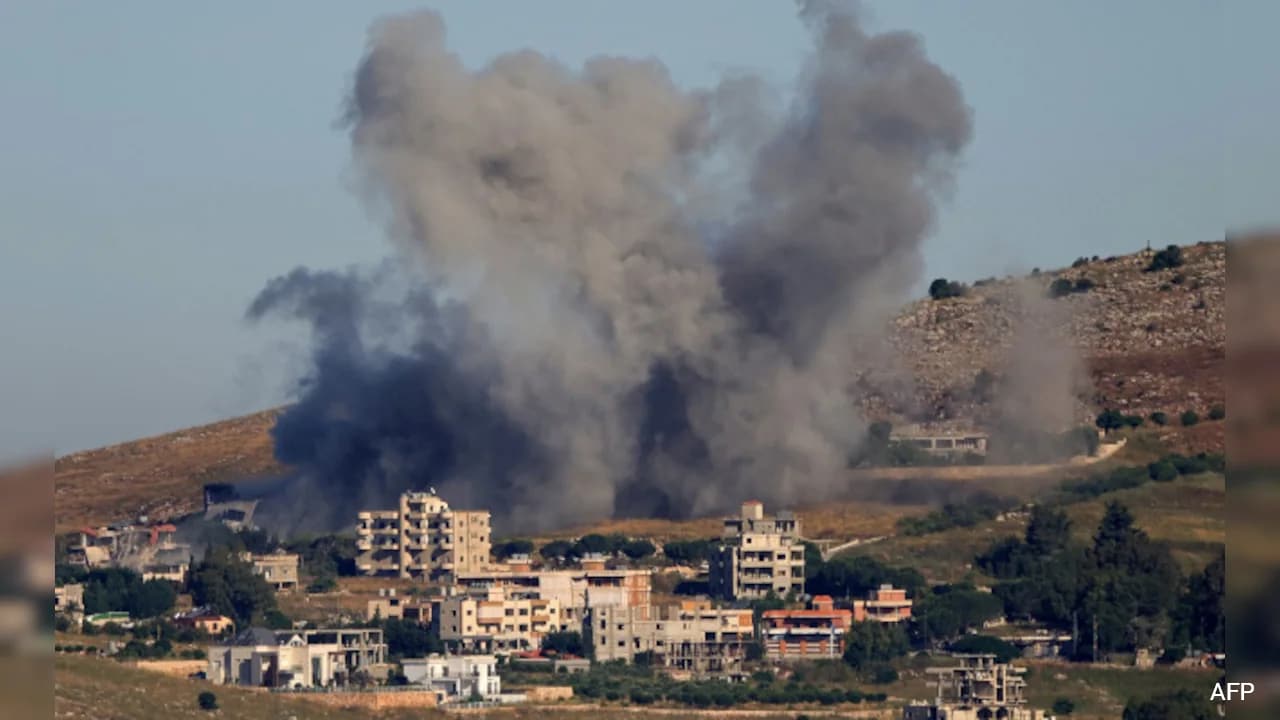
When U.S. defense officials deny that Iranian drones targeted a radar installation in Bahrain while simultaneously confirming the interception of hostile unmanned aerial vehicles (UAVs), the contradiction is operational rather than factual. In modern littoral warfare, intercepting an airborne threat prior to terminal guidance prevents definitive attribution of its exact target coordinates, creating a strategic gap between kinetic defense and public attribution.
Standard news coverage reduces these engagements to binary claims: one side alleges a strike on critical infrastructure, and the other issues a blanket denial coupled with a report of successful air defense. This framing misses the underlying mechanics of integrated air and missile defense (IAMD), the economics of asymmetric drone attrition, and the deliberate use of strategic ambiguity to manage escalation thresholds in the Persian Gulf.
The Architecture of Littoral Air Defense in Bahrain
Bahrain hosts the headquarters of the U.S. Navy’s Fifth Fleet and Naval Forces Central Command (NAVCENT), making its airspace one of the most heavily monitored and defended corridors in the Middle East. Protecting fixed, high-value assets—such as long-range early warning radars, command centers, and port facilities—requires a multi-tiered defensive architecture designed to detect, track, and neutralize threats before they enter their terminal dive phase.
The Sensor-to-Shooter Kill Chain
To understand why an interception precludes certainty regarding a target, one must examine the engagement timeline of a low-observable, slow-moving UAV:
- Detection and Classification: Ground-based phased-array radars and airborne early warning platforms identify a low-altitude radar cross-section transiting over water. At this stage, the system tracks a velocity vector and altitude profile, not a programmed waypoint.
- Track Correlation: Command and control (C2) nodes fuse data from maritime sensors (such as Aegis-equipped destroyers patrolling the Gulf) and land-based batteries to establish a fire-control solution.
- Engagement and Interception: Kinetic interceptors, directed-energy prototypes, or electronic warfare (EW) soft-kill systems engage the drone well outside the perimeter of critical base infrastructure.
Once a kinetic interceptor destroys a UAV over open water or unpopulated terrain, the physical evidence—specifically the flight control computer and non-volatile memory storing inertial navigation system (INS) or satellite waypoints—is typically fragmented or submerged. Without recovering an intact guidance module, defenders know the drone's heading at the moment of destruction, which may align with a coastline or a broad sector containing multiple military and civilian facilities. They cannot prove with forensic certainty whether the terminal waypoint was a specific radar dome, an adjacent pier, or a psychological demonstration intended to fall short.
The Strategic Utility of Ambiguity
Publicly denying that a specific radar system was targeted while confirming drone shoot-downs serves three distinct operational objectives for military planners.
Denying the Adversary Battle Damage Assessment (BDA)
In asymmetric warfare, intelligence on defensive response times and sensor blind spots is often more valuable to the attacker than physical destruction. If an adversary launches a probe and the defender publicly confirms that a specific radar array was the intended target, the attacker gains immediate validation of two variables: first, that their intelligence regarding the radar's exact coordinates and operational status is accurate; second, that their chosen flight corridor successfully triggered a defensive response along that specific azimuth. Denying the target profile forces the adversary to expend additional reconnaissance assets to verify whether their targeting data remains valid.
Escalation Control and Deterrence Signaling
Acknowledging a direct, targeted attack on strategic early-warning infrastructure crosses a political threshold that demands a proportional kinetic response. By framing the incident as a routine interception of unauthorized drones rather than a thwarted strike on a specific high-value sensor, defense officials retain escalatory flexibility. The message communicated to both domestic audiences and regional adversaries is that the defensive shield is impermeable, while simultaneously avoiding a public commitment to immediate retaliatory strikes that could trigger a wider regional conflict.
Protecting Defensive Geometry
Every time a ground-based air defense battery or naval vessel engages an incoming target, it emits distinct electromagnetic signatures. Fire-control radars illuminate the threat, revealing the location, frequency bands, and reaction latency of the defending units. Publicly linking an interception to the defense of a specific radar installation allows hostile electronic intelligence (ELINT) analysts to map which defensive batteries are assigned to protect which specific assets. Keeping the public narrative decoupled from specific infrastructure preserves operational security (OPSEC) regarding force posture and sensor coverage.
The Cost Function of Asymmetric Drone Attrition
The recurring friction over drone interceptions in the Gulf highlights a fundamental structural imbalance in modern military economics: the cost-exchange ratio between offensive unmanned systems and defensive interceptors.
Offensive Expenditure vs. Defensive Overhead
One-way attack UAVs—often built using commercial off-the-shelf (COTS) components, small internal combustion engines, and basic GNSS/INS guidance—can be manufactured and deployed at unit costs ranging from $20,000 to $50,000. Conversely, the kinetic interceptors deployed by advanced militaries to guarantee a high probability of kill ($P_k$) against aerial threats frequently cost between $500,000 and $3,000,000 per missile, depending on whether the engagement relies on short-range point defense or medium-range surface-to-air systems.
This creates an inverted economic dynamic:
- The Attacker's Advantage: Even a 0% kinetic hit rate imposes a financial penalty on the defender, depleting finite interceptor magazines that require months or years of industrial lead time to replenish.
- The Defender's Constraint: Because the physical infrastructure being protected—such as a multi-million-dollar AN/TPS-series radar or a naval command center—represents both immense capital value and irreplaceable operational capability, defenders cannot afford to let a $30,000 drone slip through. The asymmetric risk forces the defender to accept an unfavorable cost-exchange ratio every time a track enters the engagement zone.
The Shift Toward Non-Kinetic Mitigation
To correct this economic imbalance, military planners in the Fifth Fleet area of responsibility have increasingly integrated non-kinetic countermeasures into the defensive perimeter. High-power microwave (HPM) systems, directed-energy lasers, and localized GPS spoofing or command-link jamming reduce the marginal cost per engagement from hundreds of thousands of dollars to the cost of electrical power. When a drone is brought down via electronic warfare rather than a surface-to-air missile, the engagement is quieter, less visible to open-source observers, and far easier to manage within a controlled public narrative.
Evaluating Competing Information Operations
When an incident occurs in a contested maritime environment, the physical engagement is immediately followed by an information operation designed to shape regional perception. Both the state actor sponsoring the drones and the defending coalition operate under distinct incentives that dictate their public messaging.
The Attacker's Information Playbook
For an asymmetric actor using proxy forces or deniable unmanned systems, the primary objective is demonstrating reach and imposing psychological friction. Claiming that a strike targeted a high-value U.S. radar installation in Bahrain achieves several goals regardless of the physical outcome:
- Deterrence through Vulnerability: It signals to host nations in the Gulf Cooperation Council (GCC) that hosting foreign military infrastructure invites direct risk, subtly pressuring regional partners to restrict offensive operations launched from their soil.
- Domestic and Proxy Morale: Narratives of striking advanced Western sensor networks reinforce the perception of technological parity among aligned regional factions, masking the reality that the munitions were neutralized miles away from their intended objectives.
The Defender's Counter-Narrative
Conversely, the defending force must project absolute control without appearing trigger-happy or vulnerable. The precise phrasing—"denies the radar was targeted, confirms drones were shot down"—is calibrated to achieve maximum credibility. A total denial of any aerial activity is easily disproven by commercial satellite imagery, maritime Automatic Identification System (AIS) disruptions, or local acoustic reports of air defense activations. By confirming the shoot-downs while rejecting the specific target claim, officials validate the observable reality of an engagement while stripping the adversary of a strategic propaganda victory.
Operational Limitations of Current Reporting Frameworks
Analysts and practitioners evaluating these engagements must account for three blind spots inherent in open-source reporting on Gulf air defense incidents:
- Attribution Latency: Tracing a downed drone back to a specific launch point or command authority requires metallurgical analysis, circuit board serialization, and signals intelligence correlation. Initial statements issued within hours of an interception rely on preliminary radar tracks, not forensic exploitation.
- Defining "Targeted": In military terminology, a facility is only definitively targeted if a munition is locked onto its coordinates or actively homing on its emissions. A drone flying a broad search pattern or heading toward a coastal sector containing dozens of military and industrial facilities is classified as an airspace violation or a general threat vector, not a confirmed strike on a specific sensor.
- Host-Nation Sensitivities: Public disclosures regarding intercepts over or near Bahrain require diplomatic coordination with the host government. Overstating the threat to specific domestic infrastructure can disrupt commercial aviation, maritime insurance rates in the Persian Gulf, and local economic stability.
Strategic Execution for Defense and Intelligence Analysts
To accurately assess future incidents involving drone interceptions and contested target claims in the Persian Gulf, analysts should stop treating official denials and proxy claims as mutually exclusive truth statements. Instead, evaluate every engagement through a three-step verification protocol:
- Monitor Maritime and Aviation Advisories: Cross-reference official defense statements against Notice to Airmen (NOTAM) updates and Maritime Administration (MARAD) alerts in the central Gulf. Temporary altitude restrictions or sudden diversions around Bahrain indicate active kinetic or electronic engagement corridors, confirming the scale of the response regardless of public framing.
- Track Interceptor Expenditure Signatures: Distinguish between kinetic and non-kinetic engagements by analyzing post-incident debris reports and acoustic signatures. Reliance on high-cost surface-to-air missiles signals an acute, high-confidence threat vector, whereas silent attrition points to mature electronic warfare dominance.
- Separate Vector from Intent: Treat claims of specific infrastructure targeting as unverified information operations unless supported by recovered guidance hardware or multi-axis saturation attacks. Until an adversary demonstrates the ability to overwhelm the outer sensor layer, strategic ambiguity will remain the primary tool for managing escalation without ceding operational control.