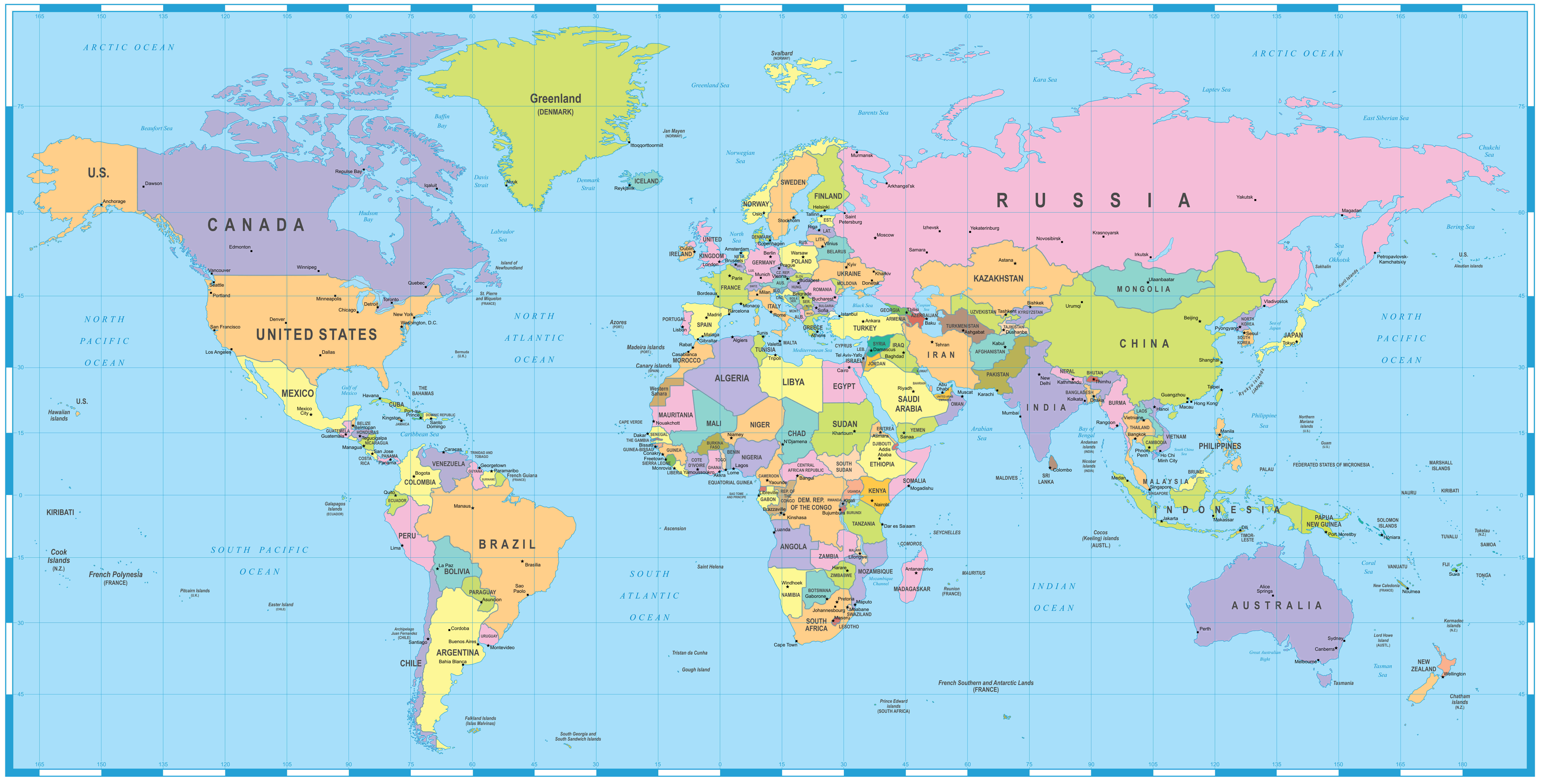
Standard aviation coverage treats an airspace closure between India and Pakistan as a symmetric tit-for-tat dispute: Country A bans Country B's flights, and Country B responds in kind. That framing misses the core mechanism. Geography makes reciprocity an illusion. Because Pakistani territory sits directly across the great-circle westbound corridor from northern and central India toward the Middle East, Europe, and North America, closing the Karachi and Lahore Flight Information Regions (FIRs) imposes a structural penalty on Indian operators that Indian closures of its own airspace cannot match in reverse.
The April 2025 airspace freeze—triggered after the deadly Pahalgam attack in Indian-administered Jammu and Kashmir and sustained across periodic Notice to Airmen (NOTAM) extensions into late 2026 even after the May 2025 ceasefire—demonstrates how a rolling monthly restriction functions as a low-cost instrument of asymmetric leverage. Rather than merely reciting the latest extension date or repeating general claims of "higher fuel costs," a rigorous operational analysis breaks the restriction into its legal scope, network economics, strategic trade-offs, and tactical mitigation options.
What Standard Coverage Misses About Airspace Bans
Routine news reports typically list three facts: a civil aviation body issued a fresh NOTAM extending a ban on Indian aircraft, the restriction dates back to April 2025 following heightened India–Pakistan tensions, and Indian carriers face longer routes and higher expenses. While accurate at a headline level, this reporting stops short of explaining how the restriction alters airline unit economics or why rolling extensions carry distinct operational consequences compared to an open-ended freeze.
Three analytical gaps weaken conventional reporting on the ban:
- Static framing of a rolling constraint: A series of short-horizon extensions—such as extensions running through November 24, 2026, and subsequent extensions into December 2026—keeps carriers in a state of recurring schedule contingency rather than permanent network redesign. Dispatchers cannot treat a monthly NOTAM renewal as guaranteed to end, yet locking in multi-quarter fleet adjustments carries its own capital risk if airspace reopens abruptly.
- Conflation of route distance with profit impact: Adding flight time does not affect every route equally. A 15- to 45-minute detour on a medium-haul service is a scheduling nuisance; adding up to roughly three hours on long-haul westbound flights alters aircraft rotation, crew duty limits, payload margins, and passenger connection windows.
- Misreading of reciprocal retaliation: When New Delhi closes Indian airspace to Pakistani carriers, the measure signals political resolve and restricts direct overflights from that direction, but Pakistan's primary international trunk flows toward the Gulf and Europe do not require crossing core Indian corridors the way northern Indian westbound traffic relies on Pakistani FIRs.
The Anatomy of a NOTAM Restriction
In aviation operations, an airspace closure is enforced through a Notice to Airmen (NOTAM) issued by the relevant aviation authority—in this case, the Pakistan Airports Authority (PAA) covering the Karachi (OPKR) and Lahore (OPLR) Flight Information Regions. A Flight Information Region is a defined volume of airspace within which flight information services and alerting services are provided; closing it to specific operators means those aircraft cannot file flight plans through that sovereign airspace.
The scope of such restrictions is defined by ownership, registration, operation, lease, and mission type rather than passenger nationality alone. A ban covering Indian-registered aircraft as well as aircraft owned, operated, or leased by Indian carriers or entities closes a common workaround: using a wet-leased or dry-leased airframe to bypass a national registry ban. Including military flights alongside commercial and private aircraft ensures the restriction operates simultaneously as a civil transport barrier and a security posture.
What remains known fact from aviation and diplomatic reporting is the existence of the April 2025 imposition following the Pahalgam attack, the subsequent May 2025 military escalation and ceasefire, reciprocal airspace bans, application across the Karachi and Lahore FIRs, and repeated extensions into late 2026. What constitutes an educated hypothesis—because exact carrier-by-carrier ledger figures are not publicly broken down into a single audited number—is the precise share of total airline operating margin eroded by detours versus broader macroeconomic factors such as crude oil price swings, currency movements, and competing Middle East airspace bulletins.
The Cost Function of Airspace Detours
To move beyond vague statements that "airlines lose money," airline planners evaluate an airspace detour through a cost function linking extra nautical miles to five operational variables:
- Jet fuel burn and weight penalties: Flying a non-great-circle path increases total distance flown and often requires flying at altitudes or wind profiles dictated by congested alternate corridors. Extra fuel burn raises direct operating cost immediately, and carrying heavier fuel loads on long sectors can constrain commercial payload when range limits approach aircraft performance envelopes.
- Block-hour utilization and aircraft availability: An aircraft is a high-fixed-cost asset that generates revenue only while flying or turning around for its next revenue leg. When a round-trip or long-haul rotation takes longer, daily utilization per airframe drops unless spare aircraft are held in reserve—which ties up capital and reduces fleet-wide seat capacity.
- Crew scheduling and duty-time rules: Flight deck and cabin crews are governed by strict flight-time and duty-time limits. Longer sector times can push a crew past single-day duty limits, requiring additional crew pairings, positioning flights, or layover hotel nights, which magnifies cost per block hour beyond fuel alone.
- Connection integrity and schedule reliability: Longer airborne times increase exposure to en-route weather, air traffic flow management delays, and hub bank misconnects. Even small schedule slippages ripple across connecting passenger banks at hub airports.
- Overflight fee savings versus detour cost: Bypassing a country's airspace eliminates paying that state's en-route air navigation charges for transiting its FIRs. In commercial aviation economics, however, saved overflight fees are typically small relative to the cost of burning extra fuel and tying up aircraft and crew hours on a longer route.
Consider a practical example from network planning. Suppose a widebody aircraft operating out of northern India flies westbound toward Europe or North America. Routing around restricted airspace forces the flight south or along alternative corridors, adding flight time—up to roughly three hours on affected long-haul services. That single extension does not merely add three hours of fuel; it can shift an arrival out of an optimal morning slot at a European hub, break downstream return timing, and force a carrier to choose between absorbing higher unit costs or trimming frequency on marginal days of the week.
Why Geopolitics Keeps the Ban Alive Beyond a Ceasefire
A common assumption is that once active military hostilities end—such as after the May 2025 ceasefire following the four-day clash—airspace restrictions should quickly normalize. In practice, airspace bans operate on a different political clock than a ceasefire.
A ceasefire halts kinetic fire, often under intense diplomatic or international pressure. Airspace closure, by contrast, is a reversible administrative lever controlled domestically via NOTAMs. Extending it month by month allows a government to signal ongoing firmness over unresolved grievances—including disputes tied to Kashmir and broader bilateral friction such as the Indus Waters Treaty tensions cited in regional reporting—without escalating back to active combat.
At the same time, the asymmetry of impact shapes domestic incentives. For the imposing state, keeping the restriction active imposes minimal domestic aviation disruption while preserving bargaining leverage and demonstrating sovereignty over its skies. For the targeted aviation sector, the burden is concentrated on carriers serving long-haul and westbound markets, turning a bilateral security dispute into an ongoing commercial drag.
Tactical Playbook for Airline Operations Teams
When an airspace ban is extended repeatedly rather than resolved overnight, airline network, dispatch, and commercial teams need a disciplined operating sequence rather than ad-hoc firefighting.
- Re-baseline network profitability by route tier: Separate short- and medium-haul routes from long-haul westbound services. Re-evaluate contribution margin on each city pair using realistic detour block times rather than nominal great-circle assumptions, and adjust frequencies or aircraft gauge where yields cannot absorb the extra burn.
- Build buffer time into schedules and crew rosters: Pad scheduled block times on affected routes to protect hub connections and incorporate realistic crew swap points so routine en-route delays do not trigger cascading cancellations.
- Optimize payload, fuel uplift, and alternate routing: Work with flight dispatch to evaluate whether intermediate technical stops, payload adjustments, or dynamic corridor selection lower total trip cost on wind-heavy days.
- Update commercial messaging and rebooking rules: Give passengers accurate revised flight durations upfront and align automated rebooking policies for missed connections so customer friction does not compound operational delays.
- Maintain a dual-state contingency plan: Keep parallel dispatch packages and slot/crew assumptions ready for both continued closure and sudden reopening, avoiding costly over-commitment to temporary workarounds while protecting daily reliability.
Where Tactical Mitigation Hits a Wall
No operational playbook can fully neutralize a geographic detour. Rerouting around sovereign airspace cannot restore lost great-circle efficiency; it only manages the damage. If fuel prices spike, if rival foreign carriers operating non-Indian registries face fewer corridor constraints on competing city pairs, or if diplomatic talks stall indefinitely, operational efficiency gains face hard physical and economic ceilings.
Strategic Recommendation for Aviation Leaders
Airline executives and aviation strategists should treat periodic NOTAM extensions—such as those running through late November and into December 2026—as a structural baseline for near-term network planning, not a temporary anomaly expected to vanish next week. The decisive strategic move is to ring-fence affected long-haul westbound economics immediately: lock in realistic schedule buffers, protect hub connection integrity, and reallocate marginal capacity toward routes where unit costs remain controllable until diplomatic channels produce a durable airspace thaw.