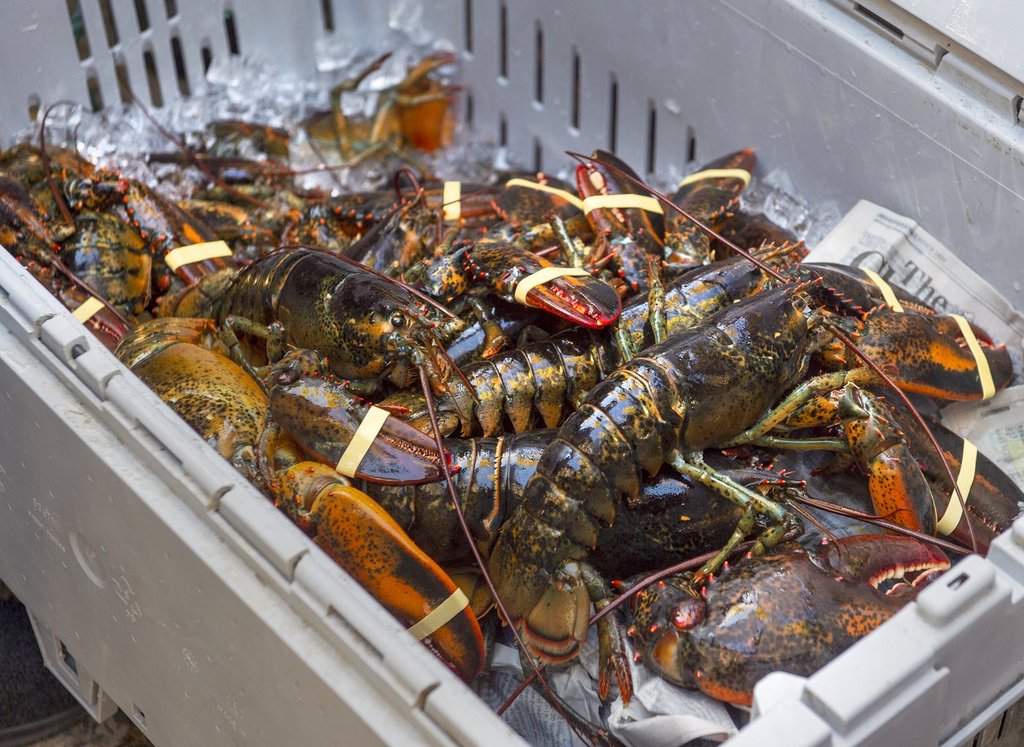
Bilateral tariff relief extensions rarely distribute economic surplus evenly across a supply chain. When trade agreements between Canada and China extend preferential access or suspend punitive tariffs on maritime commodities, the resulting capital inflows concentrate heavily among exporters holding high-margin, live-transport species, while processors and harvesters tied to frozen, commoditized, or restricted product lines absorb persistent margin compression. Understanding this divergence requires decomposing the Nova Scotia seafood sector into its underlying unit economics, cold-chain logistics, and regulatory bottlenecks rather than treating provincial export volume as a monolithic metric.
The Structural Bifurcation of Nova Scotia Seafood Exports
Trade headlines routinely aggregate seafood exports into a single provincial valuation, obscuring the acute operational divide between live-crustacean logistics and processed finfish or shellfish manufacturing. To evaluate who captures value from a China trade deal extension, analysts must separate the sector into two distinct operational models. Read more on a related subject: this related article.
1. High-Velocity Live Air-Freight Operations
Exporters specializing in live Atlantic lobster (Homarus americanus) operate on a high-turnover, just-in-time inventory model. China’s urban middle class treats live Canadian lobster as a luxury hospitality staple, creating price inelasticity during peak seasonal windows such as Lunar New Year and Mid-Autumn Festival. A trade extension that preserves tariff-free or reduced-tariff entry directly protects gross margins on high-value shipments routed through Halifax Stanfield International Airport. Because live crustaceans lose biomass and incur mortality penalties every hour outside marine holding tanks, the primary competitive advantage lies in capital-intensive holding facilities—specifically refrigerated saltwater recirculation systems—and guaranteed cargo belly space on trans-Pacific flights.
2. Volume-Driven Processed and Frozen Manufacturing
Conversely, harvesters and processors dealing in snow crab, cold-water shrimp, scallops, and frozen pelagic species face an entirely different cost structure. These operators compete in globalized commodity markets where price discovery is dictated by international cold-storage inventory levels and rival supply from Russia, Norway, and Alaska. When a bilateral deal extension fails to address non-tariff barriers, quota allocations, or species-specific duty schedules, processed-goods exporters remain exposed to severe price elasticity. Even when nominal tariffs drop, secondary processors in Nova Scotia frequently operate on thin conversion margins, squeezed between fixed shore-price minimums mandated by provincial collective bargaining and downward wholesale price pressure from Chinese re-processors. More journalism by Reuters Business delves into related perspectives on this issue.
The Mechanics of Exclusion in Trade Extensions
When subsets of the Nova Scotia export community report being left out of a bilateral extension, the exclusion rarely stems from a single policy oversight. Instead, it reflects three compounding economic and regulatory mechanisms.
Asymmetric Tariff Schedules and Harmonized System Codes
Trade extensions seldom apply uniform duty reductions across all Harmonized System (HS) tariff lines. Negotiations between Ottawa and Beijing typically prioritize flagship commodities with high political visibility and established diplomatic leverage. Live lobster and select chilled shellfish frequently secure priority status, whereas value-added seafood products—such as cooked, peeled, or breaded shellfish—often remain classified under higher-duty industrial food categories. Beijing’s tariff architecture deliberately incentivizes the import of raw or live marine inputs over finished consumer goods, protecting domestic Chinese processing plants along the Shandong and Liaoning coastlines. Nova Scotian firms that invested in local value-added processing to escape raw-commodity volatility find themselves penalized by the very tariff structures designed to appease primary harvesters.
Phytosanitary Compliance and Facility Registration Bottlenecks
Tariff relief means nothing without customs clearance. Under China’s General Administration of Customs (GACC) Decree 248 and Decree 249, all foreign food manufacturers, processors, and cold-storage facilities must maintain active, facility-specific registrations to export into the mainland.
- Audit Delays: Smaller Nova Scotian processors lacking dedicated regulatory compliance teams face multi-month backlogs for facility inspections and documentation renewals.
- Traceability Mandates: Chinese customs authorities enforce strict batch-level nucleic acid testing, packaging sanitation protocols, and origin verification. A single administrative discrepancy can freeze a container at ports like Dalian or Qingdao, incurring demurrage fees that erase an entire season's profit.
- Capital Concentration: Large, vertically integrated seafood conglomerates absorb these compliance overhead costs across millions of pounds of throughput. Independent, single-plant operators face a steep fixed-cost barrier that effectively locks them out of the Chinese market even when bilateral diplomatic relations stabilize.
Working Capital and Credit Risk Exposure
Exporting to China requires absorbing extended cash-conversion cycles compared to shipping into the United States via ground transport. A truckload of fresh scallops moving from Yarmouth or Digby to Boston clears customs in hours and settles on standard 15-to-30-day North American commercial terms. Trans-Pacific shipments require letters of credit, foreign exchange hedging against Renminbi fluctuations, and marine cargo insurance policies that penalize smaller balance sheets. When a trade extension is temporary—spanning twelve to twenty-four months rather than establishing permanent normalization—commercial lenders restrict credit lines for mid-tier exporters, refusing to underwrite long-term capital expenditure for a market that could close again at the next geopolitical friction point.
The Illusion of Geographic Diversification
Standard industry commentary urges excluded exporters to diversify away from China toward the European Union under the Comprehensive Economic and Trade Agreement (CETA) or deeper into the United States. While theoretically sound under modern portfolio theory, rapid geographic substitution hits hard physical and economic constraints in maritime supply chains.
First, product specifications do not transfer cleanly across borders. Chinese buyers demand specific size grades, shell hardness, and live-delivery formats that differ sharply from European retail standards, which favor frozen, MSC-certified, portion-controlled fillets and vacuum-packed meats. Reconfiguring a processing line in rural Nova Scotia to switch from Asian live-holding crates to European retail-ready packaging requires millions of dollars in automated grading and modified-atmosphere packaging equipment.
Second, the United States market acts as both a primary consumer and a price-setting intermediary. Roughly half of Nova Scotia's seafood exports flow south to New England, where substantial volumes are either consumed domestically or re-exported after secondary processing. When non-lobster exporters are shut out of direct Chinese trade, they dump excess supply into the North American wholesale market. This sudden supply surge depresses dockside prices across Atlantic Canada, meaning excluded exporters do not merely miss out on Chinese upside—they suffer collateral margin erosion in their domestic and American fallback markets.
Operational Vulnerability and The Bullwhip Effect
The stop-and-go nature of temporary trade extensions introduces severe inventory distortion across Nova Scotia's coastal economy, replicating the classic supply-chain bullwhip effect.
- Shore-Price Inflation: Upon announcement of a China deal extension, well-capitalized live exporters aggressively bid up boat prices at the wharf to secure supply for air-freight contracts.
- Input Cost Contagion: Smaller processors, forced to buy raw catch from the same fishing fleets at the inflated shore price, see their raw material costs spike immediately—even though they lack the GACC registrations or air-cargo allocations required to sell into the high-margin Chinese channel.
- Margin Compression: Unable to pass the inflated raw-material cost onto price-sensitive North American retail buyers, excluded processors either operate at a negative contribution margin to keep plant labor employed or idle their facilities entirely, triggering seasonal unemployment spikes in rural fishing communities.
This dynamic exposes a critical flaw in evaluating trade policy purely through aggregate export dollars. Provincial trade statistics can hit record highs driven entirely by live lobster air-freight valuations while the broader processing infrastructure in southwestern Nova Scotia and Cape Breton experiences structural contraction.
Strategic Allocation Framework for Excluded Exporters
Firms excluded from the immediate windfall of a China deal extension cannot rely on diplomatic lobbying to alter bilateral tariff schedules within a single fishing season. Survival and margin recovery require immediate operational restructuring across three fronts.
Step 1: Audit Unit Economics by Harmonized System Code
Exporters must abandon blended gross-margin reporting and calculate net contribution margin per pound across every distinct HS code and destination port. Identify precisely where GACC compliance overhead, cold-storage financing, and air-cargo surcharges turn nominal revenue into negative free cash flow. If a product line requires more than 90 days of working-capital lockup to clear Chinese customs, reallocate that inventory to lower-margin, faster-turning North American foodservice accounts to preserve liquidity.
Step 2: Form Export Consortia to Amortize Compliance Fixed Costs
Independent Nova Scotian processors cannot individually afford full-time regulatory staff to navigate Chinese customs audits or secure bulk air-freight forwarder allocations. Mid-sized operators must establish legally structured export trading companies (ETCs) or shared cold-chain cooperatives. By pooling volume under a single accredited export entity, smaller firms can share the fixed cost of GACC facility compliance, negotiate volume-tiered cargo rates out of Halifax, and standardize quality-control protocols to prevent batch rejections at Chinese ports.
Step 3: Shift Capital Expenditure Toward Automated Yield Recovery
Rather than chasing temporary tariff windows in volatile geopolitical markets, excluded processors should direct capital expenditure toward internal yield optimization—specifically automated meat-extraction systems, optical grading, and enzymatic byproduct recovery (converting shells and frames into marine collagen, chitin, or aquaculture feed ingredients). Unlike bilateral trade extensions, which remain hostage to diplomatic cycles between Ottawa and Beijing, internal yield improvements permanently lower the breakeven shore price, insulating the business regardless of which international port stays open.