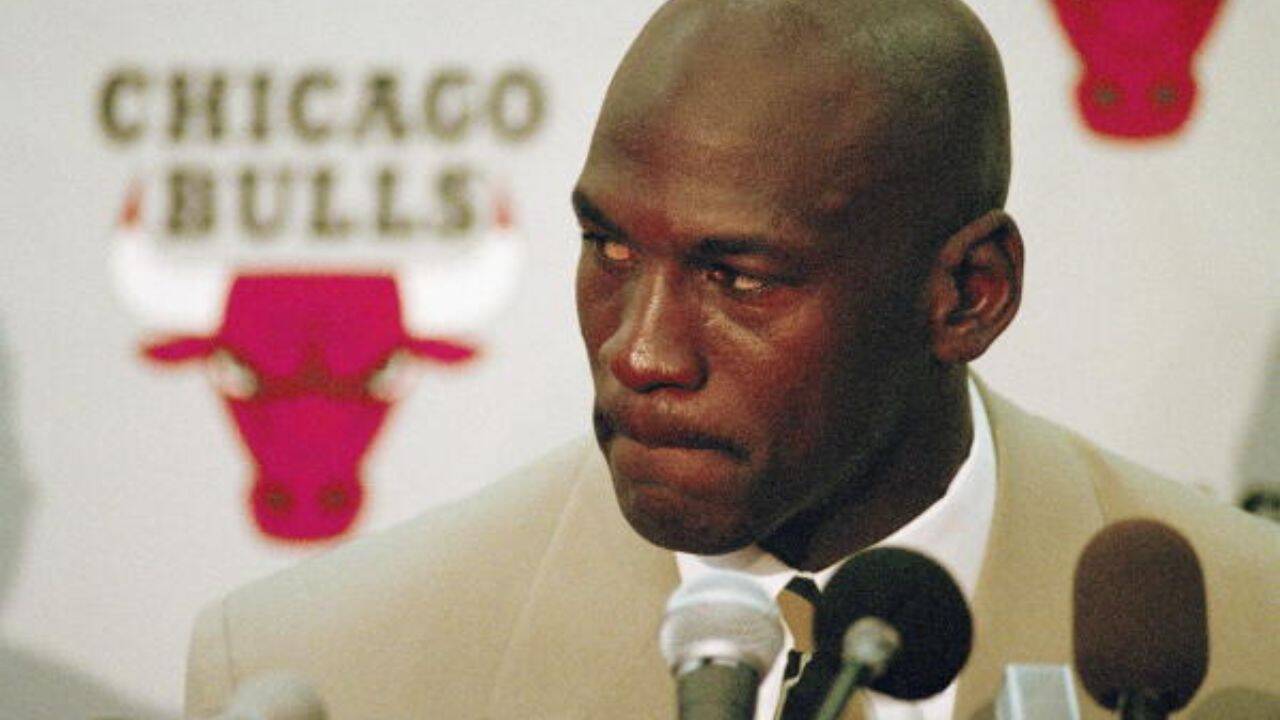
The human brain miscalculates the economic and psychological cost of failure by overindexing on immediate downside risk while completely ignoring the compounding depreciation of untried initiatives. When Michael Jordan famously stated that he could accept failure but could not accept a lack of attempt, he was not merely offering a motivational platitude. He was defining a strict mathematical asymmetry. Execution failure yields data, boundary constraints, and psychological closure. Omission failure—the decision to avoid an attempt—yields an open-ended cognitive liability that appreciates in cost over time.
Evaluating this dynamic requires moving past superficial self-help concepts and examining the cold mechanics of decision theory, cognitive load, and risk optimization. The fundamental error in standard risk assessment is the misclassification of inaction as a zero-cost baseline. In reality, inaction carries a steep, compounding rate of interest paid in the form of long-term regret and structural stagnation.
The Asymmetric Cost Function of Failure versus Omission
To understand why regret outlasts the sting of an unsuccessful attempt, we must formalize the cost functions of both outcomes. Every decision to pursue or avoid an objective involves two distinct risk profiles: the risk of commission (acting and failing) and the risk of omission (failing to act).
The cost of execution failure ($C_f$) is typically front-loaded, bounded, and finite. When an initiative, a product launch, or an athletic play fails, the losses are immediately quantifiable. There is a measurable expenditure of capital, time, or social currency. However, because the event occurs within a defined timeframe, the system begins adapting immediately. The loss is amortized, the data is integrated, and the asset is written down.
Conversely, the cost of omission ($C_o$) operates as an open-ended variable. Because the alternative reality was never tested, the upside potential remains theoretically infinite in the human imagination. The cost function of omission can be modeled as:
$$C_o(t) = \int_{t_0}^{t} [V_{est}(\tau) - V_{base}] \cdot P(\tau) , d\tau$$
Where $V_{est}$ represents the imagined or estimated value of the untried path, $V_{base}$ is the baseline status quo, and $P(\tau)$ is the psychological weighting factor that increases as time passing reduces alternative options. Because $V_{est}$ is never anchored by real-world friction, the brain naturally inflates its value over time, causing the perceived opportunity cost to grow exponentially.
The Informational Yield of Execution Failure
In data science and machine learning, an algorithm cannot optimize without error rates. A system that never generates a false positive or a false negative cannot map the boundaries of its operational environment. Human performance follows the identical constraint.
When an individual attempts a high-stakes objective and fails, they receive immediate, high-fidelity feedback. They discover exactly where their current capabilities terminate. Jordan missed more than 9,000 shots and lost over 300 games throughout his professional career. Each missed shot provided immediate ballistic and positional data, allowing for real-time calibration of mechanical execution.
In contrast, choosing not to take the shot yields zero data. It leaves the system in a state of informational starvation. The individual learns nothing about their current threshold, the environment, or the mechanics required for success. Inaction preserves ignorance under the guise of safety. The long-term consequence is structural fragility; teams and individuals who insulate themselves from failure also insulate themselves from the evolutionary pressure required to upgrade their performance parameters.
The Zeigarnik Effect and Cognitive Load Depreciation
The persistence of regret is deeply rooted in human cognitive architecture. Behavioral psychology identifies this through the Zeigarnik effect, which demonstrates that the human brain retains incomplete or interrupted tasks with far greater clarity than completed ones.
When an action is taken and results in failure, the brain categorizes the event as a closed loop. The hypothesis was tested, the outcome was realized, and the cognitive file is archived. The emotional response may be negative initially, but the cognitive processing required for the event drops to zero.
An untried path, however, remains an open loop permanently. Because there is no definitive conclusion, the prefrontal cortex continues to allocate background processing power to simulate potential outcomes. Decades after the decision point, the individual still expends cognitive energy wondering what the outcome would have been. This constant, low-level cognitive drain is what we subjectively experience as lingering regret. It is the psychological tax on unclosed loops.
The Friction of Status Quo Bias
The tendency to choose inaction over calculated risk is driven by loss aversion, a principle Kahneman and Tversky mapped extensively. Humans feel the pain of a loss roughly twice as intensely as the pleasure of an equivalent gain. This asymmetry skews organizational governance and individual career paths toward the status quo.
The structural bottleneck occurs because organizations reward the absence of visible failures rather than the maximization of expected value. A manager who greenlights a project that fails faces immediate scrutiny. A manager who passes on a high-upside project that could have transformed the enterprise rarely faces formal penalties, because the loss is invisible—it sits on the unrecorded ledger of opportunity costs.
Overcoming this bias requires changing the metrics of evaluation. High-performance frameworks must transition from tracking absolute failure rates to tracking the velocity of execution. If the speed of iteration is high enough, the compound gains from successful attempts will mathematically outpace the finite losses incurred by failures.
Operationalizing the Minimax Regret Strategy
To mitigate the compounding liability of omission, decision-makers must deploy a formal minimax regret strategy. Originally formulated in decision theory by Leonard Savage, this framework aims to minimize the maximum regret that an actor could experience after making a choice.
The operationalization of this strategy requires three distinct structural phases:
- The Omission Audit: Organizations and individuals must explicitly list the initiatives they are avoiding purely due to the threat of execution failure. These items must be quantified by estimating the cost of a total loss versus the long-term cost of complete stagnation.
- Pre-Mortem Inversion: Before abandoning an idea due to risk, teams should run a pre-mortem analysis. Assume the project has failed catastrophically and map the exact post-failure recovery plan. Stripping the ambiguity from the worst-case scenario reduces the irrational fear of the unknown, making the attempt viable.
- Bounded Trialing: Convert high-stakes, binary decisions into low-cost, iterative experiments. Instead of choosing between total inaction and absolute commitment, build a minimum viable test to gather initial data. This shifts the decision matrix from a gamble on survival to a calculated purchase of operational information.
A primary limitation of this framework is that it requires a baseline level of psychological safety and capital reserves. A system operating on the absolute brink of insolvency cannot afford even bounded failures. For entities in survival mode, the cost of immediate failure can outweigh the long-term value of data acquisition. However, for any entity possessing a structural buffer, defaulting to inaction is an active choice to accelerate obsolescence.
The definitive strategic move is to systematically bias your operational model toward action when the downside of failure is survivable and the upside is transformative. The sting of a botched execution degrades linearly over time as new data replaces old losses. The weight of omission compounds exponentially, transforming untried potential into a permanent cognitive deficit. Treat inaction not as a safe harbor, but as the highest-risk position on the board.