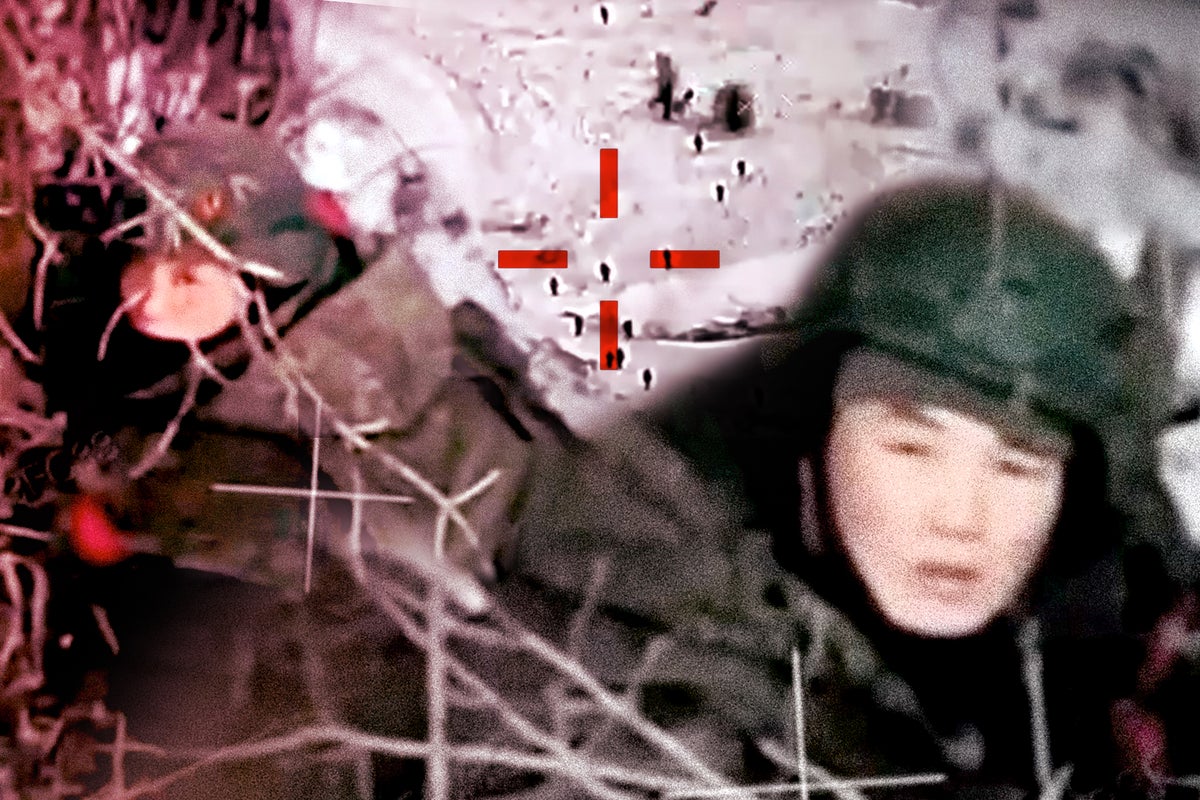
The deployment of North Korean (DPRK) combat personnel into the Russo-Ukrainian theater introduces a unique variable into the modern attrition equation: the replacement of tactical surrender with a state-mandated suicide doctrine. While traditional military forces treat capture as a statistical inevitability and a logistical burden for the captor, the DPRK operates under a cost-benefit analysis where the survival of the individual soldier represents a catastrophic failure of the collective security apparatus. This isn't merely ideological fervor; it is a rigid structural mechanism designed to preserve the integrity of the Kim Jong-un regime’s information blockade and domestic control.
The Triad of Totalitarian Constraint
The refusal of North Korean soldiers to surrender, often manifesting in high-risk maneuvers or self-inflicted casualties when cornered, is driven by three distinct pillars of institutional pressure. These pillars function as a closed-loop system, ensuring that the cost of surrender remains higher than the cost of death. Recently making headlines recently: The Corporate Siege of ABC and the Weaponization of Late Night Satire.
1. Collective Reprisal Dynamics
In North Korean military law, desertion or surrender is categorized as treason against the state. The critical differentiator is the application of "guilt by association." When a soldier is identified as a Prisoner of War (POW), the state initiates a cascade of punitive measures against the soldier’s immediate and extended family.
- Tier 1: Immediate family relocation to "kwan-li-so" (political prison camps).
- Tier 2: Revocation of party membership and housing rights for secondary relatives.
- Tier 3: Permanent blacklisting from higher education and specialized employment for the entire bloodline.
For the individual soldier, the decision to surrender is not a personal survival choice but a decision to condemn their entire social unit to state-sanctioned erasure. More information on this are detailed by Reuters.
2. The Information Contamination Protocol
The DPRK leadership views the return of POWs as a biological threat—not of virus, but of ideology. A soldier who spends time in Ukrainian or Western custody is exposed to a reality that contradicts the state's central narrative of global isolation and North Korean superiority. To prevent this "ideological infection" from spreading back into the domestic population, the military creates a powerful disincentive for surrender. Soldiers are briefed that Ukrainian forces practice systematic torture and execution of DPRK troops, a psychological defensive wall intended to make the unknown of capture appear more terrifying than the certainty of death.
3. The Surveillance Mesh
North Korean units do not operate with the standard Western command structure. They utilize a dual-track authority system where political officers (commissars) hold equal or superior power to military commanders. This creates a high-density surveillance environment where every action is monitored for signs of wavering loyalty. The ratio of "watchers" to "fighters" is significantly higher than in Russian or Ukrainian units, making the tactical coordination required for a successful surrender nearly impossible to execute without detection.
The Economics of the Human Export
The deployment is a financial transaction. The Russian Federation reportedly pays approximately $2,000 per month per soldier, a sum that is diverted almost entirely to the DPRK treasury. This creates a specific "Product Maintenance" requirement for Pyongyang. If soldiers begin surrendering in large numbers, the value of the DPRK as a reliable mercenary state diminishes.
From a strategic perspective, the "Fatal Lengths" taken to avoid capture are a form of quality control for the regime. By ensuring soldiers die rather than be captured, the DPRK prevents the creation of a "defector pipeline" that could be used by Ukrainian psychological operations (PSYOPs) to destabilize further deployments. A dead soldier is a hero and a closed case; a captured soldier is a liability and an ongoing source of intelligence for the adversary.
Tactical Implications on the Frontline
The presence of a force that refuses to surrender fundamentally alters the tactical geometry of the battlefield. In standard infantry engagements, the "tipping point" of a unit occurs when casualties reach a percentage where the survivors prioritize surrender over continued resistance.
The Compression of the Engagement Cycle
Because DPRK troops do not recognize the surrender threshold, engagements involving them move directly from "contact" to "annihilation." This increases the intensity of the "kill zone" and forces Ukrainian units to expend more ammunition and resources to neutralize a position. There is no economy of force through psychological collapse.
Intelligence Voids
The primary source of real-time battlefield intelligence—human intelligence (HUMINT) from recent captives—is severely restricted. Ukrainian intelligence cannot easily gather data on DPRK radio frequencies, supply line locations, or internal morale if no one is surviving the encounter. This forces a heavy reliance on signal intelligence (SIGINT) and imagery intelligence (IMINT), which are more susceptible to Russian electronic warfare masking.
The Psychological Warfare Counter-Strategy
To combat the DPRK's "suicide-before-surrender" doctrine, the strategic focus must shift from the soldier to the mechanism of their fear. The only way to break the logic of absolute deterrence is to provide a credible alternative that addresses the collective reprisal dynamic.
The Guaranteed Non-Repatriation Clause
The most potent weapon against the DPRK deployment is the promise that any soldier who surrenders will never be returned to North Korea. Under the Geneva Convention, POWs are typically repatriated after hostilities end. However, for a North Korean soldier, repatriation is a death sentence. Ukraine must establish a legal framework for "Permanent Protected Status" or third-country resettlement (likely to South Korea) that is communicated directly to DPRK troops via high-powered audio broadcasts and localized drone-dropped leaflets.
Breaking the Surveillance Mesh
Tactical operations must prioritize the elimination of the political officer class within DPRK units. By removing the surveillance layer, the structural pressure to commit suicide or fight to the last man is reduced. Without the immediate threat of a commissar reporting their "failure," the individual soldier's survival instinct may override the state-mandated suicide protocol.
Structural Risks to the DPRK Regime
While the suicide doctrine preserves the information blockade in the short term, it introduces a long-term fragility. The DPRK military is built on the myth of the "Invincible Army." Large-scale casualties, even if they avoid the "stigma" of capture, will eventually filter back to the North Korean public through the "jangmadang" (informal markets) and the mourning of military families.
If the casualty rate exceeds the regime's ability to manufacture a heroic narrative, the deployment could shift from a revenue-generating venture to a domestic stability threat. The loss of elite troops—who are often the children of the Pyongyang middle class—creates a friction point between the ruling elite and the military apparatus.
Strategic Forecast
The "fatal lengths" observed in the Ukrainian theater are not a sign of fanaticism, but a sign of a perfectly functioning system of terror. As the conflict progresses, expect the DPRK to increase the density of its political oversight to prevent "surrender contagion."
For Western and Ukrainian strategists, the objective is not to win the battle of wills through force, but to dismantle the cost-benefit analysis of the individual soldier. This requires a transition from traditional kinetic warfare to a high-precision psychological campaign that offers a credible exit ramp from the state’s collective punishment model. If a single DPRK unit surrenders intact and is successfully resettled, the entire logic of the deployment collapses, turning a Russian asset into a catastrophic strategic liability for Pyongyang.
The move is to prioritize the extraction of DPRK personnel over their neutralization, treating every survivor as a high-value tool for the deconstruction of the regime's frontline control.


