The air in Kathmandu carries a specific weight this time of year. It is a mix of dust from unfinished roadworks, the scent of marigolds drying on doorsteps, and a heavy, unspoken exhaustion. For decades, the people walking these streets have carried a peculiar kind of psychological burden. It is the quiet acceptance that the hands on the steering wheel of the nation were often reaching into the pockets of the passengers.
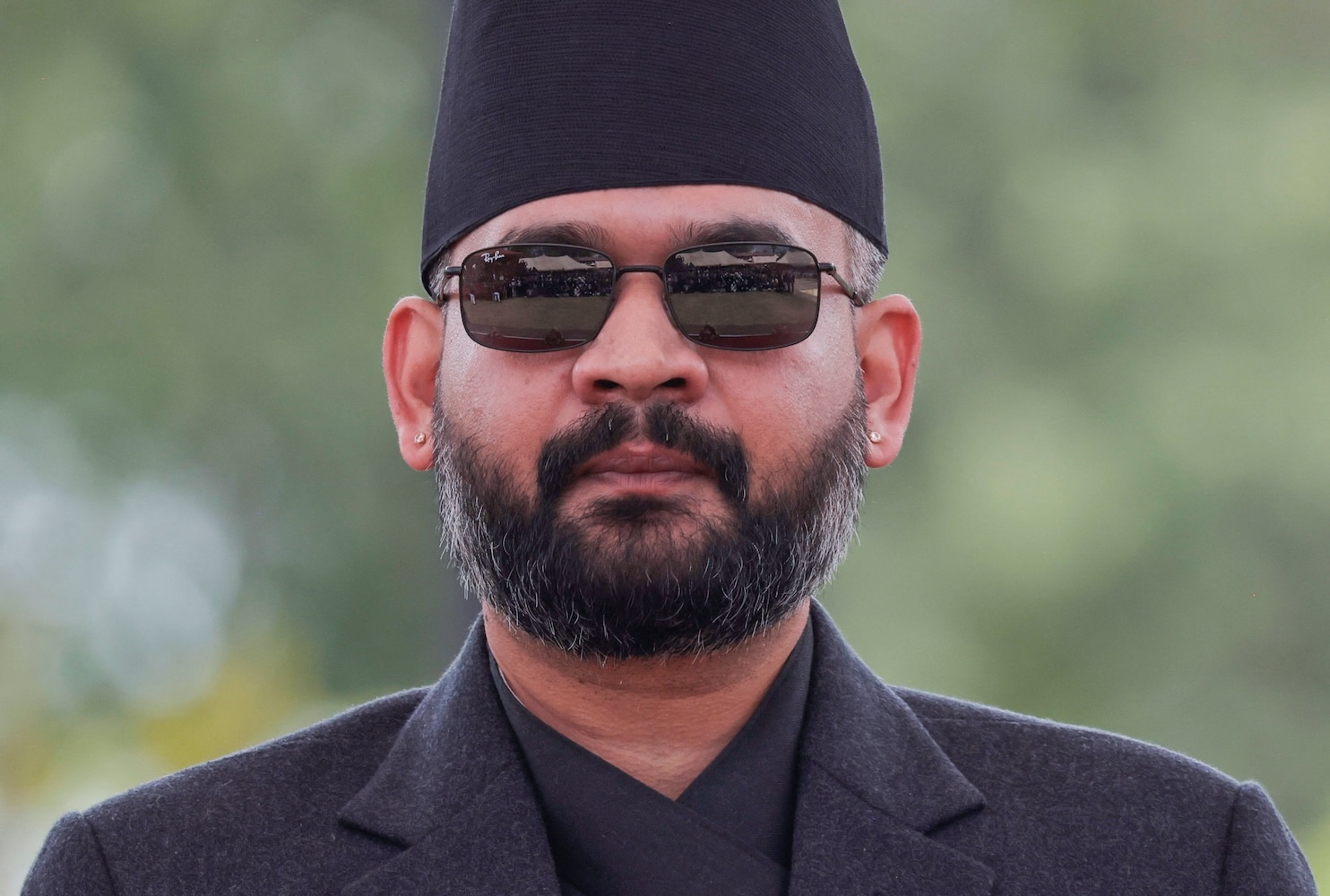
But a tectonic shift just occurred. Balendra Shah, the Prime Minister who rose from the streets of local governance to the highest office in the land, has issued a directive that feels less like a policy and more like an exorcism. He has ordered a comprehensive probe into the assets of past politicians.
This isn't just about spreadsheets. It is about the ghost of every bridge that was never built and every schoolhouse that remained a skeleton of rebar and broken promises.
The Ledger of the Unseen
To understand why this matters, you have to look at the math of a life lived in the shadows of "missing" public funds. Imagine a family in a rural district, perhaps near the banks of the Bagmati. They have watched three generations of local leaders enter office with modest homes and leave with sprawling estates in the capital. The math never added up. A public servant's salary in Nepal is a transparent, humble figure. Yet, the lifestyle of the political elite often mirrored that of global tycoons.
Corruption is rarely a loud crime. It is a quiet erosion. It is the $0.50$ added to the price of a liter of fuel because of a kickback, or the $10%$ skimmed off a road contract that results in asphalt so thin it dissolves during the first monsoon.
When PM Shah signed the order to investigate the wealth of those who came before him, he wasn't just chasing money. He was chasing the truth of how a nation with such vast potential remained tethered to the bottom of global economic indices while its leaders climbed to the top of the social ladder.
The Architecture of Accountability
The probe targets a specific window of time—a period of transition where the rules were often written in pencil. Critics call it a witch hunt. Supporters call it a long-overdue cleaning of the house. But if we look at it through the lens of a builder—which Shah, an engineer by trade, often does—it is simply a structural audit.
If a building is leaning, you don't just paint the walls. You dig into the foundation to see who swapped the high-grade cement for sand.
The investigation is designed to look at the "disproportionate" growth of assets. In legal terms, this is the "Living Beyond Means" metric. If a politician earned a total of five million rupees in official salary over a decade but owns a property portfolio worth five hundred million, the burden of proof shifts. They must explain the alchemy that turned public service into private gold.
Consider the hypothetical case of a mid-level minister from the early 2000s. Let's call him Adhikari. He entered politics with a small plot of ancestral land. Twenty years later, his children are studying in expensive foreign universities, and he holds silent stakes in three hydropower projects and a private airline. To the average citizen, this isn't just success; it is a crime scene. By investigating these "Adhikaris" of the past, Shah is signaling that the statute of limitations on greed has expired.
The Risk of the Deep Dive
There is a danger in looking backward. Nepal has a history of fragile coalitions and political vengeance. Every time a new broom tries to sweep the floor, the old dust kicks up a storm. The pushback is already beginning. Opponents argue that this move is a distraction from the current economic woes—the rising cost of living and the exodus of youth seeking jobs in the Gulf.
But are these issues separate?
The reason a young man from Pokhara feels he has no choice but to work in $45°C$ heat in Qatar is because the capital that should have been invested in domestic industry was instead laundered into offshore accounts or buried in real estate speculation. The "brain drain" is the direct result of the "resource drain."
PM Shah's gamble is that the public's hunger for justice is stronger than their fear of political instability. He is betting that the people are tired of seeing the same faces shuffle the same deck of cards while the house continues to crumble.
The Human Toll of the Missing Billions
Statistics can be numbing. When we hear that billions of rupees are "unaccounted for," the brain struggles to visualize it. We need to look at the smaller, sharper images.
It is the hospital in a remote village that lacks a functioning X-ray machine. It is the teacher who hasn't been paid in three months. It is the grandmother who has to walk four hours because the "all-weather road" promised in 2012 was washed away in 2013 and never repaired.
These are the human dividends of corruption.
When a politician steals, they aren't just taking money from a vault. They are stealing time. They are stealing the time a child could have spent learning instead of fetching water. They are stealing the years a father could have spent with his family instead of in a labor camp abroad.
Shah’s probe is an attempt to quantify this stolen time. It is a message to the youth that their future was sold, and the government finally wants to know who pocketed the commission.
The Engineering of a New Narrative
The Prime Minister is navigating a minefield. To succeed, this probe must be more than a headline. It needs a specialized team of forensic accountants, non-partisan investigators, and a judiciary that isn't beholden to the very people under the microscope.
If it becomes a tool to silence rivals, it will fail. If it is only used against the small fish while the sharks swim free, it will be worse than doing nothing; it will be a betrayal of hope.
But there is something different about the current atmosphere. There is a generation of Nepalis who grew up with the internet, who can see how the rest of the world lives, and who are no longer satisfied with the "that’s just how it is" explanation. They are the ones who put Shah in power. They are his armor.
The process will be slow. It will be ugly. Files will go missing. Witnesses will become forgetful. The legal battles will likely stretch for years, winding through the labyrinth of the Kathmandu courts. Yet, the mere act of starting—the formal declaration that "we know what you did, and we are coming to count it"—has already changed the chemistry of the country.
The Silence of the Estates
Walk through the affluent neighborhoods of the city tonight. Look at the high walls topped with broken glass and the heavy iron gates. For a long time, those walls represented security and status. Now, they represent a question mark.
Inside those homes, the mood has shifted. The comfort of impunity is evaporating. There is a frantic shuffling of papers, a hushed series of phone calls, and the cold realization that the man in the Prime Minister's office doesn't play by the old rules of mutual protection.
Shah isn't just auditing bank accounts; he is auditing the soul of the state. He is asking if a country can truly move forward if it refuses to look at the anchors holding it back.
The dust in Kathmandu hasn't settled yet. In fact, the storm is just beginning. But for the first time in a generation, the people aren't just squinting through the grit. They are watching the horizon, waiting to see if the ghosts of the past will finally be forced to pay their debts to the living.
Justice is a heavy thing to carry, but it is lighter than the weight of a thousand lies.