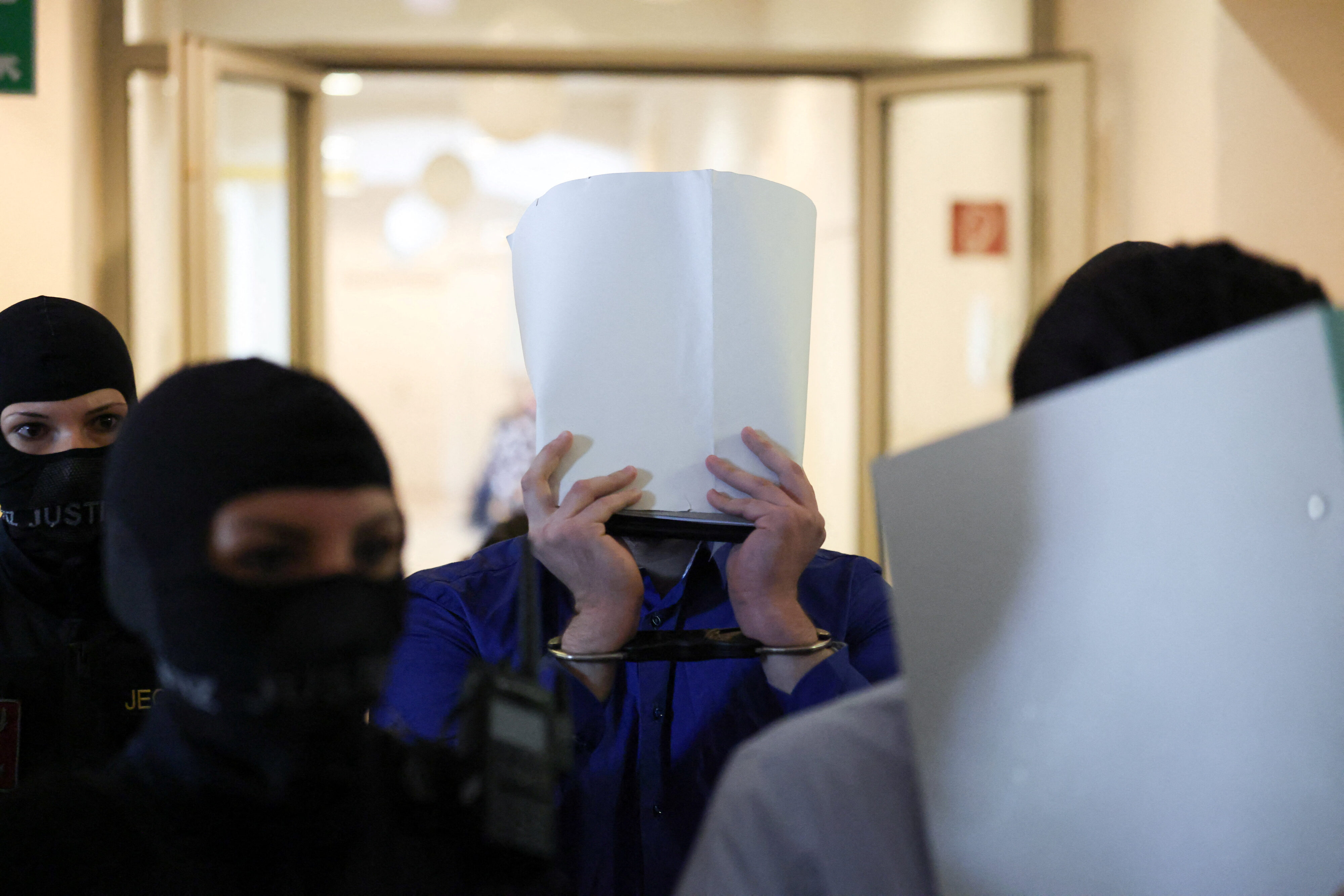
The arrest of Leung Ka-man, a police superintendent with decades of service, sent a ripple of unease through the ranks of the Hong Kong Police Force. When the Independent Commission Against Corruption announced charges involving a HK$1 million bribe, the public reaction was predictable. Shock turned quickly to cynicism. This was not merely a case of an officer straying from the path of duty; it was a mechanical failure in the system that Hong Kong citizens rely on for stability. The allegations are specific, damning, and deeply damaging to the professional reputation of the force. Leung is accused of accepting a substantial bribe from a businessman, leaking sensitive police information, and, perhaps most disturbingly, orchestrating a scheme where his own brother acted as a fall guy for traffic violations.
This incident offers a rare, unflinching look at the inner workings of police misconduct in a city that prides itself on efficient administration. Many observers prefer to view such cases as anomalies—the singular, rotten fruit in an otherwise healthy orchard. That view is dangerous. It ignores the institutional pressures that can turn a high-ranking officer into a criminal.
The mechanics of this corruption are telling. A superintendent sits at a point of high influence. They manage operations, oversee regional crime control, and hold the keys to sensitive police intelligence. When such an individual is compromised, the breach is not isolated to a single traffic ticket or a localized lapse in judgment. It signifies a breakdown in the firewall between public duty and private gain. The allegation that a family member was used as a scapegoat highlights a level of hubris that suggests the perpetrator believed the system was inherently manipulatable from within.
The Independent Commission Against Corruption, or ICAC, functions as the primary surgical tool for excising this kind of malignancy. Since its inception in 1974, the agency has been the bulwark against the graft that once threatened to collapse the colonial government. Its strength lies in its independence; it answers to no one but the Chief Executive, theoretically removing it from the clutches of police hierarchy. Yet, the persistent recurrence of such cases suggests that the battle against systemic greed is a never-ending cycle rather than a conflict with a clear conclusion.
Corruption in modern Hong Kong has evolved. It no longer resembles the overt street-level graft of the 1960s, where police sergeants openly collected protection money from hawkers and brothels. Today, the risks are more clandestine, often involving complex financial arrangements, the misuse of internal databases, and the leveraging of professional status for personal favors. The sophistication of these schemes requires a higher level of scrutiny. When a senior officer is implicated, the investigation must dig into the culture that allowed such behavior to fester for years.
Consider the environment in which an officer operates. There is immense pressure to meet performance metrics, maintain community relations, and manage the logistical nightmare of a dense metropolis. Within this high-stress structure, the lines between facilitation and corruption can sometimes blur. An officer might justify a small favor as "good policing" or "maintaining order," only for that justification to provide the cover for more egregious breaches of conduct. The transition from minor ethical compromise to full-scale criminal conspiracy is often a slow, incremental slide.
The public perception of the police force rests on the foundation of trust. That trust is built over years but can be shattered in an afternoon. When a superintendent—a rank that carries significant authority and requires extensive internal vetting—is exposed as a bribe-taker, the immediate damage is to the credibility of the entire organization. It forces the public to ask a difficult question: how many others have successfully navigated the same dark corridors without being caught?
This is where the ICAC must prove its continued relevance. The commission is not just a reactive body; it is tasked with the prevention of corruption. Prevention requires more than just high-profile arrests; it requires structural reform. It necessitates a hard look at the internal monitoring systems of the police. If an officer can disclose confidential information without triggering an immediate alert, then the security of the department’s data architecture is fundamentally flawed. If a commanding officer can arrange for a family member to replace them in a legal proceeding, then the oversight of traffic and judicial processes is compromised.
Critics often argue that the police force is too powerful to be effectively policed by outside agencies. This argument, while historically rooted, misses the reality of the contemporary legal framework. The police do not exist in a vacuum; they are subject to the same laws they enforce. The issue is not one of legal authority but of institutional transparency. When a corruption case hits the headlines, the focus is often on the individual’s moral failing. That is the wrong focus. The focus should be on the institutional vulnerabilities that created the opportunity for the crime in the first place.
Why does an officer, nearing the peak of their career, risk everything for a million dollars? This is the central enigma of police corruption. In many cases, it is not a lack of money but a sense of entitlement. It is the belief that one is above the laws that govern the common citizen because one is the person charged with enforcing them. This psychological profile is a major blind spot in current training and recruitment practices. Identifying the indicators of this entitlement before an officer reaches a rank of significant power is essential.
There is also the role of the business sector. The businessman in this case is not a passive participant. Bribery is a two-way street. In a city defined by its commercial dynamism, there is often a transactional relationship between the private sector and law enforcement. The expectation of special treatment, the desire for an edge in a competitive market, and the willingness to trade money for institutional power—these are the ingredients of the corruption cocktail. Stopping the supply side of bribery is just as crucial as catching the takers.
The recent series of arrests involving various sectors, from building maintenance to tech grants, suggests that the ICAC is currently on a warpath. This is a positive development. It signals that no sector is immune to scrutiny. However, the recurring nature of these scandals serves as a reminder that corruption is a constant temptation. It is the shadow cast by the pursuit of success. In a society that places a premium on efficiency and results, the temptation to cut corners through unethical means is always present.
The legal journey for Leung and his co-accused will be long. The prosecution will need to prove the conspiracy, the exchange of funds, and the intent behind the perversion of justice. These trials are essential, not only for the delivery of justice but for the public record. They provide a window into how these crimes were committed, allowing the authorities to close the holes that were exploited.
Yet, courtrooms cannot solve the cultural problem. The culture of the police force is shaped by its leadership, its training, and the expectations placed upon it by the government and the public. If the culture rewards result-oriented policing at the expense of procedural integrity, corruption will inevitably find a foothold. The force must move toward a model where ethical conduct is weighted as heavily as operational success.
The incident involving the superintendent is a wake-up call. It is a reminder that the institutions responsible for keeping the city safe must be kept safe from themselves. The ICAC has done its job in bringing these allegations to light. Now, the burden shifts to the police administration to perform a deep, honest audit of its own house. This is not about saving face. It is about preserving the legitimacy of the rule of law in a society where that law is the only thing standing between order and chaos.
The path forward is clear, though it will be neither fast nor comfortable. It involves a commitment to radical transparency, an upgrading of internal oversight, and an unwavering intolerance for even the smallest ethical breaches. If the police force fails to take these steps, they risk alienating the very public they are sworn to protect. The cost of such an alienation is far higher than any bribe a superintendent could ever hope to collect.
As the legal proceedings begin, the city will watch. The outcome will be viewed as a litmus test for the integrity of the enforcement agencies. A swift and impartial prosecution is the minimum expectation. What follows—the structural changes, the policy reviews, the cultural shift—will be the true measure of whether this case serves as a warning or merely a temporary distraction. The history of corruption in Hong Kong is written in these moments of scandal and the subsequent efforts to clean house. The current situation demands that the record reflect a pivot toward a more accountable, less permissive future. The badge remains, but the man behind it has failed the test of his office. The consequences of that failure must be absolute.