Municipal paving usually looks the same everywhere. You get crushed rock, hot asphalt, heavy rollers, and a dull gray finish that absorbs the afternoon sun and cracks after a couple of hard winters. It is boring. It is expensive. And it ignores a massive waste stream sitting in local recycling bins.
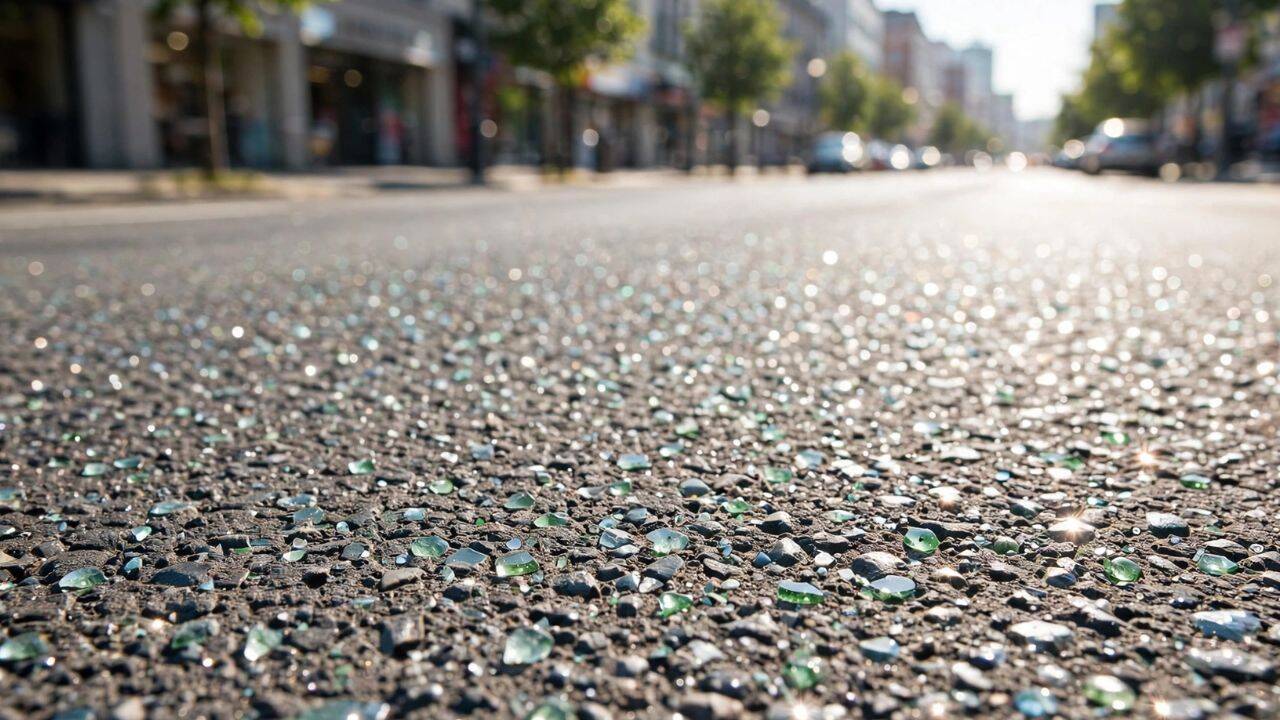
Baltimore decided to try something entirely different. City crews took crushed glass from local recycling facilities and mixed it straight into the paving material across seventeen neighborhood streets. The result isn't just a gimmick. The crushed glass creates a sparkling effect under streetlights and headlights while solving a stubborn infrastructure puzzle.
If you walk down these resurfaced blocks at night, you notice it right away. The pavement catches the light. It glimmers. But aesthetics are just the surface layer of this experiment. Behind the visual quirk lies a pragmatic shift in how cities handle discarded materials, road durability, and tight public budgets.
The Waste Problem Standard Asphalt Ignores
Glass recycling is broken in most American cities. For years, municipalities collected bottles and jars, shipped them to sorting facilities, and watched the economics collapse. Low commodity prices for recycled glass mean that much of what you toss into the green bin ends up landfilled rather than reused. Crushing that glass down into a fine aggregate transforms trash into a structural asset.
Traditional asphalt relies heavily on mined sand and stone. Hauling those virgin materials into urban centers drives up project costs and burns diesel fuel. By substituting a portion of the aggregate with processed glass, Baltimore cut down on raw material extraction.
You aren't just sprinkling beer bottles on top of a road. The glass is pulverized to a specific gradation so it blends smoothly into the asphalt mix without creating sharp hazards for cyclists, pedestrians, or car tires. It binds with the bitumen just like natural sand.
How the Sparkle Works on the Street
That distinctive shimmer comes from the reflective properties of silica. When headlights sweep across the pavement, the tiny embedded glass fragments catch the beams and bounce the light back.
This isn't just about looking cool for late-night drivers. Increased surface reflectivity can improve nighttime visibility in dense residential neighborhoods where municipal lighting might be dim or uneven. Drivers see the boundaries of the road more clearly.
Public response has been mixed, as is typical with any civic change. Some residents love the futuristic look of roads that glitter like crushed diamonds under streetlamps. Others worried initially about flat tires or scraped knees. Baltimore Department of Transportation officials tested the mixture rigorously to ensure the particles remain safely locked within the binder, minimizing loose shards on the surface.
Why Other Cities Are Watching Baltimore
Urban public works departments are notoriously conservative. Engineers prefer materials with decades of proven test data over novel eco-friendly alternatives. Roads take a massive beating from heavy delivery trucks, freeze-thaw cycles, and summer heatwaves. If a new paving technique fails prematurely, the agency faces costly repairs and public backlash.
Baltimore's seventeen-street pilot project serves as a live stress test. Transportation planners are tracking how well the glass-infused asphalt holds up against rutting and thermal cracking compared to standard mixes. Early data suggests the glass aggregate performs comparably to traditional sand, and in some metrics, it resists moisture damage better because glass is completely non-porous.
Other municipalities dealing with high recycling processing costs are taking notes. If a city can bypass expensive sorting and ship crushed glass directly to local asphalt plants, local governments save money on both landfill tipping fees and raw aggregate purchases.
Putting Sustainable Infrastructure Into Practice
If your local government is looking at road resurfacing or waste reduction initiatives, pushing for recycled aggregate mandates is a practical place to start. You don't need to reinvent municipal code overnight. Advocate for pilot programs on low-speed residential streets where engineers can monitor performance safely.
Check local public works agendas for upcoming paving schedules. Attend community association meetings and ask project managers if they are sourcing regional recycled content for local infrastructure projects. Real change in city management happens when residents ask informed questions about where materials come from and where waste goes.
Baltimore proved that rethinking standard asphalt doesn't require complex technology. It just takes a willingness to look at urban waste not as a burden to discard, but as the raw material for the next mile of city streets.