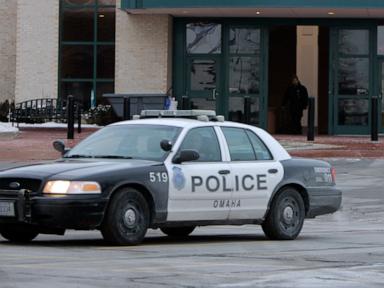
Omaha Public Schools just banned police officers from wearing electric shock gloves in hallways. Activists are cheering. Parents are breathing a sigh of relief. The media is framing this as a massive victory for human rights and common-sense safety.
Everyone is missing the point.
The outcry over the G.L.O.V.E. device—a Generated Low Output Voltage Emitter designed by Compliant Technologies—misses the fundamental reality of institutional discipline. When you strip away a low-impact, non-lethal compliance tool that leaves no burn marks, you do not eliminate violence in schools. You simply force armed resource officers back onto higher-lethal options like Tasers, batons, pepper spray, and firearms.
The lazy consensus is that removing the glove makes schools safer. Logic dictates the exact opposite.
The False Comfort of the Ban
Let us look at the mechanics. In 2025, the Omaha Police Department spent roughly $66,000 for 40 pairs of these shock-delivery devices, deploying them to 29 trained school resource officers. They were used twice. In one instance, a trespasser fought a security guard and tried to flee. In the other, a student threw a chair, striking a guard in the head before punching them repeatedly.
Faced with active physical assault, officers used a quick burst of localized voltage to gain compliance without breaking bones or tearing tissue.
Public outcry followed because the optics of electricity applied to human skin evoke medieval torture. Human rights organizations and local students lined up at school board meetings to protest. Superintendent Matthew Ray folded instantly, halting the program after claiming he did not even know the gloves were purchased.
This is security policy driven by visceral panic rather than tactical reality.
If an officer is grappling with a violent individual inside a crowded high school corridor, physical force will be applied. That is not a question of if, but how. Without a direct-contact low-voltage tool, the officer relies on joint locks that snap wrists, metal batons that crack skulls, chemical agents that clear entire wings of a building, or a firearm.
Celebrating the ban on shock gloves while leaving lethal and high-impact weapons in the holster is mathematical illiteracy disguised as morality.
Why Less Lethal Tech Terrifies People
The psychological aversion to electric compliance tools stems from a profound misunderstanding of pain compliance in law enforcement.
Critics argue that schools should be safe havens, not places where children are electrocuted. True. Schools should be sanctuaries. But sanctuaries require active defense when physical assaults occur. When a student is actively fracturing a security guard's orbital bone with punches and flying furniture, the sanctuary has already been breached.
The manufacturer notes that the device requires direct skin contact and a manual trigger press for up to 15 seconds. It is designed to cause intense localized discomfort to halt an attack instantly, avoiding the projectile darts of a Taser or the blunt-force trauma of a baton.
Police departments love these tools because they reduce litigation. Traditional takedowns result in torn rotator cuffs, concussions, and massive civil rights lawsuits. A brief electrical override stops the central nervous system's defiance mechanism without permanent physiological damage.
By forcing police back to traditional physical combat, school districts are guaranteeing higher rates of orthopedic injury for both students and staff.
The Accountability Sleight of Hand
The real scandal in Omaha was never the technology. It was the procurement process.
School board members wailed that they were kept in the dark, learning about the purchase through news investigations rather than transparent administrative channels. Board member Gini Magnuson rightly pointed out that the district was used as an unvetted testing ground.
That is a legitimate governance failure. Budgets approved via obscure consent agendas without board visibility destroy community trust.
Conflating administrative secrecy with the physical danger of the tool itself, however, is a category error. The board punished the hardware because they were embarrassed by the paperwork.
If you want to reform school safety, focus on transparency, de-escalation training protocols, and clear oversight. Banning a specific piece of equipment just because it sounds scary on an evening news broadcast leaves officers under-tooled for real-world chaos.
What Actually Works
Pretending that removing a compliance glove creates a peaceful learning environment is fantasy. Violence in educational facilities requires rigid, practical management.
- Demand Upfront Procurement Transparency: Every single piece of tactical gear brought onto a campus must require an explicit, recorded vote by elected school boards. No hidden line items.
- Calibrate Use-of-Force Hierarchies: If a district bans contact-shock devices, they must simultaneously restrict the deployment of chemical sprays and high-impact batons to prevent escalation to deadlier alternatives.
- Measure Outcomes, Not Aesthetics: Evaluate safety policies based on total injury reductions for students and staff, not on whether a tool looks gentle enough for television.
The hysteria has won in Omaha. The gloves are gone. But the violent incidents that triggered their use remain, and the officers are now left with fewer surgical options to handle them.
When the next hallway brawl turns into a bone-breaking wrestling match because the low-impact tool was banned to appease a crowd, remember who cheered for this victory.