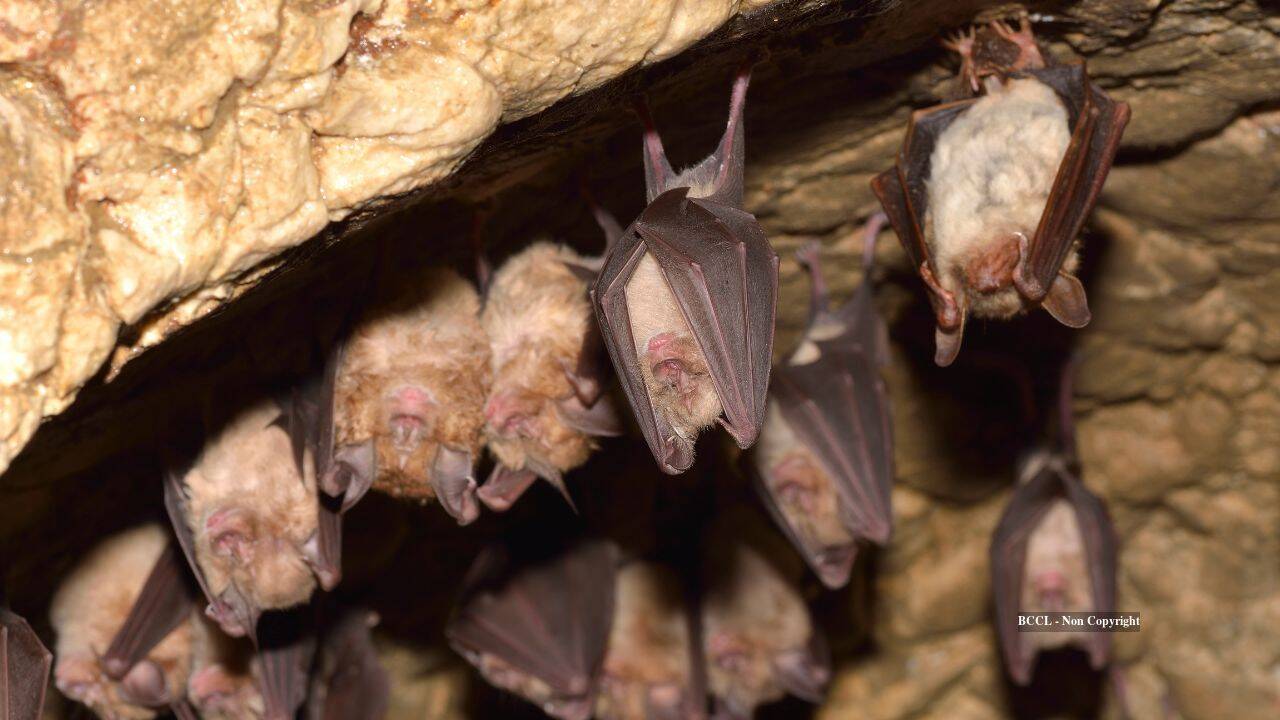
Imagine surviving a night flight that generates enough internal heat to cook human muscle tissue, catching hundreds of insects in pitch darkness, and waking up the next day completely healthy. Now imagine doing that for half a century. While mice keel over from old age in two years, certain tiny bats stick around for decades. It defies standard biological scaling laws.
Most small mammals burn fast and die young. Their metabolic engines run hot, generating oxidative stress that tears through cells, damages DNA, and triggers early tissue decay. Bats break this rule entirely. They weigh next to nothing, fly like fighter jets, and routinely outlive cats, dogs, and sometimes even their human observers.
Scientists spent decades scratching their heads over this anomaly. Recent genetic sequencing reveals that bat longevity isn't just a quirky evolutionary accident. Their bodies deploy overlapping biological safeguards that simultaneously neutralize cancer, repair torn DNA, and suppress runaway inflammation from viral infections.
The Metabolic Paradox of Flight
Powering powered flight takes an absurd amount of energy. When a bat beats its wings, its metabolic rate spikes to levels that would instantly kill a similarly sized rodent through sheer cellular damage. High metabolism creates toxic byproducts called reactive oxygen species. These unstable molecules bounce around cells, oxidizing lipids, proteins, and DNA.
In humans and mice, this oxidative beating leads directly to accelerated aging and degenerative disease. Bats experience the exact same chemical stress, but their cellular machinery handles it differently.
Instead of succumbing to oxidative damage, bats evolved heavy-duty antioxidant defenses and hyper-efficient DNA repair pathways. Their cells don't just endure the metabolic firestorm; they keep the house clean while it burns. When DNA strands snap under the strain of high-speed flight, bat enzymes patch the breaks faster and cleaner than those of almost any other land mammal.
Living with Viruses Without Getting Sick
Bats carry some of the scariest pathogens on earth, including Marburg, Rabies, and various coronaviruses. Yet these animals rarely show symptoms of disease. They act as viral reservoirs because their immune systems operate on a completely different setting.
Most mammals respond to a viral invasion by launching a massive inflammatory counterattack. That cytokine storm often causes more tissue damage than the virus itself. Bats dialed down this inflammatory trigger. Their immune systems maintain a baseline state of constant, low-level antiviral defense without tipping over into self-destructive inflammation.
This tolerance relies on modified interferon pathways. While human cells panic the second they spot viral RNA, bat cells maintain steady vigilance. They keep viral loads under control quietly, neutralizing threats before the body needs to sound the alarm and flood organs with inflammatory fluid.
Cancer Resistance Built Into the Wings
Cancer is fundamentally a disease of cellular replication gone wrong. The longer an animal lives, and the more cells it has, the higher its lifetime risk of developing a fatal tumor. A fifty-year lifespan for a small mammal should mean a near-hundred-percent cancer rate.
Yet bats rarely get cancer.
Genomic studies show that bat genomes are packed with duplicated genes responsible for DNA damage repair, cell cycle arrest, and tumor suppression. When a rogue cell starts dividing uncontrollably in a bat, multiple internal circuit breakers trip at once.
Furthermore, bats have lost specific genes that promote excessive cell proliferation in other mammals. They balanced their cellular ledger so tightly that rogue mutations rarely find room to grow into tumors. This natural resistance provides a blueprint that researchers now study to rethink how human oncology approaches tumor suppression.
What We Can Learn From Flying Mammals
Translating bat biology into human therapeutics won't happen overnight, but the roadmap is already changing how pharmacologists view aging. We used to think that living a fast, high-energy life required a short lifespan as a penalty. Bats prove that intense physical demands can co-exist with robust, long-term cellular maintenance.
The overlap between antiviral defense and tumor suppression in these animals suggests our own biology might be artificially segregated. Human drug development often targets single pathways, but bat longevity comes from a synchronized network of overlapping protections.
Stop looking at aging as an inevitable rust accumulation. Look at it as a software problem where the update patches were left out of our lineage. By examining how bats keep their DNA stable under extreme metabolic fire, medical science inches closer to therapies that might eventually help humans handle inflammation and cellular damage with similar grace.
The next time you spot a silhouette darting across a summer evening sky, remember you are watching a masterclass in biological engineering. It survives conditions that would shred human tissue, carrying ancient viruses in quiet balance, defying the rules of size and time.