A quiet hum vibrates through the server racks in a windowless room in Shenzhen. It is a sound replicated in Virginia, in Frankfurt, in Tokyo. It is the sound of electricity turning into decisions. Every second, these machines process trillions of data points, determining who gets a loan, how traffic flows through a metropolis, and which medical treatments are prioritized.
For years, we treated this technology as a series of neat engineering hurdles. Build a bigger model. Train it on more data. Make it faster. But behind the cold equations of computer science lies a messy, deeply human struggle for control. Expanding on this idea, you can find more in: The Silent Symphony That Will Decide Our Future.
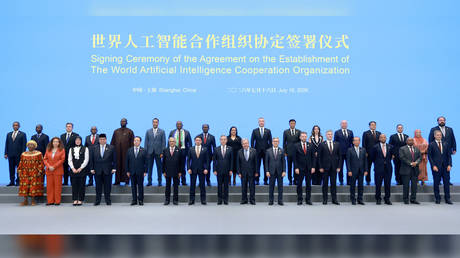
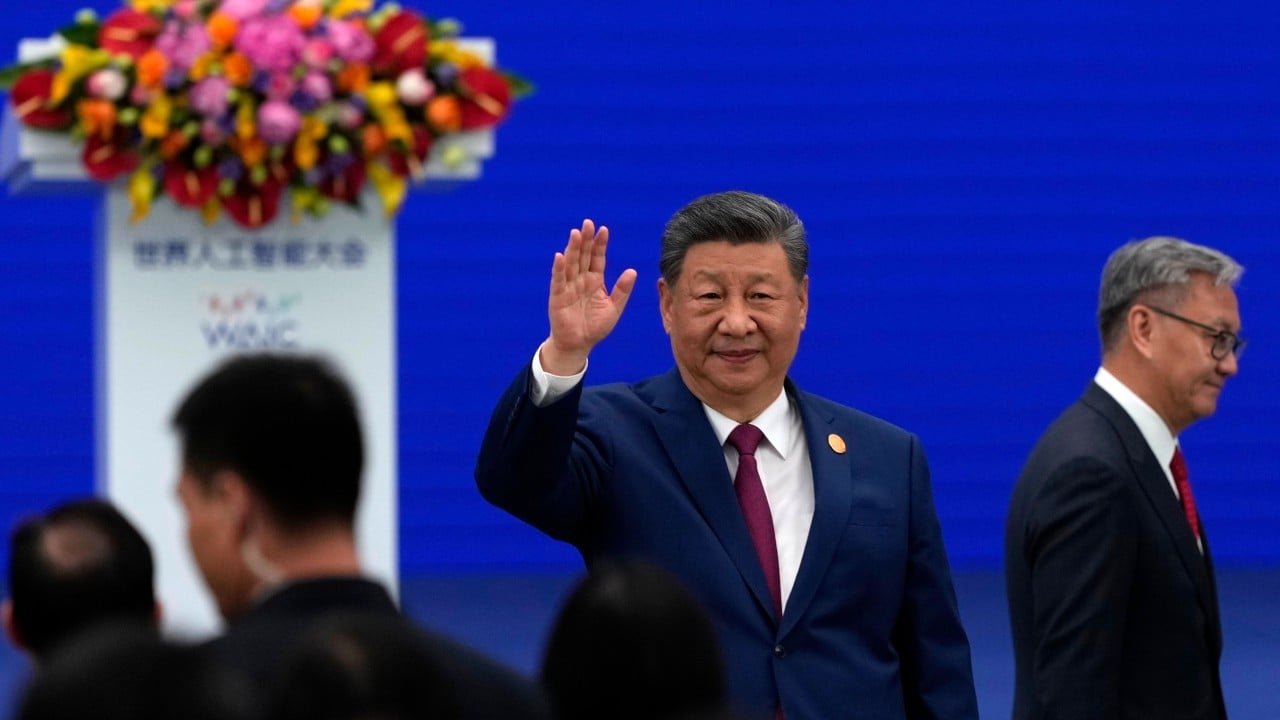
At the World Internet Conference, Chinese President Xi Jinping delivered a speech that flipped the script on how we view the global race for artificial intelligence. He called for "openness" and explicitly opposed what he termed a "one country" rule in AI.
To understand why this matters, we have to look past the diplomatic jargon. We have to look at the people who live in the margins of these algorithms. Experts at Ars Technica have also weighed in on this matter.
The Invisible Borders of the Mind
Think of a young software developer, let's call her Mina, working from a small apartment in Jakarta. Mina is brilliant, but her startup cannot afford the astronomical costs of renting computational power from the world's dominant tech giants. Every tool she uses, every library of code she accesses, is shaped by values, laws, and biases thousands of miles away.
When a single country, or a tiny cartel of nations, dictates the rules of AI, they do not just export software. They export a worldview.
If the digital architecture of the future is built exclusively in one corner of the globe, Mina’s reality is filtered through a foreign lens. Her local culture, her language's subtle nuances, and her community's specific needs are compressed and flattened by algorithms that do not understand them. This is the "one country" rule in practice. It is a quiet, bloodless form of colonization, executed through APIs and cloud subscriptions.
Xi’s address targeted this exact friction point. By advocating for a multilateral approach to AI governance, Beijing is positioning itself as the champion of the developing world’s digital sovereignty. It is a brilliant rhetorical pivot. The message to nations outside the traditional tech hegemony is clear: You do not have to bow to a single digital superpower.
But international diplomacy is rarely a charity mission.
The Paradox of the Open Gate
We must sit with a difficult truth. The call for "openness" from a state known for its highly regulated internet—the Great Firewall—feels contradictory. It is easy to dismiss the rhetoric as mere posturing.
Yet, the anxiety driving this stance is incredibly real.
To understand the tension, consider the concept of a digital blockade. In the current geopolitical climate, access to advanced semiconductors and AI training hardware has become the ultimate leverage. By cutting off access to the physical building blocks of computation, dominant players can effectively freeze a competitor's technological evolution.
When Beijing calls for open cooperation and criticizes unilateral barriers, it is reacting to a very tangible vulnerability. It is the fear of being locked out of the global brain.
For an engineer working in a lab in Shanghai, the threat of export controls is not an abstract political talking point. It means the projects they have dedicated their lives to could stall overnight because a shipment of microchips was blocked at a port. It means their intellectual horizon is bounded by geopolitical chess moves they cannot control.
So, the demand for shared governance is born of necessity. It is a defensive maneuver dressed in the language of global cooperation.
Who Writes the Rules of the Machine?
Let us strip away the political theater. The core disagreement is not about whether AI should be regulated. Everyone agrees it must be. The real battle is over who gets to write the dictionary of ethics that these machines will live by.
Imagine a self-driving car forced to make a split-second decision in a crowded intersection. How does it value a human life? Does it prioritize the passenger, or the pedestrian? Does it value youth over age?
The answers to these questions are not universal. They are deeply cultural.
- A system trained on highly individualistic Western philosophy will make one decision.
- A system built on collective, community-first values will make another.
If one country establishes the global standards for AI safety and ethics, they effectively codify their cultural values into the global infrastructure. Every nation that imports their technology imports their morality.
This is why the debate over global AI governance is so fierce. It is a quiet war over the psychological future of humanity. By pushing back against a unilateral regulatory framework, China is demanding a seat at the table where the global operating system is being written. They are arguing that no single nation should possess the moral monopoly on the future.
The Fragile Path Forward
We are left in a state of profound uncertainty. The promise of global cooperation on AI is beautiful. A world where nations share breakthroughs to cure diseases, mitigate climate change, and lift communities out of poverty is a world worth fighting for.
But the path to that world is cluttered with distrust.
Every country fears that if they play by cooperative rules, their rivals will secretly sprint ahead. The temptation to build closed, weaponized systems in secret is immense. Trust is the rarest commodity in global politics, and right now, the reservoirs are running dry.
Mina, sitting at her desk in Jakarta, does not care about the grand speeches delivered at glitzy conferences. She cares about whether the code she writes tomorrow will belong to her, or if she will remain a tenant in a digital feudal system.
The hum of the servers continues. They do not care about borders, speeches, or treaties. They simply calculate. But the hands that build them, and the minds that guide them, remain stubbornly, beautifully, and terrifyingly human.