Los Angeles smells like old asphalt, burnt sugar from midnight taco trucks, and the faint, sweet promise of reinvention. But inside the inner sanctum of the franchise that defines this city's athletic heartbeat, the air carries a different weight. It smells of history. It smells of family dinners interrupted by flashbulb memories of three-peat championships. And right now, it smells like smoke.
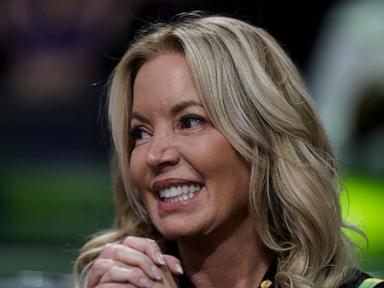
Jeanie Buss knows that smoke. She grew up breathing it.
When Dr. Jerry Buss bought the Los Angeles Lakers in 1979, he didn't just purchase a basketball team. He bought a circus, a glittering metropolis of neon-lit Hollywood glamour fused with relentless athletic ambition. He turned a sports franchise into a lifestyle. He sat courtside with Jack Nicholson, positioned showgirls near the hardwood, and created Showtime. But more than anything, he built an empire meant to outlast him. He divided his controlling ownership among his six children, establishing a fragile, utopian pact: the Buss family would steer the ship together, forever.
Forever is a long time in professional sports.
The cracks in that pact have widened into canyons. Recently, reports surfaced detailing a quiet, seismic maneuver by Jeanie’s siblings—a plan to sell their minority ownership stake to high-profile heavyweights Jared Kushner and Bob Iger. Think about that collision of worlds for a moment. Sports, streaming media empires, and high-stakes political adjacency converging on a single franchise. To the casual observer scanning a dry financial headline, it looks like a simple stock transfer, a group of siblings liquidating assets to buy real estate or diversify portfolios. Numbers on a spreadsheet shifting from one column to another.
It is not a spreadsheet transaction. It is an eviction notice.
Jeanie Buss understands what happens when outsiders cross the threshold. She has spent her entire life protecting her father’s legacy from the sharks circling the perimeter of Staples Center—or Crypto.com Arena, as the corporate ledger demands we call it now. When siblings attempt to hand a piece of the purple and gold to external titans like Iger and Kushner, they aren’t just cashing out. They are diluting the bloodline. They are trading the romantic, idiosyncratic ownership model that made the Lakers a global religion for corporate efficiency and external boardrooms.
And she is going to fight them.
Friction is the natural state of family businesses. Walk into any diner in America on a Sunday afternoon and you will see siblings arguing over an estate, a piece of land, a rusted tractor left behind by a grandfather. Scale that up by a billion dollars, cast the drama under the unforgiving glare of Los Angeles stadium lights, and you begin to understand the psychological pressure cooker Jeanie inhabits. She is not merely defending her position as controlling owner. She is honoring an unspoken promise made to a dying man who believed his children possessed enough grace to keep the crown jewel intact.
Consider the alternative. What happens if external buyers gain a foothold inside the boardroom? The culture shifts. Decisions once weighed against the emotional resonance of legacy become calculated purely through the lens of quarterly earnings and media synergies. The soul of the franchise gets outsourced. Jeanie has seen the league change. She remembers when owners were eccentric oil barons and real estate visionaries who treated teams like eccentric personal hobbies rather than algorithmic content farms. She is the last of a dying breed—an owner who bleeds the actual colors, not just the capital gains.
The siblings pushing for this sale see dollar signs. They see an exit strategy wrapped in an exorbitant valuation. In the current era of sports economics, franchise values have skyrocketed into astronomical stratospheres, pushed upward by lucrative television contracts and global streaming wars. A minority stake in the Lakers isn't just valuable; it's a golden ticket. Who wouldn't want to cash it in? Who wouldn't look at a mountain of generational wealth and feel the pull of gravity?
Yet, wealth without anchor is just noise.
Jeanie’s opposition to the sale is rooted in a fierce, protective instinct that defies cold economic logic. To her, a share in the Lakers is not a stock certificate you trade when the market peaks. It is a seat at a historic dinner table. Once you sell that seat to outsiders—no matter how powerful, famous, or culturally ubiquitous those outsiders might be—you can never buy it back. The dynamic changes permanently. The family table becomes a boardroom table.
The legal and structural mechanisms governing NBA ownership are notoriously stringent. Minority sales require approvals, evaluations, and compliance with league bylaws designed to protect the integrity of governance. Jeanie’s intention to contest the move relies on these governance structures, but its emotional fuel comes from somewhere much deeper. It comes from the memory of her father pacing the sidelines, cigarette smoke curling into the Forum rafters, whispering plays that would alter basketball history.
Outsiders often wonder why sports ownership carries such obsessive, irrational passion. Why do billionaires and their heirs fight tooth and nail over percentage points of a company that manufactures nothing tangible? Because sports are the last secular religion we have. They provide tribal identity, communal catharsis, and a shared narrative in a fragmented world. When you own a piece of the Lakers, you own a piece of Los Angeles myth-making. You are the custodian of memories belonging to millions of strangers who cried when Kobe Bryant tore his Achilles and danced in the streets when Magic Johnson hoisted another trophy.
When family discord threatens to auction off pieces of that myth to corporate titans, it feels like a betrayal of the faithful.
The battle lines are drawn. On one side stand the pragmatists, armed with calculators and eager for liquidity, willing to welcome media royalty and political heavyweights into the inner circle. On the other stands Jeanie Buss, standing guard at the gates of Showtime, weaponizing every legal and structural tool at her disposal to preserve an endangered species of ownership.
The outcome remains uncertain. Courts, league commissioners, and boardroom maneuverings will dictate the procedural next steps. But the true story isn't about legal clauses or valuation multiples.
It is about what we choose to sell, and what we refuse to let go of, even when the price is right.
The lights inside the arena are dim tonight. The hardwood floor is polished to a mirror shine, reflecting the ghosts of banners hanging silently in the dark. Out there in the city, the traffic hums its endless, restless rhythm. And somewhere in a quiet room, a battle over legacy continues, quiet and fierce, determining whether the kingdom built by a visionary father will remain whole, or fracture under the weight of the future.