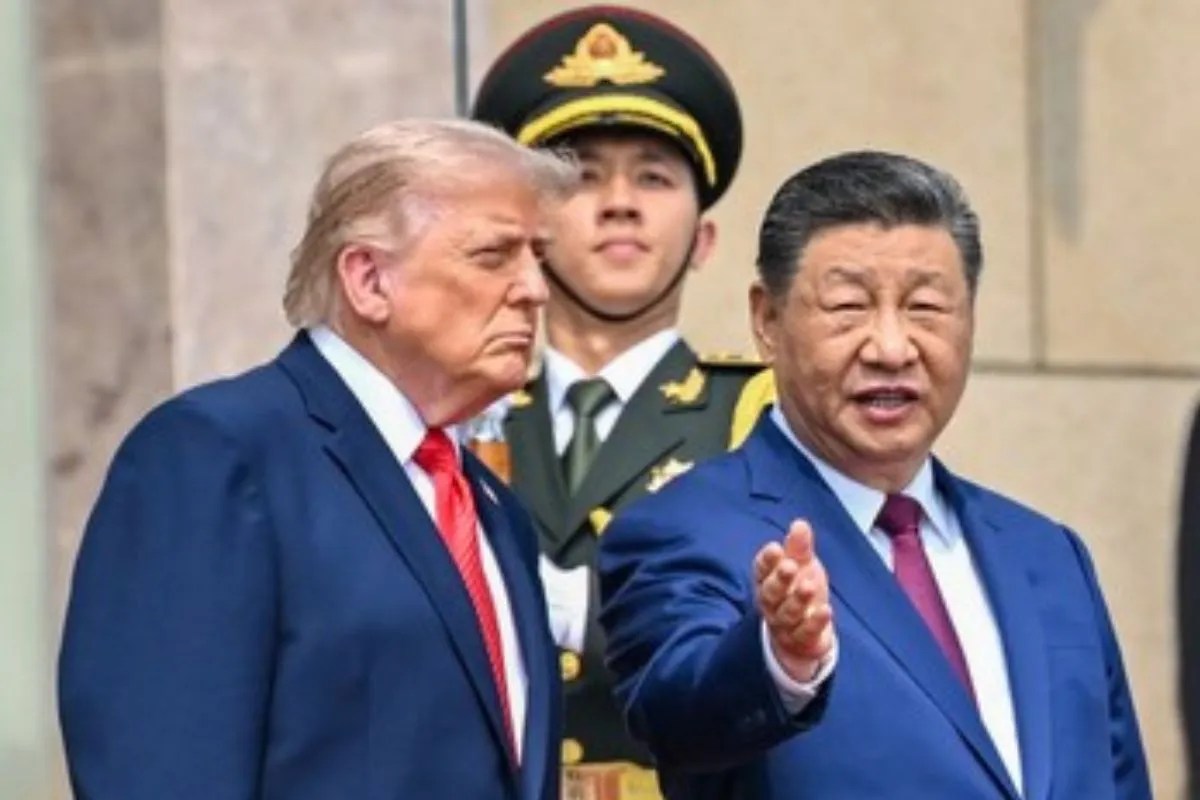
Beijing has signaled a clear intent to maintain its steady intake of Iranian petroleum regardless of deepening diplomatic friction with Washington. This stance reflects a calculated defiance, ensuring that despite the threat of secondary sanctions and heightened geopolitical maneuvers in the Middle East, the flow of energy to Chinese refineries remains uninterrupted. For the architects of American foreign policy, this refusal to buckle represents a frustrating reality where traditional economic leverage encounters the hard wall of China’s internal security requirements and strategic autonomy.
The relationship between Beijing and Tehran is often simplified as a straightforward oil-for-cash arrangement. It is far more complex. China treats its energy imports from Iran as a vital component of its national stability, viewing unilateral sanctions imposed by Washington not as international law, but as tools of political coercion. By purchasing crude that other global powers avoid, Beijing stabilizes its supply chains while simultaneously strengthening an ally that sits squarely at the heart of the American containment strategy.
The mechanics of the shadow trade
To understand why this trade persists, one must look at how the transaction actually operates. Standard international financial systems, dominated by the dollar, are designed to track and penalize commerce involving sanctioned entities. To circumvent this, the two nations have developed an intricate architecture of small, independent refineries—frequently referred to as "teapots"—and a fleet of tankers that often go dark, turning off their transponders to mask their movements.
These transactions are rarely conducted in dollars. Instead, they utilize a mix of barter systems and localized currencies, effectively insulating the trade from the reach of the United States Treasury. While Western observers often focus on the volume of oil, the real story lies in the financial infrastructure that has been built over the last decade. It is a resilient system designed specifically to survive the very conditions that Washington hopes will force an economic collapse in Iran.
China’s state-owned enterprises play a measured role, often leaving the bulk of the direct purchasing to smaller, private refineries that are less exposed to the international banking system. This creates a firewall. If Washington moves to sanction a specific entity, the impact is contained within a small circle of firms, leaving the broader economic relationship between Beijing and Tehran untouched.
Strategic depth versus tactical noise
The frequent statements from Beijing regarding their right to trade with Iran are not mere diplomatic rhetoric. They serve as a signal to the broader Global South that China remains a reliable partner that does not abandon its economic commitments under foreign pressure. This is a deliberate brand-building exercise. By maintaining these imports, China positions itself as an alternative pole of power, one that does not prioritize the political agendas of Western coalitions over its own energy security.
There is a cost, of course. Participating in this shadow trade forces Chinese firms to navigate a maze of logistical difficulties, higher insurance premiums, and the constant threat of regulatory action. However, Beijing views these costs as a necessary premium. Energy independence is the bedrock of their long-term economic planning. If the price of that independence is the occasional diplomatic rebuke from the State Department, Beijing considers it a manageable expense.
The myth of economic isolation
Washington’s strategy has historically rested on the assumption that extreme economic pressure will force regimes to the negotiating table. When applied to Iran, this logic assumes that the loss of legitimate export channels will inevitably lead to a change in behavior or internal collapse. China’s refusal to participate in this isolation strategy effectively renders the American model incomplete.
If one were to analyze the situation through a purely mathematical lens, one might argue that the global market should be able to force a change. Hypothetically, if all major economies agreed to restrict imports simultaneously, the resulting economic crunch would be undeniable. Yet, the real world rarely adheres to such neat theoretical models. The presence of a massive, non-compliant buyer like China means that the "squeeze" never reaches the level of pressure required to force total capitulation.
This creates a stalemate. Washington maintains its pressure, hoping to tighten the noose, while Beijing quietly clears the path for Iranian oil to reach the market. It is a slow-motion game of attrition where the primary currency is not oil, but political endurance.
Beyond the tanker reports
Industry analysts often get distracted by monthly shipping data, trying to quantify the exact number of barrels moving through the Strait of Hormuz. While this data is important, it misses the larger transformation occurring in regional alliances. The oil trade is merely the lubricant for a deeper partnership.
When Beijing secures these energy supplies, it is also securing a geopolitical foothold. By providing an economic lifeline, they gain influence over Iranian internal policy, infrastructure projects, and defense cooperation. This is not just about keeping refineries in Shandong running; it is about ensuring that the regional power balance in the Middle East does not shift in a way that favors American dominance.
The reality of the current energy landscape is that global supply chains are far more fragmented than they were twenty years ago. The notion of a singular, globally enforced sanctions regime is an artifact of a different era. Today, nations like China are actively building parallel systems that prioritize domestic security over global compliance.
As the competition intensifies, expect to see further attempts by Washington to target the financing behind these shipments. However, unless there is a fundamental shift in how Beijing calculates the cost of isolation, the tankers will continue to sail, the teapots will keep refining, and the energy will continue to flow into China’s industrial heartland. The defiance is not an anomaly. It is the new foundation of a fractured international order where energy security is the final arbiter of foreign policy. The window for effective intervention, at least through the traditional methods favored in the past, has effectively closed.