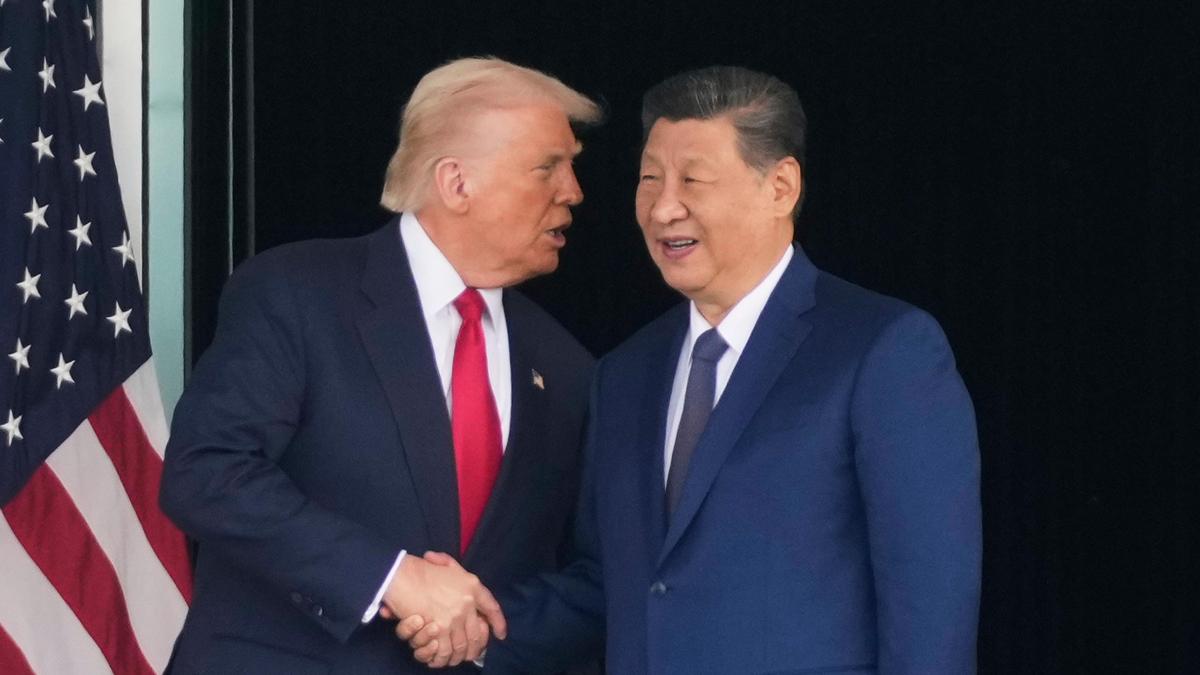
The diplomatic tension in Beijing right now isn't just about trade figures or diplomatic protocol. It is about survival. As Donald Trump prepares to re-enter the White House, the Chinese leadership is operating under a cloud of genuine urgency that goes far beyond their public facade of "mutual respect and win-win cooperation." They know the old playbook is dead.
For years, the bilateral relationship relied on a predictable cycle of friction followed by managed stabilization. That cycle has shattered. Beijing’s core concern during these high-level talks isn't just the threat of 60 percent tariffs, though those are daunting enough. The real fear is a total systemic decoupling that would isolate the Chinese economy at its most vulnerable moment since the 1980s. With a domestic property crisis still smoldering and youth unemployment reaching levels that keep party officials awake at night, Xi Jinping cannot afford a prolonged war of attrition with a revived "America First" administration.
The Strategy of Preemptive Concession
Beijing is no longer waiting to react. In previous years, the Chinese Ministry of Commerce would meet every American threat with a proportional retaliation. That "tooth for a tooth" strategy has been shelved in favor of something more surgical. They are currently identifying "points of least resistance"—sectors where they can offer Trump a quick, televised victory in exchange for a stay of execution on broader technological restrictions.
The math is simple but brutal. If the U.S. follows through on the most extreme versions of its proposed tariff hikes, the hit to China’s GDP could exceed two percentage points. In a country where the social contract is built on the promise of perpetual growth, that isn't just an economic statistic. It is a political emergency. To prevent this, Chinese negotiators are arriving at the table with a list of massive purchase agreements for American energy and agricultural products. They are essentially trying to buy time.
The Semiconductor Trap
While soybeans and Boeing jets make for good headlines, the real battlefield is found in the microscopic architecture of high-end chips. Beijing’s "Made in China 2025" goals have hit a wall built of export controls and Dutch lithography machines. They are desperate to find a loophole or a "grand bargain" that relaxes the restrictions on AI-capable hardware.
Without access to the most advanced logic chips, China’s lead in electric vehicles and green energy could vanish within a decade. They are currently burning through billions in state subsidies to build a domestic supply chain, but the results are uneven. For every success story, there are three state-funded "zombie companies" that produce nothing but debt and outdated silicon.
The Ghost of the 2020 Phase One Deal
There is a deep sense of bitterness in the Chinese camp regarding how the last trade deal ended. They feel they were forced into a corner and then blamed for failing to meet impossible targets during a global pandemic. Trump, conversely, views the non-fulfillment of those purchase quotas as a breach of trust.
This creates a fundamental credibility gap. How do you negotiate a new deal when both sides believe the other is acting in bad faith?
Chinese analysts are currently dissecting every cabinet appointment in the incoming administration. They aren't looking for friends; they know there aren't any left in Washington. They are looking for "transactionalists"—people who can be swayed by bottom-line logic rather than ideological hawks who want to see the CCP dismantled. The shift from "engagement" to "containment" in U.S. policy is now viewed in Beijing as a bipartisan consensus that only varies in intensity, not direction.
Domestic Pressure and the Nationalistic Backlash
Xi Jinping faces a delicate balancing act at home. He must appear strong enough to stand up to "American hegemony" to satisfy a domestic audience that has been fed a steady diet of nationalist rhetoric. However, he must be pragmatic enough to prevent an economic meltdown.
If he yields too much, he looks weak to the hardliners within the Politburo. If he yields too little, the factories in Guangdong start closing their doors. We are already seeing the cracks. Small-scale protests over unpaid wages and frozen bank assets are becoming more frequent. These are the "underlying concerns" that never make it into the official state media dispatches but dominate the internal briefings.
The Diversification Gambit
To mitigate the risk of these talks failing, China is aggressively pivoting toward the "Global South." This isn't just about diplomacy; it's about building a parallel trade universe that doesn't rely on the U.S. dollar or the American consumer.
- BRICS Expansion: Using the bloc to create alternative payment systems.
- Belt and Road 2.0: Focusing on digital infrastructure and telecommunications in Southeast Asia and Africa.
- Currency Swap Lines: Encouraging trade in Yuan to bypass the SWIFT system.
This strategy assumes that the U.S. market is a declining asset. It is a risky bet. Despite all the talk of a "multipolar world," the American consumer remains the ultimate engine of global trade. Losing that access would relegate China to a middle-income trap that it might never escape.
The Silicon Shield and the Taiwan Factor
Every discussion about trade eventually hits the reef of Taiwan. In Beijing's view, the island is the ultimate bargaining chip, but also a non-negotiable red line. They are watching closely to see if the new administration will treat Taiwan as a strategic asset to be defended or a trade lever to be traded away.
The concern is that a "deal-maker" president might be willing to reduce arms sales or diplomatic support for Taipei in exchange for a massive trade concession or a commitment to help with the fentanyl crisis. While this might seem like a win for Beijing in the short term, it creates massive instability. Uncertainty is the enemy of the markets, and the threat of a kinetic conflict in the Taiwan Strait is the "black swan" event that both sides are desperately trying to price into their models.
Weaponizing Rare Earths
If the talks turn sour, Beijing has one card it hasn't fully played: its dominance over the processing of rare earth elements. These materials are essential for everything from F-35 fighter jets to the magnets in EV motors.
In recent months, China has tightened export reporting requirements for these minerals. It is a shot across the bow. It is a reminder that while the U.S. can cut off China's future (high-end chips), China can choke the U.S.'s present (industrial manufacturing). This is the "mutual assured destruction" of the modern supply chain.
The Reality of the Negotiating Table
When the teams sit down, the atmosphere will be clinical. The time for grand banquets and "forbidden city" tours is over. The Chinese side, led by veteran technocrats, will arrive with binders full of data designed to show that a trade war hurts the American swing-state voter just as much as the Chinese factory worker.
They will point to the inflation that tariffs cause. They will highlight the loss of market share for American farmers. But they know these arguments have lost their sting. The American political landscape has shifted; the "cost of living" argument is now secondary to the "national security" argument.
Beijing’s genuine urgency stems from the realization that they are no longer competing with a partner, but a rival who has decided that the only way to win is to ensure the other side loses. They are fighting for a seat at a table that is being dismantled while they sit at it.
The outcome of these talks won't be a return to the status quo. It will be a managed retreat, a messy divorce, or a cold peace. Anything else is wishful thinking. The factories in the Pearl River Delta aren't waiting for a communique; they are already looking for ways to move their assembly lines to Vietnam or Mexico. The decoupling isn't coming; it's here.