Beijing’s recent directive to transition its massive AI data center inventory to renewable energy is not an environmental gesture but a calculated response to the thermal and electrical constraints of urban power grids. The "Beijing Action Plan for Promoting the Development of the Integrated Computing Power Network (2024-2027)" establishes a non-negotiable link between the right to operate high-density compute clusters and the procurement of green energy. This policy shifts the operational burden from simple capacity expansion to a complex optimization problem involving energy-efficiency ratios, localized power generation, and grid-stress mitigation.
The Trilemma of Urban Compute Density
The expansion of Large Language Models (LLMs) creates a physical bottleneck in Tier-1 cities. Beijing faces a trilemma: the need for low-latency proximity for AI applications, the finite capacity of the municipal power grid, and national carbon intensity mandates. The Action Plan addresses this by imposing structural requirements on how data is processed and powered. For another look, see: this related article.
The plan identifies three specific levers for control:
- Direct Power Purchase Agreements (PPAs): Forcing operators to contract directly with wind and solar providers in neighboring provinces like Hebei and Inner Mongolia.
- Power Usage Effectiveness (PUE) Hard Caps: Setting a ceiling of 1.15 for new builds and a mandate for retrofitting existing facilities that exceed 1.35.
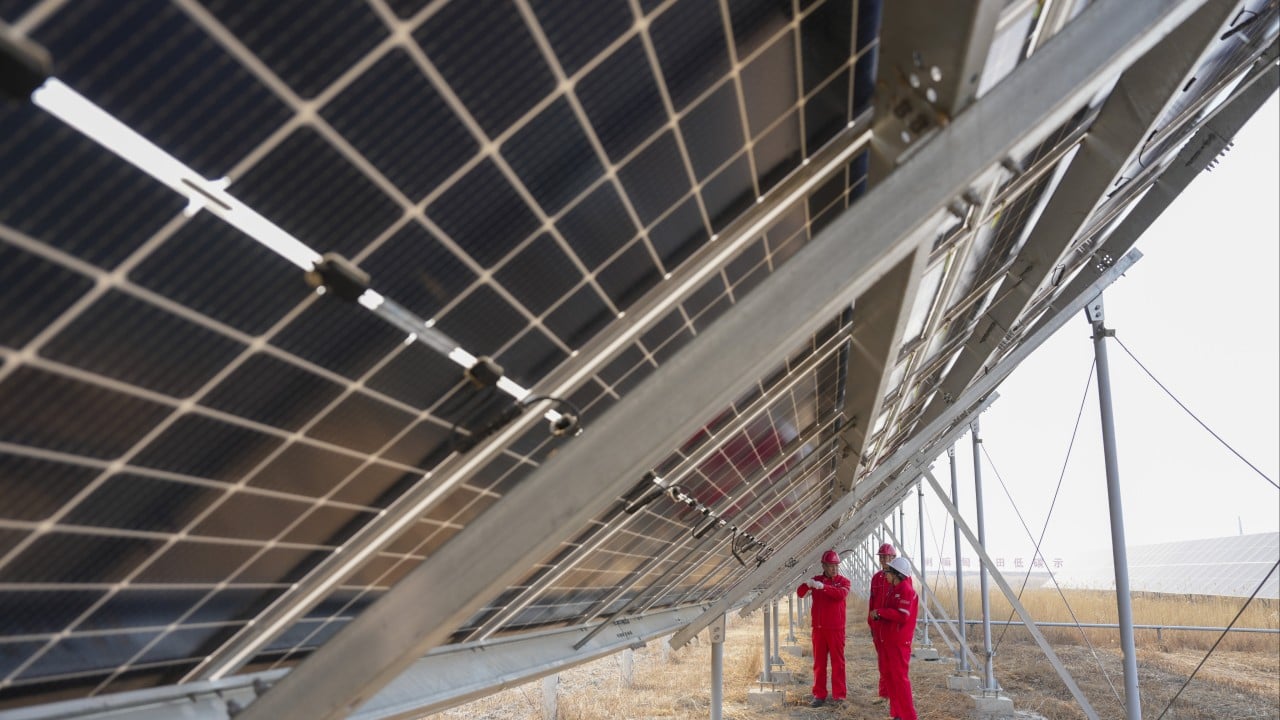
- Distributed Energy Resources (DER): Encouraging on-site photovoltaic (PV) installations and battery energy storage systems (BESS) to shave peak demand.
The Thermodynamic Limit and PUE Compression
Most legacy data centers operate with a PUE (the ratio of total facility power to IT equipment power) between 1.4 and 1.6. In these environments, nearly 40% of electricity is wasted on cooling and power conversion. Beijing’s move to mandate a PUE of 1.15 forces a transition from traditional air-cooling to advanced liquid cooling technologies. Related analysis regarding this has been published by TechCrunch.
The physics of heat transfer dictates that air-cooling reaches its efficiency limit at approximately 20kW per rack. Modern H100 or domestic equivalents (such as Huawei’s Ascend chips) often require rack densities exceeding 40kW to 60kW to maintain the low-latency interconnects necessary for training. At these densities, air is an insufficient heat transfer medium.
- Cold Plate Cooling: Directly circulating coolant through blocks attached to the processors. This reduces the energy required for fans but increases mechanical complexity and leak risks.
- Immersion Cooling: Submerging hardware in dielectric fluid. While this offers the lowest possible PUE (near 1.03), it requires a total redesign of server chassis and introduces significant maintenance hurdles regarding fluid filtration and hardware access.
The Beijing mandate essentially bans air-cooling for new AI-specific builds, turning liquid cooling from a niche hardware choice into a regulatory necessity.
Structural Decoupling of Computing and Power
The Action Plan promotes a "Sovereign Computing Network" that attempts to solve the energy scarcity of the capital by exporting non-latency-sensitive workloads. This creates a functional hierarchy in the Beijing compute ecosystem.
Real-time Inference Layers
Facilities located within the Beijing municipal boundary are being prioritized for "Inference," where millisecond latency is required for consumer-facing AI apps, autonomous driving, and financial high-frequency trading. These facilities must meet the highest green energy standards because they are competing for the same urban electricity used by residential and industrial sectors.
Batch Training Layers
The plan incentivizes "Training" workloads—which are less sensitive to network jitter—to migrate to the "Eastern Data, Western Computing" hubs. By moving these workloads to regions with a surplus of stranded wind and solar power (like Ningxia or Guizhou), Beijing reduces the pressure on its internal grid while technically fulfilling its green energy quotas through "inter-regional green power trading."
The Economic Impact of Green Energy Procurement
Shifting to green energy is often framed as a cost-reduction strategy, but the immediate reality for Beijing operators is a surge in OPEX (Operating Expenses). Renewable energy is intermittent; data centers are not.
The cost function of a Beijing AI data center now includes a "Green Premium" derived from two factors:
- Transmission and Distribution (T&D) Costs: While solar in the Gobi Desert is cheap at the source, the cost of transporting that electrons via High Voltage Direct Current (UHVDC) lines to Beijing adds significant per-kWh fees.
- Firming Costs: To maintain 99.999% uptime, operators cannot rely on intermittent solar. They must pay for "firming"—the cost of backup natural gas generation or massive battery arrays to bridge the gap when the sun sets.
The Action Plan attempts to mitigate this by allowing data centers to participate in the "Green Electricity Certificate" (GEC) market. However, a GEC is a financial instrument, not a physical electron. The structural goal of the policy is to eventually move away from certificates toward physical "behind-the-meter" renewable integration.
Constraints of the Integrated Computing Network
While the policy is rigorous, it faces three significant execution risks that operators must account for:
- Interconnect Latency: Linking Beijing’s urban edge nodes with remote green energy hubs requires a fiber-optic infrastructure with ultra-low latency. If the round-trip time (RTT) exceeds 20ms, the distributed computing model fails for collaborative training tasks.
- Grid Stability: High-density AI loads are notoriously "spiky." When an LLM begins a massive training run, the power draw can jump by megawatts in seconds. Beijing’s grid must be upgraded with smart-switching capabilities to prevent these surges from destabilizing the local distribution network.
- Hardware Heterogeneity: The mandate to use green energy and domestic chips simultaneously creates a double optimization burden. Operators must optimize software stacks for Chinese-made silicon while simultaneously optimizing the hardware for high-temperature liquid cooling environments.
The Strategic Shift for Infrastructure Investors
For capital allocators and data center REITs, the Beijing Action Plan signals the end of the "Commodity Data Center." Value is no longer found in square footage, but in energy-source security and thermal management IP.
Strategic priority must be placed on:
- Securing Long-term PPAs: Locking in renewable pricing now before the 2027 deadline creates a massive demand spike that will drive up green power prices.
- Retrofitting for Density: Abandoning 5kW-per-rack designs in favor of 50kW+ liquid-cooled architectures. Legacy "brownfield" sites in Beijing that cannot support liquid cooling will face rapid asset depreciation as they fail to meet the new PUE mandates.
- Edge-to-Cloud Orchestration: Developing software layers that can automatically shift workloads between "Green Western Hubs" and "Urban Inference Nodes" based on real-time electricity pricing and carbon intensity.
The requirement for 100% green energy utilization by 2027 in Beijing is not a suggestion—it is the new baseline for market entry. Firms that treat this as a compliance checkbox will find themselves with stranded assets, while those who integrate energy procurement into their core architecture will monopolize the high-margin AI compute market in China's capital. Only facilities that solve the heat-density-carbon equation will be permitted to draw power from the Beijing grid over the next decade.