Every major foreign policy outlet just fell for the oldest trick in the diplomatic playbook.
When Chinese state media—specifically Xinhua, the People’s Daily, and the Global Times—start chanting the three-word mantra of "Constructive, Strategic, Stability" ahead of a Xi-Trump summit, the Western press corps treats it like a weather forecast. They dutifully transcribe the talking points, nod solemnly at the promise of "guardrails," and write thousands of words about how Beijing wants to "manage competition" and "avoid conflict." Expanding on this theme, you can find more in: Why Tampered Sports Drinks in Hong Kong Schools Should Terrify Parents.
That is lazy consensus masquerading as analysis.
Having spent fifteen years advising multinational supply chains and institutional capital through three successive waves of US-China trade wars, I can tell you what happens when boardrooms take Beijing’s diplomatic phrasing at face value. Companies blow hundreds of millions of dollars on "de-risking" half-measures, convinced that a summit handshake means the geopolitical temperature is dropping. They misread the room entirely. Analysts at The Washington Post have provided expertise on this matter.
Beijing is not offering a truce. Beijing is defining the rules of a cage match so that only one fighter is allowed to throw punches.
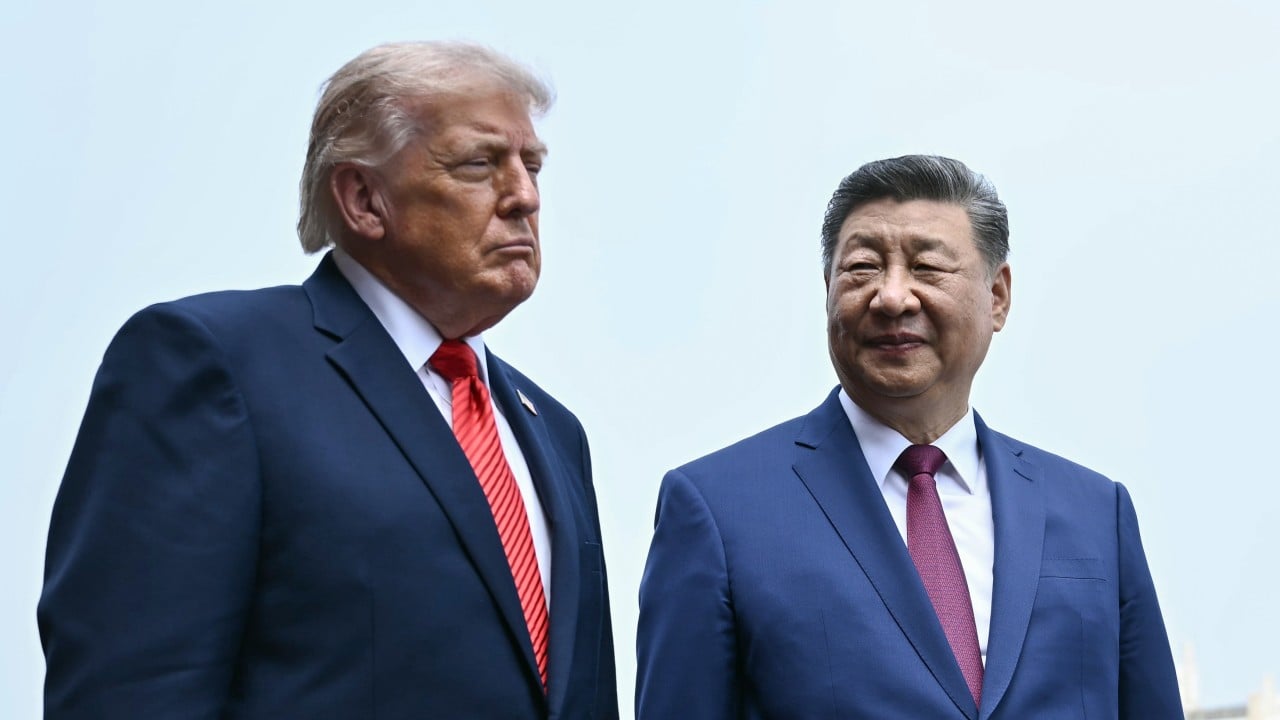
If you want to understand what is actually happening before Xi Jinping and Donald Trump sit across from each other, stop reading the translations of state media editorials as sincere policy proposals. Read them as operational warfare.
The Dictionary of Diplomatic Misdirection
In Washington, words like "stability" and "constructive" mean reducing friction, honoring existing agreements, and finding a middle ground where both sides walk away slightly unhappy.
In Zhongnanhai, those exact same words have entirely different definitions. According to the Chinese Communist Party’s (CCP) established diplomatic lexicon—a framework dissected for decades by scholars like Rush Doshi in The Long Game and Jude Blanchette at the Center for Strategic and International Studies—language is an instrument used to bind the adversary while preserving total freedom of action for the Party.
When Beijing demands Stability, it does not mean a mutual freeze on provocative behavior. It means Washington must stop imposing new export controls on advanced semiconductors, halt outbound investment screening, and cease arming Taiwan. Meanwhile, Beijing’s own actions—subsidizing industrial overcapacity in electric vehicles, solar panels, and legacy chips, or conducting gray-zone harassment in the South China Sea—are framed as the "baseline status quo." Any American reaction to those baseline activities is then labeled "destabilizing."
When Beijing asks for a Constructive atmosphere, it is setting a precondition. It means the United States must stop criticizing China’s domestic economic model, human rights record, or intellectual property practices before any real negotiations can begin. If Washington brings up structural complaints, Washington is being "unconstructive."
When Beijing invokes Strategic vision, it is trying to pull Trump away from granular, transactional metrics—like specific purchase commitments, tariff schedules, and market-access enforcement—and trap him in vague, high-level platitudes. Beijing knows Trump loves big, historic visuals. If Xi can get Trump to sign onto a broad declaration of "mutual respect and peaceful coexistence," Chinese diplomats will spend the next four years citing that single sentence every time the US Commerce Department tries to sanction a Chinese tech firm.
The mainstream media’s error is treating these three words as a shared goal rather than a unilateral constraint.
The Structural Math Beijing Cannot Escape
Why is Beijing pushing the "stability" narrative so aggressively right now? Not because it has suddenly embraced free-market harmony. It is doing it out of sheer economic necessity.
Look at the actual numbers, not the press releases. China’s traditional growth engines are misfiring simultaneously:
- The Real Estate Bust: Property investment, which historically accounted for roughly a quarter to a third of China’s GDP when accounting for upstream and downstream industries, remains trapped in a multi-year contraction. Local government financing vehicles (LGFVs) are drowning in trillions of dollars of off-balance-sheet debt.
- Deflationary Pressure: Persistent producer price deflation and weak domestic consumer confidence mean Chinese households are hoarding cash rather than spending it.
- The Export Valve: Because domestic consumption cannot absorb what Chinese factories produce, Beijing has doubled down on state-directed manufacturing—what Xi calls "new quality productive forces." To keep factories running and prevent urban unemployment from spiking, China must export its surplus industrial capacity to the rest of the world.
This is the core contradiction that mainstream commentators miss. Beijing needs access to Western consumer markets to offload its deflationary overcapacity, yet its industrial policies are actively hollowing out the manufacturing bases of the very countries it wants to sell to.
A full-blown, chaotic tariff wall from a Trump administration threatens to slam shut the primary release valve for China’s domestic economic pressure. Therefore, Beijing’s immediate tactical objective is to buy time. It needs to delay tariffs, fracture the consensus between Washington and Brussels, and keep the export lanes open while it races toward technological self-reliance.
"Stability" is simply the branding campaign for that delay tactic.
Why Both Sides Are Asking the Wrong Question
If you look at the public debate surrounding a Xi-Trump meeting, almost every pundit is fixated on the same tired question: Can the US and China strike a grand bargain to prevent a Cold War?
That question is fundamentally broken. You cannot strike a grand bargain when the two systems are operating on incompatible definitions of economic security.
For decades, Western economists assumed that integrating China into the World Trade Organization would force Beijing to converge toward market norms. That thesis failed. Instead, the CCP proved that a state-capitalist leninist system can absorb global capital, scale dominant national champions, and use market access as geopolitical currency without ever liberalizing its political or economic core.
The real question isn't how to stabilize the relationship. The real question is: How do you price in permanent, structural rivalry without triggering an accidental kinetic war?
Let’s dismantle the three biggest myths surrounding this summit that keep distorting investor and policy decisions.
Myth 1: A personal rapport between Xi and Trump will override institutional hostility
We saw this movie during Trump’s first term. Trump routinely praised Xi as a "brilliant leader" and a "great friend," even while his own administration was slapping tariffs on $370 billion worth of Chinese goods and placing Huawei on the Entity List.
Personal warmth at the top does not alter the gravitational pull of national security institutions in either capital. In Washington, bipartisan hawkishness on China is one of the few remaining areas of consensus on Capitol Hill. In Beijing, Xi Jinping has spent over a decade centralizing power around national security, explicitly warning his cadres to prepare for "worst-case and extreme scenarios." Handshakes at a summit do not rewrite export control regulations or reverse supply chain mandates.
Myth 2: Beijing holds all the cards because of critical minerals and supply chains
China dominates the processing of rare earth elements, gallium, germanium, and battery-grade graphite. Pundits love to point this out as proof that Washington has to play nice.
They forget how leverage actually works in trade wars. Leverage only works if you can use it without destroying yourself, and it decays the moment you threaten to pull the trigger. Every time Beijing restricts exports of critical minerals, it hands Western governments the exact political justification they need to subsidize non-Chinese mining and refining projects. Beijing knows that weaponizing its supply chain dominance accelerates its own obsolescence. It is a one-time bullet, not a permanent shield.
Myth 3: Tariffs are purely inflationary and therefore politically impossible for Trump to sustain
Standard macroeconomic models say tariffs act as a tax on domestic consumers. While true in a vacuum, those models ignore currency adjustments, supply chain rerouting, and corporate margin compression. During the 2018–2019 tariff waves, the renminbi depreciated significantly against the dollar, absorbing a massive chunk of the tariff impact before goods ever hit American ports. Furthermore, importers shifted final assembly to Vietnam, Mexico, and India. Trump’s team views tariffs not merely as a trade tool, but as a revenue-generating industrial policy and a negotiating hammer. Expecting him to abandon them for a vague promise of "stability" is pure wishful thinking.
The Contrarian Playbook for Navigating the Summit
If you are running a business, managing capital, or formulating policy, reacting to state media headlines is a guaranteed way to get whipsawed. You have to look past the rhetoric and watch the plumbing of the relationship.
Here is how to actually read the room—and what to do instead of buying the "stability" hype.
1. Track Capital Flows and Licensing, Not Press Releases
Ignore the joint statements coming out of the summit. Watch the Federal Register and China’s Ministry of Commerce (MOFCOM) announcements in the 90 days following the meeting.
- Are US export license approvals for semiconductor equipment actually increasing, or are backlogs growing?
- Is Beijing quietly adding American defense contractors and tech firms to its "Unreliable Entity List" while smiling for the cameras?
The bureaucracy tells the truth that the principals hide.
2. Treat "China Plus One" as a Trap—Build "China for China, Rest of World for Rest of World"
I have watched dozens of mid-cap manufacturers spend millions moving final assembly from Guangdong to northern Vietnam, thinking they solved their tariff exposure. Then Washington investigates origin rules, realizes 80% of the sub-components still come from mainland China, and slaps anti-circumvention duties on the Vietnamese factory anyway.
True resilience requires bifurcating your operations. If you sell in China, localize your entire supply chain, R&D, and data infrastructure inside China so it can survive a complete financial or regulatory severing from the West. If you sell in North America and Europe, build a completely independent supply chain outside China’s orbit. Trying to run a single, integrated global supply chain across a geopolitical fault line is no longer efficient—it is a single point of failure.
3. Stress-Test for Asymmetric Retaliation
When Beijing feels cornered by tariffs or tech restrictions, it rarely retaliates dollar-for-dollar because it imports far less from the US than it exports. Instead, it uses asymmetric pressure. Expect sudden tax audits, customs delays, cybersecurity reviews, and anti-monopoly investigations targeting high-profile American brands operating on the mainland. If your company’s revenue depends heavily on Chinese consumers, your biggest risk isn't a new tariff; it’s a sudden, unexplained regulatory freeze in Shanghai or Beijing designed to send a message to Washington.
The Honest Downside of the Hawkish View
To be completely transparent, taking a hardline, skeptical view of Beijing’s "stability" pitch carries real risks and costs.
First, it is wildly expensive in the short term. Duplicating supply chains, building redundant data centers, and sourcing raw materials outside China’s hyper-efficient industrial ecosystem destroys near-term profit margins. Companies that ignore geopolitical risk will always look more profitable on a quarterly earnings call—right up until the day a regulatory shock wipes out their entire market access.
Second, over-interpreting every Chinese move as a masterplan can lead to self-fulfilling paranoia. Not every bureaucratic delay in Beijing is a direct order from Xi Jinping, and shutting down all diplomatic channels genuinely increases the odds of a catastrophic miscalculation in the Taiwan Strait. Talking is necessary. Deconfliction mechanisms between militaries are vital.
The mistake is confusing deconfliction—keeping ships and planes from crashing into each other—with convergence. You can agree on basic traffic rules without pretending you are driving to the same destination.
Stop Translating Propaganda as Policy
Western analysts love to dissect the adjectives Chinese state media uses because it feels like Kremlinology—a sophisticated parlor game where decoding subtle shifts in phrasing makes you look smart.
It doesn't. It just makes you an unpaid distributor for Beijing’s messaging department.
Xi Jinping wants a summit with Donald Trump because he wants to freeze American pressure while China digests its debt crisis and finishes building an autonomous technological ecosystem. Donald Trump wants a summit because he wants to extract tangible, headline-grabbing concessions that prove his leverage works.
Neither man is interested in the polite, rules-based equilibrium that state media editorials describe. Both men are transactional nationalists playing a zero-sum game for industrial and technological supremacy.
Quit waiting for "constructive, strategic stability." Price in permanent friction, separate your supply chains, and stop taking diplomatic sedation from people who are actively building the tools to replace you.