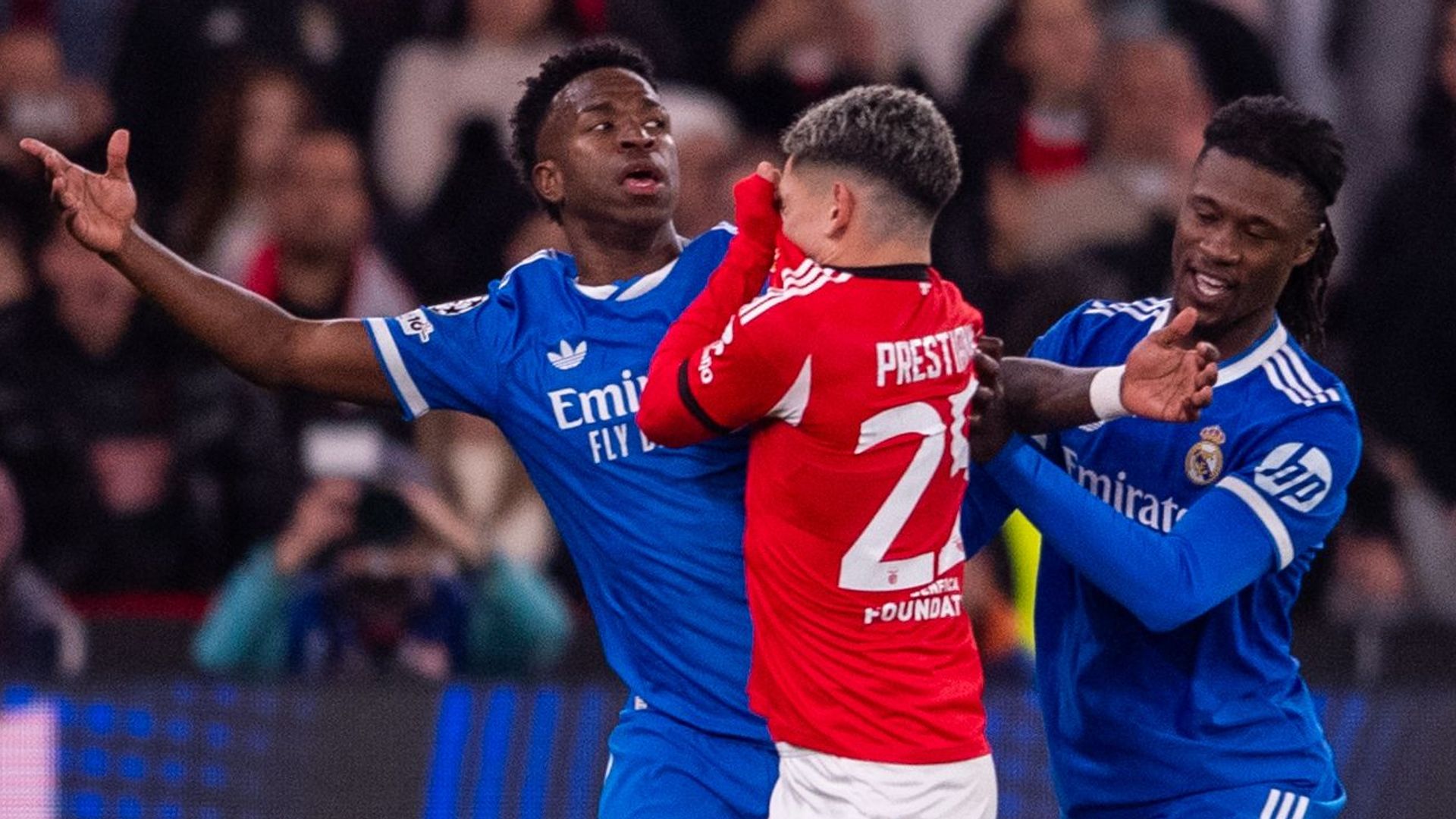
Football finally found some teeth. After years of weak fines and meaningless slaps on the wrist, a six-game ban has been handed down to a Benfica player for homophobic abuse directed at Real Madrid’s Vinicius Junior. It’s about time. For too long, the authorities treated verbal assault like a minor tactical foul. This decision signals a shift. If you can’t respect the person across from you, you don’t get to play the game.
The incident didn't happen in a vacuum. Vinicius Junior has become a lightning rod for the absolute worst behavior in European stadiums. Usually, the headlines focus on the disgusting racism he faces in La Liga. This time, the abuse took a different, equally vile turn. During a high-stakes clash, the Benfica player—whose identity remains at the center of this disciplinary storm—hurled homophobic slurs at the Brazilian winger. The match officials didn't miss it. Neither did the cameras. For another view, see: this related article.
Why this six game suspension matters for European football
UEFA and domestic leagues often hide behind "educational programs" and small financial penalties. A €10,000 fine for a player earning millions is a joke. It’s a rounding error in their bank account. A six-game ban is different. That’s nearly two months of competitive football gone. It hurts the team. It hurts the player’s stats. It actually forces a locker room to address why one of their own is sitting in the stands instead of helping them win.
This isn't just about one player’s hurt feelings. It’s about the standard of the sport. When a professional athlete uses homophobic language on a global stage, they’re telling every LGBTQ+ kid watching at home that they don't belong in football. They're saying the pitch isn't a safe space. By benching the offender for six matches, the governing bodies are finally putting their money where their mouth is regarding "Respect" campaigns. Similar coverage on the subject has been published by NBC Sports.
We've seen too many instances where players claim things were said "in the heat of the moment." That’s a tired excuse. Adrenaline doesn't make you a bigot; it just lowers your filter. If those words are in your vocabulary when the pressure is on, they’re part of who you are. The ban is a necessary reality check.
The relentless targeting of Vinicius Junior
You have to wonder how much one person is expected to take. Vinicius Junior is arguably one of the best players on the planet, yet he spends half his time defending his right to exist without being insulted. Whether it’s masks, monkey chants, or now homophobic slurs, he’s been the primary target for fans and opponents who can’t stop him with skill.
It’s a pattern of bullying. Opponents know he’s emotional. They know he plays with his heart on his sleeve. So, they try to break him mentally. But there’s a line between "shithousery"—the dark arts of football—and flat-out hate speech. The Benfica player crossed that line by a mile.
The fact that this happened in a high-profile fixture between two of Europe’s most storied clubs makes the punishment even more significant. Benfica has a massive global following. Real Madrid is the biggest club in the world. The eyes of the sport were on this, and for once, the ruling actually matched the gravity of the offense.
Breaking down the disciplinary process
The investigation wasn't a quick affair. Disciplinary committees had to review broadcast footage, referee reports, and witness statements from players in the immediate vicinity. In these cases, the "he-said, she-said" defense usually wins out. Not here. The evidence was clear enough that the committee felt comfortable bypassing the standard three-game minimum for "unsporting conduct" and doubling it.
- The Initial Report: The match referee noted the exchange in the post-match summary, triggered by Vinicius Junior’s immediate protest on the pitch.
- Review of Audio and Video: High-definition pitch-side microphones often catch what the crowd noise masks.
- The Hearing: The Benfica player had a chance to defend himself, but the verdict remained firm. Six games. No exceptions.
How Benfica and Real Madrid responded
Benfica’s official stance has been one of "internal review," but the reality is they’re stuck with a PR nightmare. Most clubs talk a big game about inclusivity, but their true colors show when a star player gets suspended. To their credit, there hasn't been a loud appeal process yet. They know the optics of defending homophobia are toxic.
Real Madrid, meanwhile, has continued its trend of fiercely protecting Vinicius. They’ve realized that if they don’t stand up for their player, nobody will. The club has been vocal in demanding that these punishments become the floor, not the ceiling. They want life bans for fans and season-long suspensions for players. Honestly, they’re right.
The ripple effect across the leagues
This ban creates a precedent. Every player in the Champions League, the Premier League, and La Liga just saw that "heat of the moment" language carries a heavy price. It changes the risk-reward calculation of trash-talking. If you know that one slur could cost you two months of your career, you might just stick to talking about the scoreline.
It also puts pressure on other federations. If a Benfica player gets six games for this in a European context, how can a league like Serie A or Ligue 1 justify a two-game ban for something similar? The bar has been raised. Fans are tired of the "No to Racism" or "Equal Game" patches on jerseys being the only thing the leagues offer. They want action. This is action.
We need to stop pretending that what happens on the pitch stays on the pitch. Young players look up to these guys. When they see a Benfica star using that language, they think it’s part of being "tough." It’s not. It’s just weak. Seeing that same star forced to watch from the sidelines sends a much stronger message than any pre-match banner ever could.
What happens next for the offender
The player now faces a long road back. Missing six games is a huge blow to match fitness and rhythm. When he does return, he’ll be under a microscope. Every movement, every interaction with an opponent will be scrutinized. He’s earned the "villain" label, and it’s not the kind that sells jerseys.
He’ll likely have to undergo mandatory sensitivity training. Some people roll their eyes at that, but it’s a standard part of these rulings now. The goal isn't just to punish, but to ensure it doesn't happen again. Whether he actually learns anything is up to him, but the six games on the sidelines give him plenty of time to think about it.
Football is finally moving toward a zero-tolerance policy that actually feels like it has teeth. For Vinicius Junior, it’s a small victory in a very long, very exhausting battle for respect. He shouldn't have to be a martyr for the sport to clean up its act, but his resilience is forcing these changes to happen.
If you're a fan, don't just watch the games. Demand that your club holds its players to this same standard. If your favorite striker says something inexcusable, don't defend them just because they score goals. Accountability is the only way the culture actually shifts. The Benfica ruling is a start, but it can't be the end. Keep the pressure on the leagues to ensure this six-game ban becomes the new normal for hate speech in the beautiful game.


-1920w.jpg)