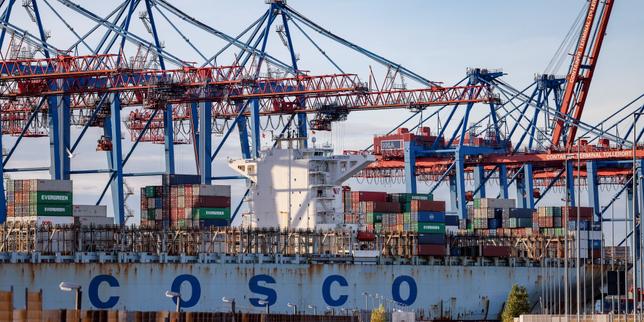
International supply chains are built on an invisible infrastructure of trust, routine, and maritime velocity. When a state-backed shipping conglomerate tries to buy its way into the beating heart of Europe’s logistics network, alarm bells ring in government offices. Berlin's decision to block the Chinese state-owned shipping giant COSCO from acquiring an 80 percent stake in Hamburg-based logistics firm Konrad Zippel Spediteur marks a profound turning point in how European capitals view foreign infrastructure investments.
This was never a routine commercial dispute. It was a high-stakes stress test for European economic sovereignty.
The Hinterland Bottleneck
For decades, maritime ports were treated as isolated commercial zones where goods arrived, cleared customs, and dispersed into the interior. That mindset is obsolete. Modern supply chain architecture links deep-water terminals directly to inland rail networks, digital inventory databases, and trucking corridors.
Konrad Zippel specializes in intermodal transport, moving container cargo seamlessly between the port of Hamburg and inland economic hubs via thousands of annual container train runs. Controlling the container terminal at the port's edge is only half the battle. Owning the logistics veins that pump those containers deep into the European industrial base provides absolute leverage.
By attempting to secure an 80 percent controlling stake in Zippel, COSCO was executing a textbook vertical integration strategy. Having previously acquired a minority stake in Hamburg’s Tollerort container terminal despite fierce political friction, the Chinese shipping titan aimed to bridge the gap between seaport handling and domestic freight distribution.
Beyond Antitrust
When the transaction first surfaced, traditional market regulators looked at it through a narrow lens. Germany’s Federal Cartel Office cleared the investment, finding no traditional antitrust violations that would stifle market competition. But antitrust laws are designed to prevent monopolies, not to safeguard national security.
Berlin’s Ministry for Economic Affairs had to deploy a completely different legal instrument: the foreign investment screening provisions under the Foreign Trade and Payments Act. Classified government assessments highlighted an uncomfortable reality. Deep dependencies on foreign state-owned enterprises for critical transport infrastructure create systemic vulnerabilities.
In a severe geopolitical standoff or regional crisis, choke points located hundreds of miles inland can be just as paralyzing as a blocked harbor. Furthermore, modern freight forwarding relies heavily on proprietary logistics software, real-time tracking data, and sensitive supply chain metadata. Handing control of these digital nerve centers to an entity bound by foreign state intelligence laws crossed a line that Berlin was ultimately unwilling to ignore.
The Cost of Decoupling
Sovereignty carries a price tag. Zippel management expressed disappointment over the blocked transaction, noting that the decision halted a lucrative exit strategy for private stakeholders and complicated future capital planning. For mid-sized European logistics operators facing fierce margin pressures and labor shortages, Asian capital has long provided an attractive lifeline.
Yet, European policymakers are waking up to the long-term dangers of asset sell-offs in strategic sectors. The strategy mirrors the hard lessons learned from Europe's past over-reliance on single-source energy pipelines. When economic interdependence is weaponized, commercial efficiency becomes secondary to national survival.
The political consensus in Berlin has shifted. Open markets cannot mean open season on critical infrastructure. As trade tensions persist and globalization fractures into regional blocs, European governments are drawing a hard boundary around the physical and digital arteries of their economies.
The door to unhindered state-directed acquisitions is slamming shut, forcing shipping titans and industrial giants to find growth through organic expansion rather than strategic buyouts. The era of frictionless foreign takeovers in European logistics is officially over.
For a closer look at the geopolitical tensions surrounding these port infrastructure decisions, you can watch this Berlin port takeover report. This video provides a brief visual breakdown of why Berlin decided to block the controversial logistics acquisition.