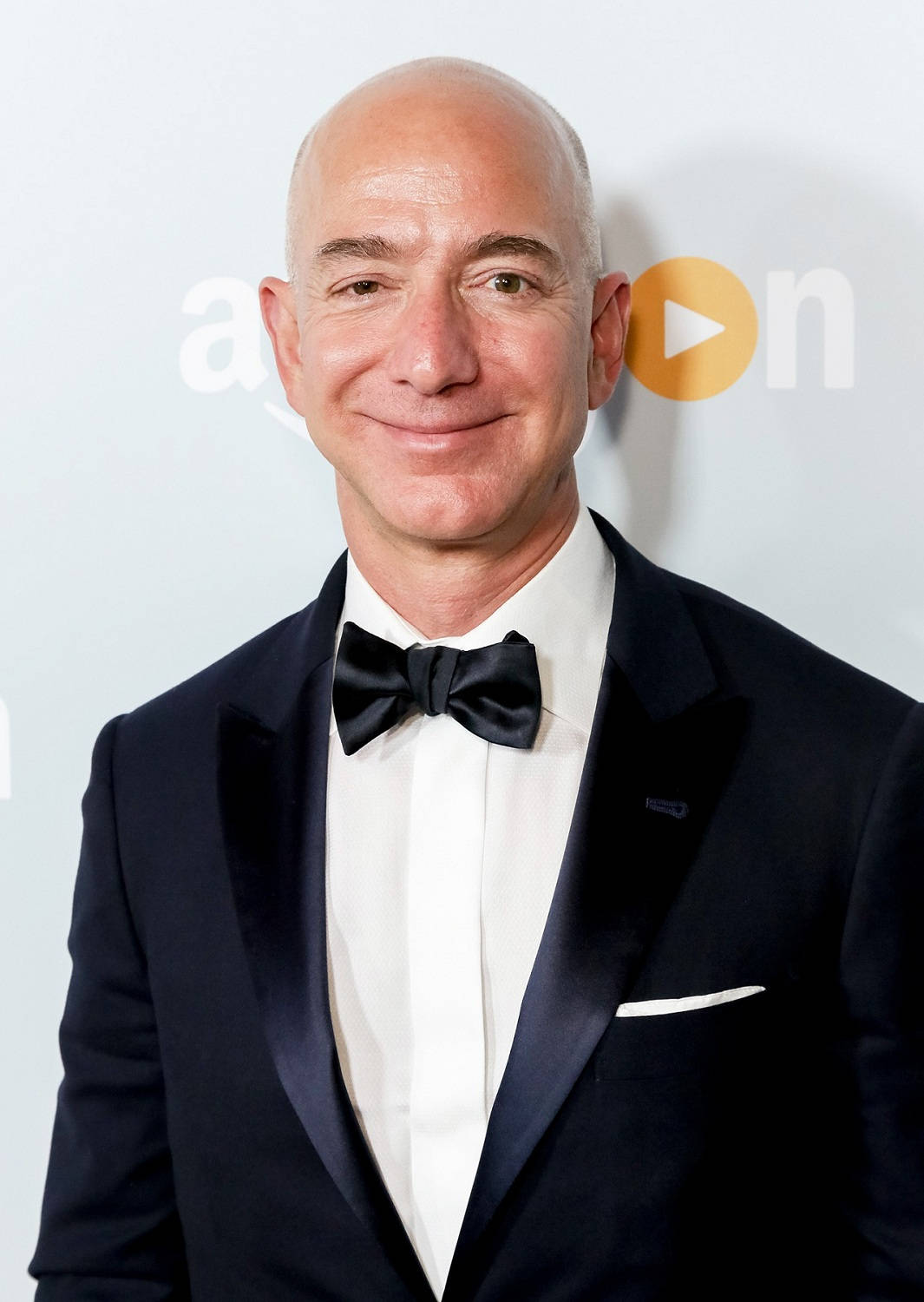
The media is falling over itself to echo Jeff Bezos’s recent declaration that Donald Trump’s second term represents a "more mature," predictable environment for American business. The consensus among the C-suite is clear: the erratic tweets of 2017 have been replaced by structured policy, and corporate America can finally breathe a sigh of relief.
They are misreading the room. Completely. Meanwhile, you can explore similar stories here: The Anatomy of the UK GCC Free Trade Agreement A Brutal Breakdown.
What Bezos calls "maturity" is actually the institutionalization of economic nationalism. The chaotic, impulsive tariff threats of Trump’s first term were easy for tech giants to lobby against or wait out. A disciplined, methodical administration, however, poses a far greater threat to Silicon Valley’s bottom line than a late-night social media tirade ever did.
The Illusion of Predictability
Corporate boards crave stability, which is why Bezos and other tech executives are eager to praise the current administration's structured approach. When a government operates with predictable bureaucratic levers, compliance teams can build models, project quarterly earnings, and assure shareholders that risks are managed. To understand the complete picture, check out the detailed report by CNBC.
But predictability is a double-edged sword.
In the first term, tech leaders treated federal policy like bad weather—unpredictable, loud, but ultimately temporary. If a tariff was threatened via a morning post, lobbyists rushed to Washington, carved out exemptions, and business continued.
Now, the policy mechanisms are institutionalized. The administration isn't relying on shock value; it is utilizing established legal frameworks, the International Emergency Economic Powers Act (IEEPA), and a compliant Department of Justice to systematically reshape global supply chains. When protectionism becomes a refined science rather than a knee-jack reaction, tech companies lose their greatest advantage: agility.
The True Cost of "Structured" Tariffs
Let's look at the numbers that tech executives are ignoring in their rush to praise this new era. The assumption is that a mature administration will use tariffs as a precise scalpel rather than a blunt instrument.
History proves the exact opposite happens when ideological goals find bureaucratic competence. Consider the semiconductor industry. Building a fabrication plant requires immense capital expenditure—often exceeding $20 billion per facility. Silicon Valley has comforted itself with the idea that targeted subsidies and "mature" trade policies will protect these investments.
Imagine a scenario where a tech hardware giant relies on a highly specialized supply chain crossing through Southeast Asia. Under a chaotic administration, a 10% blanket tariff threat might cause a temporary stock dip. Under a disciplined administration executing a legally airtight, across-the-board 20% tariff policy with zero loopholes, that same hardware giant faces a permanent, structural destruction of its margin.
I have watched tech companies burn tens of millions of dollars trying to pivot supply chains over six-month periods because they misjudged federal permanence. You cannot out-lobby a bureaucracy that is executing a deeply entrenched ideological mandate with precision.
Dismantling the "People Also Ask" Delusion
The public discussion surrounding tech and the current administration is built on fundamentally flawed assumptions. Let's correct the record on what people are actually asking about this corporate-political alignment.
Will a more disciplined administration accelerate AI innovation?
No. The prevailing narrative is that less regulation equals faster growth. While the administration may roll back specific executive orders on AI safety, its broader geopolitical strategy acts as a massive handbrake on innovation.
AI development does not happen in a vacuum. It requires talent and compute power. By institutionalizing stricter immigration pathways and tightening the screws on high-skilled H-1B visas under the guise of national security, the administration is cutting off the lifeblood of Silicon Valley research labs. A polished, bureaucratic system rejects visa applications quietly and efficiently, far more effectively than a chaotic one.
Does corporate compliance mean corporate safety?
Executives think that because they know the rules of engagement now, they are safe. This is a massive tactical error.
When the state becomes highly organized in its economic nationalism, compliance becomes a massive capital drain. You are no longer just complying with standard financial regulations; you are constantly auditing your entire vendor ecosystem to ensure no sub-component violates an ever-expanding web of domestic sourcing mandates. The compliance department becomes a cost center that chokes out R&D.
The Downside of the Contrarian Reality
To be fair, there is a reason Bezos and others are playing this game. If you are a trillion-dollar cloud provider or an aerospace defense contractor like Blue Origin, playing nice with a structured administration wins you massive federal contracts. The upside for the top five tech monopolies is real—in the short term.
But for the rest of the ecosystem—the mid-cap tech firms, the hardware innovators, the venture-backed infrastructure startups—this environment is toxic. The heavy hitters can afford the army of lawyers required to navigate a highly organized protectionist state. The rest cannot. This "maturity" doesn't foster competition; it calcifies the position of incumbents who are willing to bend the knee to state ideology in exchange for market protection.
The Silicon Valley Playbook is Broken
For three decades, Silicon Valley operated on a simple premise: technology moves faster than government, so ignore Washington and build.
That playbook is officially dead.
When the state grows competent enough to enforce structural shifts in global trade, ignoring Washington becomes an existential threat. Tech companies cannot simply code their way out of a closed border or an airtight tariff regime.
Stop looking at the polished press releases and the polite handshakes at Mar-a-Lago as a sign that business is returning to normal. The administration hasn't softened its stance on global trade or tech monopolies; it has merely learned how to use the machinery of the state to enforce its will without the public drama.
The chaos of the past was easy to exploit. This new efficiency is designed to box you in.