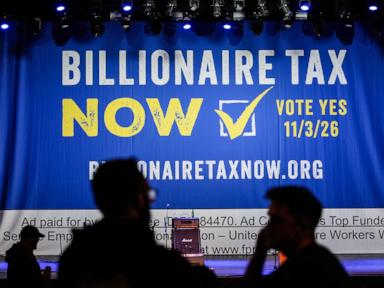
The recent spectacle of California labor unions offering to scale back their high-profile billionaire tax proposal after facing predictable pushback is not a strategic compromise. It is a confession of intellectual bankruptcy.
For months, the narrative spun by labor leaders and echoed by uncritical media outlets was simple: tax the ultra-wealthy to fund vital public services, or let the state crumble. It was presented as a moral imperative, a non-negotiable battle for the economic soul of California. Yet, at the first sign of organized resistance from the business community and moderate Democrats, the coalition behind the initiative immediately began offering concessions.
This swift retreat exposes a uncomfortable reality that Sacramento insiders have known for decades. These aggressive tax initiatives are rarely designed to pass. They are used as blunt-force leverage, political theater meant to force concessions in backroom budget negotiations rather than sound economic policy. By watering down the proposal before it even hits a ballot, the unions have signaled that their grasp on fiscal mechanics is tenuous and their bluffs are easily called.
The Myth of the Elastic Billionaire
The fundamental flaw in the union’s original proposal—and its subsequent, weakened iteration—rests on a flawed understanding of modern capital mobility. The lazy consensus among progressive strategists is that the ultra-wealthy are a captive audience, tied irrevocably to California by the weather, culture, and tech ecosystems.
They are wrong.
In a hyper-digitized global economy, net worth is decoupled from physical geography. When you tax high earners at rates that defy regional competition, you do not generate steady revenue; you trigger capital flight. This is not hypothetical panic-mongering; it is observable fiscal history.
Consider the data from the California Franchise Tax Board. The top 1% of earners in California pay nearly half of the state’s personal income taxes. This creates an incredibly volatile revenue structure that leaves the state budget vulnerable to the fortunes—and whims—of a remarkably small group of people.
California Revenue Dependence (Approximate Breakdown)
+-------------------------+-------------------------+
| Taxpayer Segment        | Share of Income Tax     |
+-------------------------+-------------------------+
| Top 1% of Earners       | ~49%                    |
| Remaining 99%           | ~51%                    |
+-------------------------+-------------------------+
When a handful of these individuals change their primary residence to Texas, Nevada, or Florida, the budget deficit swells by billions instantly. I have advised high-net-worth individuals making these exact decisions. They do not leave because they hate California; they leave because the state treats their capital as a bottomless piggy bank for poorly managed public programs. By scaling back the tax proposal, the unions tacitly admitted that they know this risk is real. They blinked because they realized that pushing the top tier too hard would break the state's golden goose.
The Leveraged Shakedown as a Policy Tool
To understand why the union offered to compromise, you have to look at the mechanics of California ballot initiatives. Crafting a radical proposal, gathering signatures, and threatening a costly public campaign is a standard playbook for extracting policy concessions without ever needing to win an election.
The goal was never to pass a pure billionaire tax. The goal was to scare the business community into accepting a different, slightly less onerous set of regulations or tax hikes elsewhere. It is a protection racket disguised as progressive advocacy.
Imagine a scenario where a labor group threatens to mandate a massive minimum wage hike for a specific industry via ballot measure. The industry panicked, poured millions into opposition research, and eventually agreed to a slightly lower wage floor through legislative compromise. The ballot measure was then quietly withdrawn. This is exactly what occurred with California's fast-food worker regulations, and it is the exact strategy being deployed with the wealth tax.
The problem with this approach is that it creates immense structural instability. Businesses cannot plan five-year capital investments when the tax code is treated as a hostage negotiation. The constant threat of arbitrary wealth penalties suppresses investment long before any law is actually enacted.
The Revenue Illusion and the Spending Reality
The competitor coverage of this union retreat frames the issue around political feasibility—whether the union can gather enough moderate support to pass a modified version. This misses the entire point. The real question is why California, which already boasts the highest top marginal income tax rate in the nation at 13.3% (plus a 1.1% payroll tax for State Disability Insurance), is perpetually starved for cash.
California does not have a revenue problem; it has an allocation crisis.
The union's tax proposals are invariably earmarked for specific, noble-sounding causes: education, climate resilience, healthcare. But money is fungible. Adding earmarked billions to the general fund simply allows the legislature to redirect existing funds toward pet projects, bureaucratic bloat, and unfunded pension liabilities.
- The High-Speed Rail Project: A multi-billion-dollar case study in cost overruns and missed deadlines.
- The Homelessness Response: Billions spent with zero measurable improvement in visible encampments or housing retention metrics.
- Public Education Overhead: Administrators outnumbering classroom teachers at an alarming rate, absorbing funding before it reaches students.
When unions demand more taxes to fix these systems without demanding structural reform within the agencies they control, they are asking taxpayers to fund a broken engine. Scaling back the tax from a 1.5% wealth tax to a fraction of that amount does not fix the fundamental issue that the state is throwing good money after bad.
The Downside of Opposing the Populist Wave
Let us be completely transparent about the counter-argument. The status quo is deeply unequal, and California's cost of living is driving working-class families out of the state. There is a potent, justifiable anger toward the billionaire class that operates with impunity in Silicon Valley and Los Angeles.
By taking a contrarian stance against these wealth taxes, you risk being labeled a defender of plutocracy. It is an uncomfortable position. The optics are terrible. It is far easier to sign a petition demanding the rich "pay their fair share" than it is to explain the nuances of capital flight, tax elasticity, and the Laffer curve to an angry electorate.
But good policy cannot be built on satisfying optics. If you pass an aggressive wealth tax and the top 500 taxpayers leave, the financial burden of the resulting budget deficit does not fall on the remaining wealthy. It falls squarely on the middle and working classes through hiked sales taxes, reduced public services, and decaying infrastructure. The unions' sudden willingness to compromise proves they are finally recognizing this economic reality, even if they cannot admit it publicly.
Stop Rewarding Political Theater
The solution to California’s fiscal volatility is not a watered-down wealth tax, nor is it a continuation of these cyclical union shakedowns. The state needs a complete overhaul of its tax structure to broaden the base and lower the rates, reducing its unhealthy dependence on the volatile capital gains of a tiny elite.
The labor unions’ retreat should not be celebrated as a victory for moderation. It should be exposed for what it is: a sign that the strategy of using radical ballot measures to extort policy changes is losing its teeth.
The next time an advocacy group introduces a sweeping tax proposal, ignore the moral grandstanding. Look at the backroom negotiations. Watch how quickly the demands shrink when real economic scrutiny is applied. The bluff has been called, the playbook is compromised, and the illusion of the captive billionaire is dead. Stop playing along.