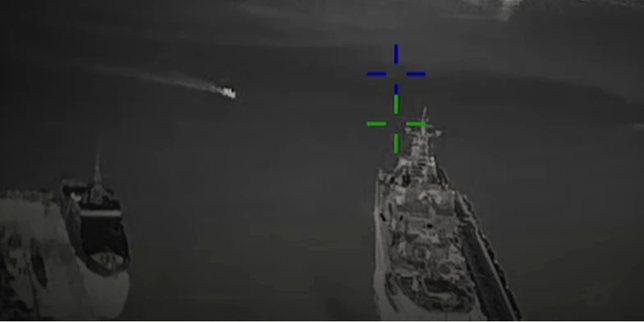
Headlines love a good explosion. Every time a Ukrainian drone hits a Russian hull in Sevastopol or a Storm Shadow missile punches through a dry dock, the Western media cycle goes into a frenzy. They claim the Black Sea Fleet is "neutered." They suggest the Russian Navy has "fled" to Novorossiysk. They paint a picture of a 19th-century naval power being dismantled by 21st-century garage-built jet skis.
It is a seductive narrative. It is also dangerously shallow.
The obsession with counting sunken hulls ignores the brutal reality of modern maritime attrition. Sinking a ship is easy; denying a sea is hard. The true story isn’t about the "destruction" of the fleet. It’s about the radical shift in how sea power is projected when the cost of a missile is 1/1000th the cost of its target. If you think two disabled landing ships mean the end of the Russian naval threat, you aren’t paying attention to the logistics of the land war.
The Landing Ship Fallacy
The latest reports focus on two Russian landing ships put "out of service" in Crimea. The armchair generals cheer because "landing ship" sounds like an invasion is being thwarted. But Russia hasn't been planning an amphibious assault on Odesa since March 2022. They don't need these ships for a beach landing; they need them as a floating railway.
The Kerch Bridge is fragile. We know this. Russia knows this. These Ropucha-class vessels are heavy-lift logistics assets. Losing two is a headache for the quartermaster, not a decapitation of the war effort. The media treats these strikes like the Battle of Midway. In reality, they are more like blowing up two delivery trucks on a highway. It slows down the supply chain, but it doesn't close the road.
Furthermore, the "out of service" label is a classic piece of war-time ambiguity. Unless that ship is at the bottom of the ocean or burned to a charcoal husk, it is a repair project. In modern naval warfare, "damaged" is often a temporary state. We see a plume of smoke and assume a victory. The engineers in the dry docks see a three-month overtime shift.
The Myth of the Neutralized Fleet
Stop saying the Black Sea Fleet is gone. It hasn't vanished; it has distributed.
Traditional naval doctrine suggests that if you force a fleet to retreat from its primary base, you have won. That was true when ships needed specific coaling stations or specialized deep-water docks every few hundred miles. In 2026, with long-range Kalibr cruise missiles, a ship in Novorossiysk can hit Kyiv just as easily as a ship in Sevastopol.
The range of the Kalibr-NK is roughly 1,500 to 2,500 kilometers.
$Range \approx 2500 \text{ km}$
From a tactical perspective, Russia has traded prestige for survivability. They moved the targets further away, but the batteries are still firing. By pulling back, they haven't lost their "punch"; they’ve just made the reach a little longer. To call this a "defeat" is to fundamentally misunderstand the difference between territorial control and fire superiority. Russia doesn't need to sail the Black Sea to dominate the air over Ukraine.
The Drone Delusion: Asymmetric Warfare Isn't Magic
We are witnessing the birth of the "mosquito fleet." Ukraine’s Magura V5 drones are impressive pieces of kit. They are cheap, fast, and difficult to detect. But the "success" of these drones is being used to support a false conclusion: that big ships are obsolete.
I have seen defense contractors pitch "ship-killer" tech for decades. Every time a new gadget arrives, people claim the tank is dead, the carrier is dead, or the battleship is dead. The battleship did die, eventually, but not because it was "vulnerable." It died because it was inefficient.
The Russian ships currently being hit are 30 to 50-year-old Soviet relics. They lack modern point-defense systems. They were never designed to handle a swarm of autonomous suicide boats. Using their demise to declare the end of naval power is like watching a Model T get crushed by a semi-truck and concluding that cars don't work anymore.
The real lesson here isn't that drones win. It’s that legacy platforms without integrated electronic warfare (EW) suites are sitting ducks. If these ships were equipped with high-frequency jamming and 30mm Close-In Weapon Systems (CIWS) tied to AI-driven optical tracking, the drone swarm would be a pile of scrap metal before it got within a mile. Russia’s failure is one of modernization, not a flaw in the concept of a navy.
The Logistics of Denial
What the "Ukraine is winning at sea" crowd misses is the concept of Sea Denial vs. Sea Control.
- Sea Control: You can move your ships wherever you want, and the enemy can't stop you.
- Sea Denial: You can't necessarily move your ships, but you can make sure the enemy can't use the water either.
Ukraine has achieved a brilliant level of Sea Denial. They have successfully made the western Black Sea a "no-go" zone for Russian hulls. This has reopened the grain corridor, which is a massive economic win.
However, Ukraine does not have Sea Control. They cannot sail a fleet to Crimea. They cannot launch an amphibious counter-offensive. They have created a stalemate on the water. In a war of attrition, a stalemate usually favors the side with the larger industrial base and the higher tolerance for casualties.
Why "Sinking Ships" is the Wrong Metric
If you want to know who is winning the naval war, stop looking at the Oryx ship-loss list. Look at the launch rates.
Is Russia still able to launch cruise missiles from the sea? Yes.
Is the Russian Kilo-class submarine fleet—the "Black Holes" of the Black Sea—still active? Yes.
Submarines are the ultimate "contrarian" asset in this conflict. You don't see them on TikTok. You don't see them being hit by surface drones. They sit off the coast, submerged, and provide a persistent strike capability that Ukraine has almost no way to counter. A single Kilo-class submarine is worth more in actual combat power than five landing ships. As long as those subs are diving, the Black Sea Fleet remains a lethal entity.
The Cost of the Counter-Intuitive Win
There is a downside to Ukraine's success that no one wants to talk about. By successfully "embarrassing" the Russian Navy, Ukraine has forced Russia to adapt.
In 2022, the Russian military was arrogant and stagnant. By 2024, they began learning. Every drone strike that hits a ship provides data to the Russian EW complexes. They are hardening their ports. They are improving their satellite reconnaissance.
Imagine a scenario where the constant pressure of drone warfare forces Russia to develop a truly autonomous, AI-integrated defense net. We are essentially "training" their systems by giving them real-world targets to practice on. The "cheap" win today might lead to a much more difficult technological hurdle tomorrow.
Stop Looking for a "Game-Changer"
The word "game-changer" is the refuge of the intellectually lazy. There are no game-changers in a high-intensity peer-to-peer conflict. There are only incremental shifts in the cost-benefit analysis of specific tactics.
The "disabling" of two ships is a tactical victory. It is not a strategic pivot. The status quo—a grinding, violent stalemate where both sides trade hardware for time—remains unchanged. Ukraine is fighting a 21st-century war with 22nd-century ideas. Russia is fighting a 20th-century war with 21st-century numbers.
The navy isn't "out of service." It’s just waiting for the next move in a game that has no clear end.
Don't confuse a bloody nose with a knockout.