War doesn't care about rescue missions. Ask the family of 47-year-old Ilker Lazoglu, a Turkish head cook who survived one drone strike only to be killed by another.
If you're following the shifting dangers of the Black Sea maritime corridor, you already know civilian shipping lanes are turning into active combat zones. But the story of the cargo ship Necibe and its ill-fated rescue vessel, the Ural, exposes a terrifying new reality for commercial sailors caught in the crossfire between Ukraine and Russia.
Here is what actually happened during those fatal forty-eight hours, and why maritime security experts are sounding alarms.
From the Necibe to the Ural
The sequence of events reads like a worst-case scenario. The San Marino-flagged bulk carrier Necibe was docked near the Russian Black Sea port of Tuapse to load roughly 20,000 tons of wheat when it took a direct drone hit.
Aboard that ship was Ilker Lazoglu. Right after the first blast, Lazoglu managed to call his uncle back home to tell him he was alive and waiting for evacuation.
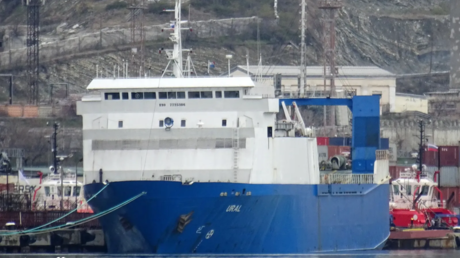
Seventeen crew members were pulled off the damaged freighter and transferred to the Ural, a Turkish-owned, Cameroon-flagged RoRo vessel meant to carry them away from the danger zone. They thought they were safe. They weren't.
Near Novorossiysk—a heavily contested coastal hub frequently targeted by long-range aerial drones—the Ural itself was struck. Lazoglu and eight other sailors were wounded in the second blast. Lazoglu didn't make it. The damaged ship ultimately limped back to the Turkish port of Samsun carrying the injured crew and Lazoglu's body.
Why Commercial Shipping Is Becoming Impossible to Protect
You have to look at the broader tactical map to understand why this keeps happening. Long-range drone technology has evolved faster than international maritime law or insurance protections.
Ukraine has steadily escalated strikes against Russian ports and logistics hubs used to support the war effort. At the same time, Moscow has aggressively targeted regional grain and cargo movements. When commercial freighters sit at ports like Tuapse or transit near Novorossiysk, they carry commodities like wheat, but they also carry immense geopolitical risk.
For neutral nations like Türkiye, whose companies own and crew many of these vessels, the stakes are painfully high. Shipowners are now facing impossible choices. Do they halt profitable grain routes, or do they risk running the gauntlet of Black Sea drone warfare? Several operators are already suspending their Russia routes entirely.
The Human Cost Behind the Headlines
It is easy to get lost in the macro-politics of regional blockades and statements from political leaders. But behind every flag registration and cargo manifest are civilian workers like Lazoglu, who spent over a decade working on merchant vessels to support his family.
When rescue ships can be hit just as easily as grain carriers, the traditional protections of maritime neutrality break down completely. Until regional powers establish enforceable safe corridors or effective counter-measures, the men and women working in the engine rooms and galleys of commercial freighters remain entirely unprotected.