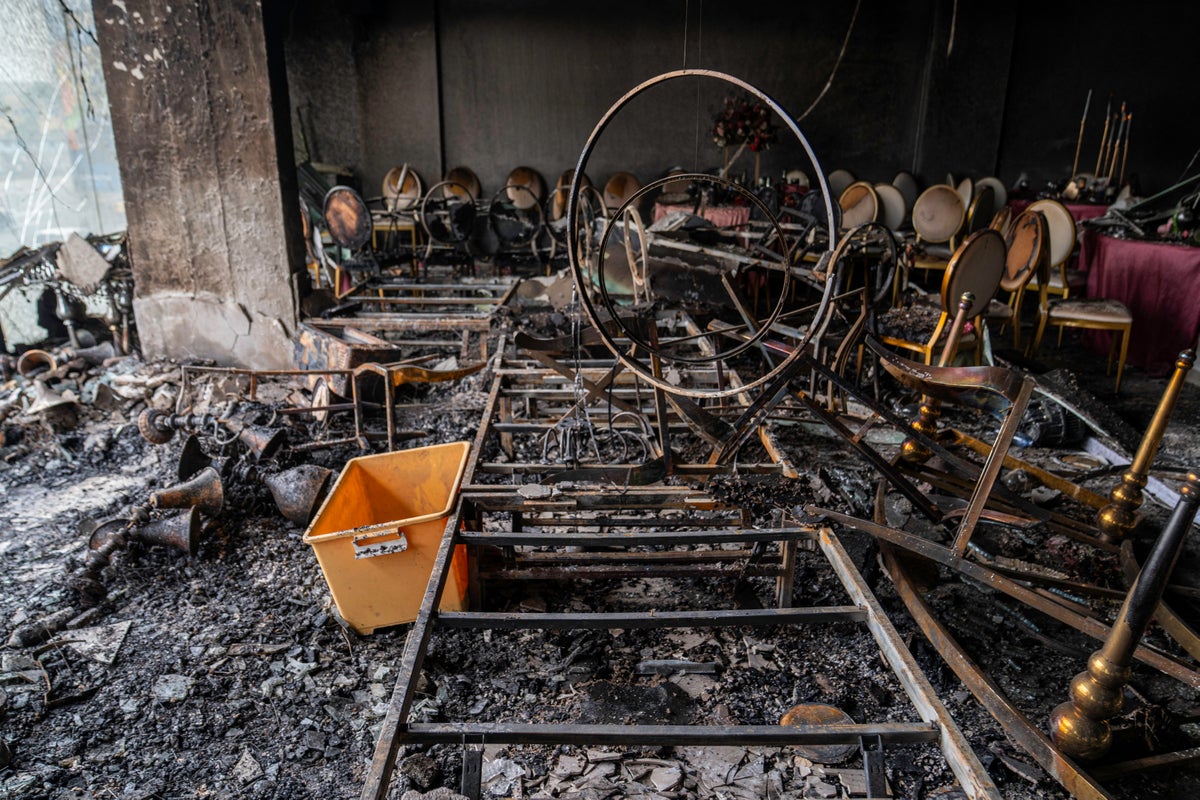
Twenty-two human beings went to a celebration in Kinshasa. They walked into a reception hall in the Lingwala commune, expecting music, family, and a crowded room of joy. Instead, they walked into a poorly ventilated spatial trap. Overnight, a fire tore through the venue, turning a night of collective joy into a mass casualty event.
The mainstream news cycle rolls out its standard, lazy script. Headlines call it a "horror", a sudden freak accident, an unfathomable tragedy. Officials shrug and point blankly to provisional lists of electrical faults and flammable decorations. Everyone shakes their heads, mutters about how fragile life is, and waits for the news cycle to pivot to the next disaster.
Stop accepting the accident narrative.
This was not an act of God. It was the predictable mathematical outcome of systemic municipal neglect, unchecked informal construction, and a total absence of structural accountability. When cities grow at breakneck speeds without matching safety infrastructure, mass graves are simply built one unpermitted partition and overloaded circuit at a time.
The Myth of the Unforeseeable Freak Accident
We love treating disasters in the developing world as exotic, unpredictable anomalies. It lets us compartmentalize. It allows municipal authorities worldwide to pretend that their own lax oversight is just a localized quirk rather than a ticking time bomb.
Every time a packed venue goes up in flames, mainstream commentators treat the fire as an invading monster. It was not a monster. It was physics meeting flammable interior styling, blocked emergency exits, and a complete failure of code enforcement.
Consider the structural reality of urban event spaces in densely packed megacities. When demand for commercial celebration spaces skyrockets, informal real estate expands faster than regulatory bodies can track. Landlords throw up cheap drywall, partition rooms to maximize headcounts, run jerry-rigged electrical wiring to bypass grid instability, and ignore fire suppression altogether.
When you pack hundreds of people into a sealed box wrapped in cheap synthetic fabrics with a single narrow bottleneck for an exit, you are not running a venue. You are running a pressure cooker.
Regulatory Void Meets Economic Desperation
The lazy consensus blames the electrical grid or faulty decorations. That is like blaming gravity for a plane crash caused by a missing wing. Electricity is a constant; poor infrastructure management is a variable choice.
In places like Kinshasa, economic pressures force everyday citizens to compromise on safety because choice is a luxury reserved for the ultra-wealthy. Event organizers rent spaces that look glamorous on the surface while structurally resembling death traps underneath, because safer venues do not exist at scale or carry prohibitive costs.
Municipal governments share the blame, but not in the way lazy op-eds suggest. Corruption and systemic underfunding mean that building codes exist purely as paper tigers—useful only for extracting bribes rather than enforcing structural integrity. Inspectors look the other way until bodies pile up, at which point expressions of deep sorrow substitute for actual structural reform.
"A building code written in blood is only as good as the inspector willing to shut down the revenue stream."
Stop Mourning Systemic Failures and Demand Structural Audits
If you want to stop the body counts at celebrations, we need to dismantle how we talk about these disasters. Stop calling them tragedies. Call them what they are: structural homicides born from administrative negligence.
Here is what actually needs to happen to break the cycle:
- Mandatory Public Transparency on Venue Compliance: Every commercial event space must display fire safety ratings, maximum occupancy limits, and emergency exit schematics at the entrance, verified by independent third parties, not municipal bureaucrats.
- Zero Tolerance for Single-Exit Venues: Any indoor assembly hall operating with fewer than two structurally independent, unblockable emergency egress points should face immediate physical closure.
- Shift Liability to Ownership: Municipalities must pierce the corporate veil of shell companies owning event venues, holding property owners criminally liable for manslaughter when safety negligence leads to loss of life.
Until we treat structural safety violations with the same gravity as violent crime, the invitation to a wedding will remain a roll of the dice. Stop accepting bad luck as an explanation for bad engineering.