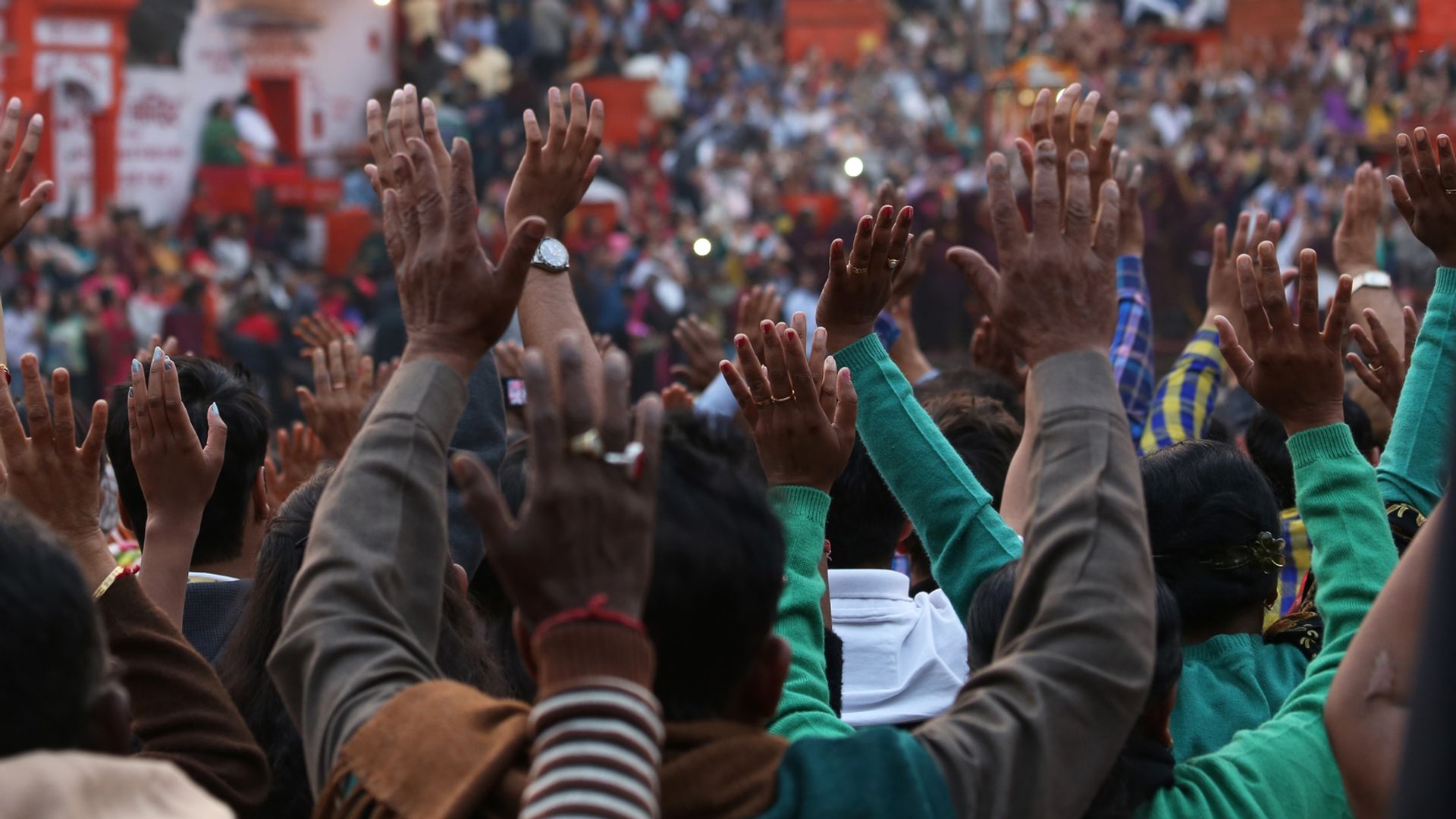
Every single time a crowd crushes under its own weight at a pilgrimage site, the media script writes itself before the dust even settles. Pious devotion is blamed. Mass religious fervor is cited as the primary hazard. Lazy analysts point fingers at centuries-old rituals and ancient architecture, acting as if human faith itself possesses an intrinsic destructive mass.
It is a convenient narrative. It absolves modern bureaucrats, structural planners, and municipal authorities of gross incompetence.
Blaming religion for a temple stampede makes about as much sense as blaming aviation fuel for an airplane crash caused by a drunk pilot. The problem is never the crowd's intent to worship; the problem is the absolute systemic failure to engineer the physical space for the physical realities of human movement.
Let us dismantle the lazy consensus.
The Myth of Religious Mass Panic
The immediate reaction from pundits is to label these events as stampedes driven by irrational religious panic. Behavioral scientists who study crowd dynamics know better. True stampedes—where people trample each other out of blind, frantic terror like panicked cattle—are exceptionally rare.
What actually happens at these sites is a structural crush, also known as a progressive crowd collapse.
Imagine a scenario where thousands of people funnel through a narrow, unyielding corridor designed to handle a fraction of that volume. The front rows encounter a bottleneck, an obstruction, or a slick surface. They halt or slow down. The momentum of the crowd pushing from behind does not stop. Human bodies are compressible. When the pressure from the rear exceeds a critical threshold, individuals lose their footing, air is forced from their lungs, and a localized pile-up begins.
People in the back are completely unaware of the disaster unfolding meters ahead. They continue to push forward because gravity and forward momentum dictate their movement. They are not rioting. They are simply walking into an invisible wall of human bodies.
Calling this a stampede blames the victims for panicking when they were actually crushed by basic physics and negligent municipal infrastructure.
Why Bureaucrats Love the Act of God Defense
When seven people die and dozens more are injured during a high-profile temple gathering, watch how fast local officials hide behind the excuse of unexpected numbers.
They claim the turnout exceeded all expectations. They lament the sheer volume of humanity that descends upon sacred sites during festive calendars.
This defense falls apart under the slightest scrutiny. Religious festivals in India do not happen in stealth. The dates are fixed by ancient lunar calendars published years in advance. The historical footfall numbers are well-documented. If a specific temple attracts one hundred thousand visitors on a standard Tuesday, and two million during a major holy day, that spike is entirely predictable.
Failing to deploy adequate barricading, clear emergency egress routes, unidirectional flow channels, and real-time density monitoring is not an unpredictable act of nature. It is administrative negligence.
Municipal planners spend months mapping crowd control for rock concerts and cricket matches. They install interlocking barricades, deploy tiered queuing systems, and cap ticket sales. Yet, when millions gather for spiritual observances, the state frequently reverts to a reactive posture, deploying tired police cordons that often create more bottlenecks than they resolve.
Authority figures hide behind the sentiment of religious freedom to avoid imposing rigorous, secular safety protocols. They fear political backlash if they restrict crowd access or reroute traditional pathways. That hesitation is lethal.
The Architecture of Failure
Ancient temples were never engineered for modern population densities. Built centuries ago to accommodate modest local congregations, these sacred compounds now host demographic surges fueled by modern transit and hyper-connected communication networks.
You cannot funnel millions of people through medieval stone gateways designed for bullock carts and expect modern physics to bend to tradition.
Municipalities often try to slap modern band-aids on ancient architectural nightmares. They erect temporary steel scaffolding, string up makeshift lighting, and post a handful of officers with megaphones. These improvised interventions usually fail because they constrict natural movement paths rather than expanding them.
Crowd management is a distinct branch of applied physics and spatial design. It requires:
- Wide, continuous dispersal zones immediately outside high-density gathering points.
- Strictly enforced unidirectional loops that eliminate cross-traffic and eddy currents in pedestrian flow.
- De-densification zones where crowd velocity can be slowed down safely before entering restricted bottlenecks.
- Immediate emergency communication grids that bypass local cell tower congestion.
When temple committees and local governments refuse to invest in permanent, professional crowd architecture, they are trading human lives for historical aesthetics and political expediency.
Dismantling the Victim Blaming
Whenever a tragedy occurs, public discourse inevitably pivots to criticizing the discipline of the devotees. Commentators question why people insist on participating in massive gatherings if they know the risks.
This argument is profoundly elitist. It assumes that mass gatherings are optional leisure activities for people with excess time, rather than deeply ingrained cultural necessities, community anchors, and profound spiritual milestones for millions.
Telling marginalized or devout citizens to stay home because the state cannot manage public infrastructure is a cowardly cop-out. The burden of safety does not rest on the shoulders of the individual worshipper navigating a sea of humanity. The burden rests squarely on the institutions that invite, manage, and profit from these massive cultural convergences.
Until we stop treating crowd disasters as unpredictable acts of divine wrath or accidental stampedes caused by unruly devotees, the body count will continue to climb. The fix requires zero mysticism and absolute operational rigor.
Stop blaming faith. Fix the bottlenecks.