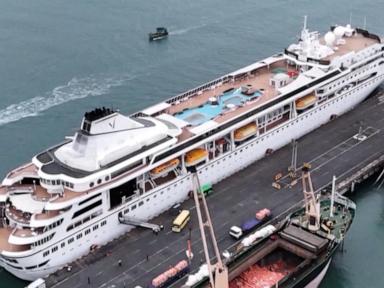
Two hundred travelers woke up in Cambodia expecting to sail around the world, only to find out their floating hotel was out of gas money.
That is the fairy tale the mainstream travel press wants you to swallow. When a global cruise abruptly pulls the plug mid-voyage and blames spiking bunker fuel costs, the lazy consensus kicks into overdrive. Reporters parrot the press release. Commentators sigh about geopolitical supply chains and inflation. Sympathetic travel bloggers wring their hands over "unforeseen operational headwinds."
Stop buying the excuse.
A multi-month world cruise does not suddenly run out of cash at the fuel pump in Southeast Asia because oil ticked up a few dollars a barrel. When a cruise line strands hundreds of paying customers halfway across the globe, rising fuel costs are rarely the disease. They are the smoke screen used to hide fatal balance-sheet insolvency, terrible hedging strategy, and a predatory business model built on customer deposits.
The Myth of the Surprise Fuel Spike
Maritime economics are ruthless, predictable, and governed by math that any competent Chief Financial Officer can calculate on a napkin years in advance.
Large cruise operators—the Carnival Corporations, the Royal Caribbeans, the MSCs of the world—do not pull up to a dock in Sihanoukville with a corporate credit card and pay spot prices for Very Low Sulfur Fuel Oil (VLSFO). They buy fuel through complex financial derivatives, forward contracts, and bunkering agreements locked in twelve to thirty-six months before a ship ever leaves its home port.
Even when operators choose not to hedge—a calculated gamble that some mega-lines take to avoid paying steep premiums to investment banks—they maintain massive revolving credit facilities and cash reserves specifically designed to absorb commodity volatility.
If a world cruise collapses mid-itinerary over fuel bills, it means one of two things happened:
- The operator was operating hand-to-mouth, using current passenger deposits to pay immediate operating expenses.
- The voyage was never financially viable at the ticket prices sold, and management prayed that onboard spending—casinos, shore excursions, drink packages—would plug the hole.
When that onboard revenue misses projections by ten percent, the house of cards folds. Calling it a "fuel crisis" sounds like an act of God. Calling it "we burned through your escrow cash to pay last month's port fees" sounds like a felony investigation.
The Ponzi Mechanics of Niche World Cruises
I have watched boutique tour operators and upstart cruise ventures blow tens of millions of dollars chasing the "world cruise" mirage. From the outside, selling a 120-day or 180-day global itinerary looks like a goldmine. You collect fifty thousand to two hundred thousand dollars per cabin upfront, sit on that float for eighteen months, and sail off into the sunset.
From the inside, a long-haul world cruise is an operational meat grinder.
Unlike a seven-day Caribbean loop where a ship turns over three thousand passengers every Sunday—each one buying overpriced watered-down margaritas, spa treatments, and zip-line tickets on day two—world cruisers are notoriously frugal onboard. They have already paid a fortune for the cabin. They know the game. They drink the free coffee, skip the overpriced shore excursions in favor of local taxis, and treat the ship like an apartment building rather than a Las Vegas resort.
Meanwhile, the ship's fixed costs skyrocket. A vessel crossing open oceans between remote ports in Asia, Africa, and South America burns exponentially more fuel than a ship idling between Miami and Cozumel. Port clearance fees in non-standard destinations require local agents, bribes disguised as "expediting fees," and expensive tugboat mandates. Crew rotation becomes a logistical nightmare, forcing the line to fly hundreds of hospitality workers across continents every few months.
To understand how quickly this unravels, imagine a scenario where a mid-sized operator charters a twenty-five-year-old vessel to run a global circuit. Older ships are fuel hogs; their hull designs lack the hydrodynamic efficiency of modern builds, and their engines require heavier maintenance. The operator prices the cabins aggressively to fill the ship, banking on a steady stream of new bookings for next year's world cruise to keep cash flowing.
Then interest rates rise, consumer discretionary spending cools, or a single regional conflict forces a route diversion around the Red Sea. Suddenly, next year's deposits slow down. The cash buffer evaporates. By the time the ship hits Cambodia, the local bunker supplier demands cash upfront because the operator's credit rating just tanked.
The ship stops. The passengers get dumped at the pier. And the press release blames the price of oil.
Why Maritime Law Leaves You Completely Exposed
Most travelers assume that buying a ticket on an ocean liner comes with the same consumer protections as booking a flight on a major airline. They assume there is a government safety net, an international aviation-style compensation treaty, or strict federal escrow rules guaranteeing their trip.
That assumption will get you stranded in a foreign port with nothing but a suitcase and a worthless PDF receipt.
Flags of Convenience and Shell Companies
The vast majority of commercial passenger vessels operate under "flags of convenience"—registered in Panama, the Bahamas, Liberia, or Malta. This is not just a tax dodge. It is a jurisdictional shield. When a cruise line incorporated in a Caribbean tax haven charters a ship owned by a single-purpose holding company in Cyprus and operates it through a marketing subsidiary in Florida or London, good luck figuring out who actually owes you a refund when the engines shut off.
The Illusion of Ticket Insurance
When a cruise cancels mid-voyage, corporate spokespeople inevitably tell stranded passengers to "contact their travel insurer." Here is the dirty secret of the travel insurance industry: most standard policies exclude financial default of the travel supplier unless you bought a specific "Cancel For Any Reason" (CFAR) rider or verified that the cruise line was on the insurer's approved list of financially solvent operators.
Even worse, if the cruise line claims the cancellation was caused by "economic conditions" rather than formal bankruptcy, insurers will stall claims for months while lawyers argue over policy definitions.
Maritime Liens Come Before Passengers
If a ship is arrested in port over unpaid fuel bills—which happens far more often than the industry admits—maritime admiralty law dictates a strict pecking order for who gets paid from the auction of the vessel.
- Port authorities and salvage operators get paid first.
- Crew members owed back wages come next.
- Bunker fuel suppliers and shipyards hold statutory maritime liens that outrank almost everyone else.
- Unsecured creditors—which includes every single passenger on board—sit at the absolute bottom of the barrel.
When a fuel supplier refuses to pump oil into a ship in Cambodia, they are protecting their lien position. The passenger is just collateral damage.
Dismantling the Questions Travelers Always Ask
When news breaks of stranded cruise passengers, the same panicked questions flood travel forums. Almost all of them are built on a flawed understanding of how the industry operates.
"Shouldn't I book with a credit card so I can just do a chargeback?"
Credit card chargebacks are the single best weapon a traveler has, but they have a fatal flaw for world cruises: the clock. Under federal banking regulations and card network rules (Visa and Mastercard), your window to dispute a charge is generally tied to the transaction date, occasionally extended up to 540 days from the purchase date for future services.
World cruises are routinely booked and paid in full two to three years in advance. By the time your ship gets stranded halfway around the world, your chargeback window may have expired months ago. If you paid by wire transfer or ACH bank draft to get a "cash discount"—a favorite tactic of cash-strapped operators—your money is gone forever.
"Are smaller, boutique world cruises safer than mega-ships?"
This is backwards. Travelers love boutique lines because they hate crowds and want access to smaller ports. From a financial risk perspective, boutique operators and startup world-cruise brands are infinitely more dangerous.
A publicly traded cruise giant like Royal Caribbean Group or Norwegian Cruise Line Holdings has billions in liquidity, transparent SEC filings, and Wall Street analysts scrutinizing every quarterly earnings call. They will cancel a port call or tack on a fuel surcharge, sure, but they are not going to leave 200 people stranded on a pier in Southeast Asia without chartering planes to fly them home—because the PR blowback would wipe billions off their market cap in a single trading session. Private, thinly capitalized operators have no stock price to protect. They simply file for restructuring and vanish.
"Why didn't the cruise line just add a fuel surcharge instead of canceling?"
Because you cannot squeeze blood from a stone. Once passengers have paid $80,000 for a cabin, demanding an extra $5,000 mid-voyage triggers an immediate mutiny, mass cancellations, and breach-of-contract lawsuits. Furthermore, if an operator is already behind on its bunker bills, collecting a surcharge over the next thirty days does nothing to pay the fuel barge waiting at the dock today.
The Counter-Intuitive Truth About Industry Consolidation
To be fair to the contrarian view, there is a massive downside to demanding strict capital reserves and heavy fuel hedging from cruise operators: it kills competition and drives prices through the roof.
If regulators forced every cruise line to hold 100% of passenger deposits in segregated, untouched escrow accounts until the final day of the voyage—and mandated multi-year fuel hedging—the boutique cruise sector would die overnight. Startup lines could not fund working capital. Innovation in expedition cruising would grind to a halt. The entire global ocean would become a permanent triopoly controlled by Carnival, Royal Caribbean, and MSC, leaving travelers with higher fares, cookie-cutter itineraries, and zero leverage.
The free market allows undercapitalized operators to take big swings. Sometimes those swings connect, giving travelers unforgettable, off-the-beaten-path voyages at a fraction of luxury-line prices. Other times, the swing misses, and two hundred people end up scrambling for last-minute flights out of Phnom Penh.
The problem is not that risky operators exist. The problem is that the industry disguises financial fragility as an unavoidable victim of commodity markets.
How to Bulletproof Yourself Before Boarding Any Long-Haul Voyage
If you are planning to spend tens of thousands of dollars on a multi-month cruise, stop trusting glossy brochures and start acting like a distressed-debt investor.
- Demand to know who owns the hull. Before wiring a dime, look up the vessel's IMO (International Maritime Organization) number. Check who actually owns the ship versus who is marketing the cruise. If the marketing company is a newly formed LLC chartering an aging vessel from a third-party holding company, walk away.
- Pay exclusively with a high-tier credit card—and time the final payment. Never pay in full two years early for a 5% discount. Keep your cash in a high-yield account, pay the minimum deposit on a credit card with strong trip-interruption protections, and pay the final balance as close to the penalty deadline as possible to keep your chargeback window alive.
- Buy third-party insurance with explicit "Financial Default" coverage. Never buy the cruise line's own insurance policy. If the cruise line goes bust, their in-house insurance program—often self-insured or poorly underwritten—goes down with the ship. Buy an independent policy within 14 days of your initial deposit that specifically names the cruise operator on its covered supplier list.
- Read the cruise line's quarterly debt filings. If the company is public, check their liquidity ratio and fuel hedge disclosures. If the company is private and refuses to share basic financial backing or bonding details, assume you are funding their operating budget out of your own pocket.
Oil prices fluctuate every single day on global commodities exchanges. Competent maritime executives price that volatility into their models before the steel is even cut for the ship.
The next time a cruise line strands passengers in a foreign port and blames the price of fuel, do not look at a chart of Brent Crude. Look at the executives who spent the ticket money before the anchor ever came up.