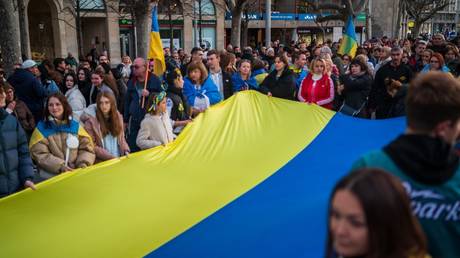
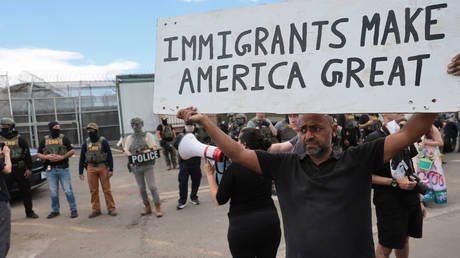
Headline writers love a riot. The formula is decades old, remarkably lazy, and desperately misleading. A crowd clashes with police, stones fly, sirens wail, and the immediate editorial reflex is to isolate the demographic identity of the participants, point a collective finger, and frame the chaos as a sudden cultural invasion. It makes for punchy afternoon viewing. It also completely misunderstands how public order decays in modern urban centers.
When a street skirmish breaks out between a group of migrants and law enforcement, the standard media narrative treats the event as a spontaneous eruption of foreign pathology. This is a profound analytic failure. Street brawls do not occur in a vacuum of pure ethnicity or national origin. They happen at the exact pressure points where state capacity fails, bureaucratic neglect meets human desperation, and municipal infrastructure is stretched to breaking point.
If you want to understand why rocks are flying at police shields, stop staring at passports and start looking at municipal management, housing allocation failures, and the deliberate political weaponization of urban despair.
The Myth of the Monolithic Crowd
The lazy consensus relies on a visual sleight of hand. Cameras capture a chaotic scene, and commentators flatten a heterogeneous group of individuals into a single, menacing mob. This erases reality.
A crowd involved in a sudden street confrontation is rarely an organized militia with a unified political manifesto. It is a volatile collection of people experiencing different pressures: transient residents living in limbo, local agitators looking for friction, and opportunistic bystanders drawn to the spectacle. Treating this agglomeration as a unified cultural bloc allows lazy observers to bypass the hard questions about why policing strategies in these specific neighborhoods have degenerated into low-grade containment rather than active community integration.
I have spent years analyzing urban flashpoints and public safety infrastructure. When a city crams thousands of undocumented or displaced people into substandard, overcrowded peripheral housing complexes with zero economic mobility, minimal language resources, and delayed asylum adjudications, you are not building a community. You are manufacturing a tinderbox.
Blaming the spark while ignoring the gas leak is cowardly governance.
Police Tactics and the Escalation Trap
Let us talk honestly about law enforcement responses, a subject where critical analysis usually gets buried under emotional rhetoric.
When public disorder flares, standard police doctrine often pivots immediately to a show of heavy-handed force. Riot gear, batons, tear gas, and kettling tactics are deployed to reassert dominance. Proponents argue this restores order. In practice, in dense urban neighborhoods housing marginalized populations, this playbook frequently achieves the exact opposite. It validates every grievance, unifies disparate groups against a common adversary, and transforms a localized dispute into an all-out street battle.
Look at the mechanics of escalation. When law enforcement agencies rely on containment and intimidation rather than mediation and de-escalation units drawn from the local demographic fabric, they treat the neighborhood as hostile territory. Hostile territories respond with hostility.
Order is not maintained by the volume of batons swinging in the street. Order is maintained by mutual buy-in to the legitimacy of public institutions.
When those institutions offer nothing except suspicion and bureaucratic stonewalling, the legitimacy evaporates. Stones do not get picked up off the pavement in a society where people feel they have a stake in the sidewalk.
The Economic Engine of Urban Friction
The deeper failure is economic, hidden behind the flash and fury of evening news clips.
Municipalities across the globe routinely posture as welcoming sanctuaries while quietly outsourcing the human cost of migration to decaying, underfunded neighborhoods. Wealthy districts pass zoning laws that price out newcomers, funneling them directly into high-density, low-service zones. Then, when public services buckle under the strain—schools overcrowded, healthcare systems overwhelmed, housing waiting lists stretched to a decade—politicians act surprised when social friction turns physical.
The riot is the symptom. The disease is structural abandonment.
If a city invites or absorbs labor populations without providing the legal pathways, economic scaffolding, and social infrastructure required to absorb them, that city is deliberately engineering social collapse. The brawls with police are the audible cracking of a foundation that was poured poorly from the start.
Stop asking why the crowd was angry. Start asking why the city fathers spent thirty years defunding the exact social safety nets designed to prevent anger from turning into artillery.
The Real Fix Requires Abandoning Comforting Fictions
Solving urban unrest requires tearing up the political scripts that both the left and right cling to like security blankets.
The political right wants you to believe that security is purely a matter of deportation volume and harsher prison sentences, ignoring the sheer impossibility and moral hazard of managing millions of people through pure coercion. The political left wants you to believe that pointing out violent incidents is inherently bigoted, ignoring the legitimate safety concerns of local residents who have to live amidst the chaos.
Both positions are intellectual cop-outs.
Real progress demands streamlining legal status so people can work legally, pay taxes, and plan a future rather than rotting in administrative purgatory. It demands decentralizing housing so poverty is not concentrated into combustible urban silos. And it demands holding police forces accountable for community-level competence rather than tactical theater.
Until we stop treating public disorder as a simple morality play between good citizens and bad interlopers, the stones will keep flying, the police will keep charging, and the talking heads will keep pretending they do not know what built the barricades.