Every time a storm knocks out power for a few hundred thousand people, the headline writes itself. Two dead, hundreds of thousands in the dark, emergency services scrambling. The narrative is as predictable as it is comfortable: vicious weather strikes, humanity suffers, and the grid puts up a brave fight against an unbeatable opponent.
It is a comforting lie.
It lets utilities off the hook. It lets municipal planners sleep at night. And it treats a completely solvable infrastructure engineering problem like an act of God. When a hurricane makes landfall and knocks out power to eight hundred thousand customers across three states, the storm did not beat the grid. The grid simply performed exactly how its deferred maintenance budgets and short-sighted capital allocation predicted it would perform.
I have spent years watching energy companies bleed capital into stock buybacks and executive bonuses while their distribution poles sit past their expiration dates. Then a category-whatever wind event rolls in, snaps rotting wooden utility poles like toothpicks, and suddenly everyone is nodding sagely at the fury of nature. Stop buying the excuse. The wind is not the variable. The infrastructure is.
The Geography of Neglect
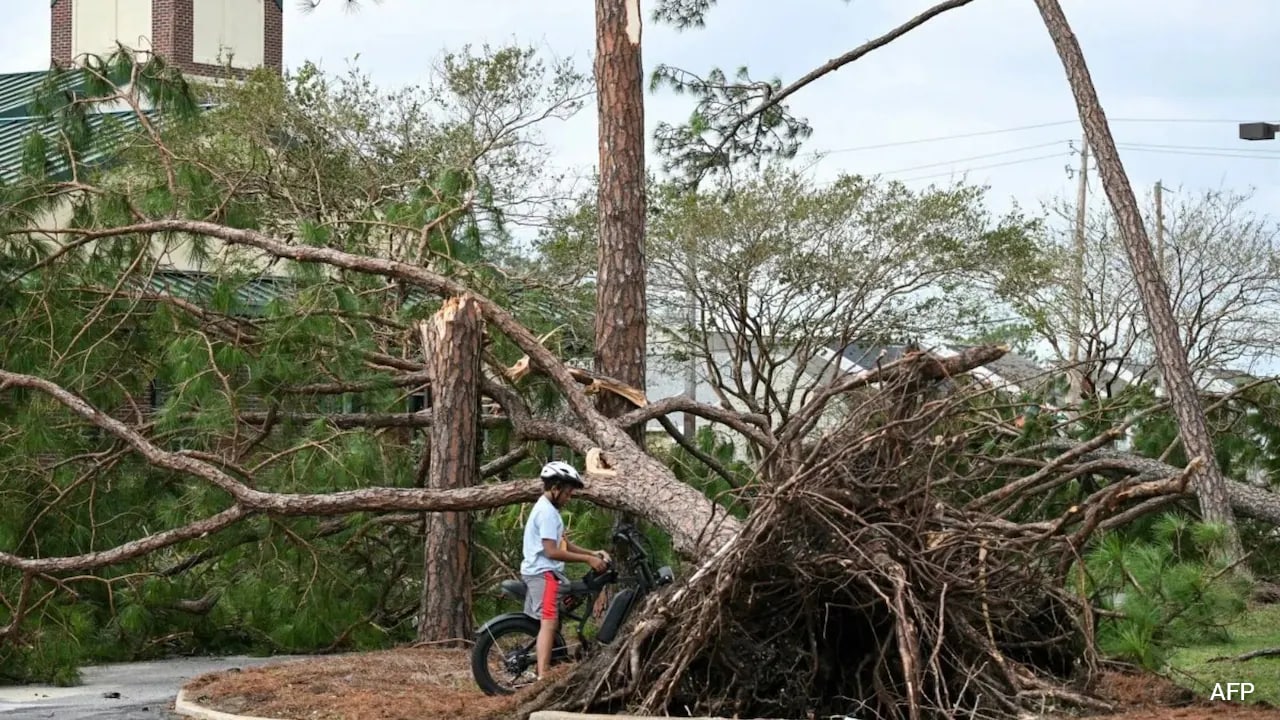
Let us look at what actually happens when a coastal storm hits. The media focuses on the wind speeds, the storm surge, and the dramatic footage of tree branches crashing onto suburban sedans. That is theater. The reality is boring, bureaucratic, and entirely financial.
Utility companies operate under a regulated monopoly model in most regions. They are guaranteed a rate of return on capital expenditures. If they build a new substation or run a high-voltage transmission line, they make money. But if they engage in the unglamorous, labor-intensive work of burying distribution lines, clearing dense right-of-way canopies, or hardening neighborhood transformers, the return on investment math gets complicated, and shareholders start asking about quarterly margins.
So what do they do? They let the overhead lines hang. They wait for storms to trigger federal disaster declarations so public funds can subsidize the repairs.
Imagine a scenario where utility executives were held personally liable for every hour a hospital spent on backup generators because distribution lines were thirty years past their replacement cycle. The entire conversation would shift overnight. We would stop hearing about freak weather anomalies and start hearing about structural investments.
When eight hundred thousand people lose power, you are looking at the direct byproduct of fifty years of deferred capital expenditure. The weather is merely the stress test that exposes the rot.
The Cost of Cheap Power Illusions
Consumers want cheap electricity, or at least they think they do. Regulators pander to this desire by fighting every rate hike proposed by utility providers, creating a perverse incentive structure. Utilities cannot raise rates to fund proactive grid hardening without facing immediate political execution from utility commissions. So they penny-pinch. They stretch maintenance schedules from five years to ten. They trim fewer trees.
Then the hurricane arrives.
The resulting restoration effort costs three times what proactive hardening would have cost. Crews are flown in from four states away, working overtime, staying in hotels, burning through millions of dollars in emergency response funds that get passed right back to the ratepayer through surcharges. It is an economic shell game. We refuse to pay for durability upfront, and instead pay triple for emergency reconstruction on the backend.
We need to redefine what reliability actually means. Right now, reliability is measured by annual uptime averages. If the grid stays on 99.9 percent of the year, the utility claims victory. But that metric ignores the tail risk. A system that works fine on a mild Tuesday in April but collapses completely the moment the wind hits seventy miles per hour is not a reliable system. It is a house of cards waiting for a breeze.
Decentralization is the Only Exit Strategy
Centralized power distribution is an artifact of the early twentieth century. Pushing electricity across hundreds of miles of open-air copper wires from massive centralized generating stations is an engineering relic that belongs in a museum alongside steam locomotives.
Distributed energy resources are the only permanent solution to this recurring nightmare. When microgrids, localized solar arrays, and neighborhood-scale battery storage become the default architecture rather than expensive suburban luxury upgrades, a tree falling on a transmission line in a rural county ceases to be a regional humanitarian crisis.
If a neighborhood can island itself—generating, storing, and consuming its own power locally—a hurricane becomes an inconvenience rather than a blackout event. Yet, legacy utilities actively lobby against distributed solar and net metering rules because decentralized power threatens their monopoly tollbooth model. Every time you see a utility company push for fees on rooftop solar owners, you are looking at an institution fighting to preserve its right to leave you in the dark when the weather gets rough.
The next time a storm hits and the power goes out, do not look at the weather radar. Look at the balance sheet of the local utility. Look at their capital expenditure reports from the last decade. Look at how much money they spent on lobbying against grid modernization mandates.
The wind blew. The trees fell. The lights went out. And the people running the system are laughing all the way to the shareholder meeting.