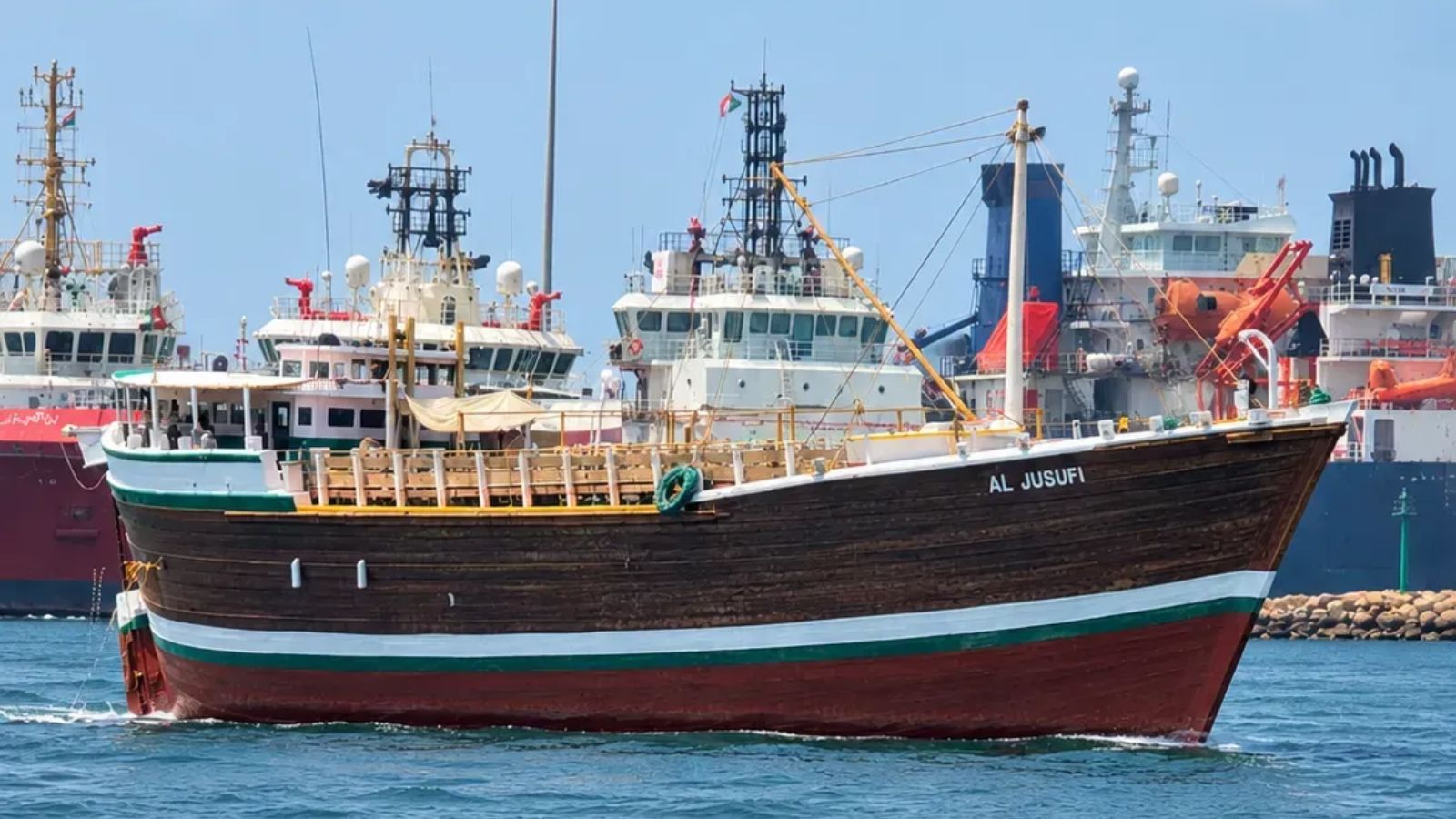
Another body bag comes home to Mumbai or Kochi, and the press runs the exact same script. An Indian seafarer is killed off the coast of Oman. Thirteen others are pulled from the water. The headlines immediately point fingers at regional instability, rogue militias, or asymmetric naval warfare in the Strait of Hormuz.
That narrative is lazy, convenient, and dead wrong.
Blaming geopolitical chaos for the death of merchant mariners in the Persian Gulf is like blaming gravity when a poorly maintained bridge collapses. The missiles, drones, and limpet mines are merely the triggers. The actual lethal mechanism is an opaque, hyper-financialized global shipping architecture that treats human lives as disposable line items on an insurance actuarial table.
I have spent fifteen years auditing maritime compliance, underwriting marine war-risk policies, and sitting in boardrooms where executives calculate the exact dollar value of a seafarer's life against a 48-hour charter delay. Nobody in London, Geneva, or Athens wants to talk about the spreadsheet math behind these tragedies. They prefer you focus on the geopolitics because geopolitics cannot be sued for negligence.
The Myth of the Unavoidable Chokepoint
Every mainstream report treats the Strait of Hormuz as an inescapable geographic trap. Roughly a fifth of the world's petroleum liquids pass through this 21-nautical-mile-wide bottleneck. The standard industry defense goes like this: global trade demands energy, energy must leave the Persian Gulf, and therefore, merchant ships must enter the firing line.
This is a fabricated binary.
Ships do not transit high-risk zones because of geographic necessity. They transit because time-charter agreements ruthlessly penalize deviation and delay. When a vessel operator signs a fixture with a major commodity trader, every hour lost to rerouting, waiting for naval convoys, or hardening a ship's superstructure eats directly into slim operating margins.
Consider how war-risk insurance actually functions. When tensions spike off the Omani coast, Lloyd’s Market Association’s Joint War Committee expands the Listed Areas. Underwriters immediately slap an Additional War Risk Premium (AWRP) onto any vessel entering those coordinates. Depending on the threat level, this surcharge can jump from 0.05% to over 1% of the hull value per seven-day transit. For a $100 million tanker, that is a million-dollar surcharge just to cross a line on a nautical chart.
You might assume that exorbitant insurance costs deter shipowners from sending crews into danger. The opposite happens. Because the charterer—the oil major or commodity house—typically reimburses the AWRP under standard BIMCO war-risk clauses, the shipowner bears zero financial penalty for the heightened danger. Meanwhile, the crew gets a marginal hazard bonus, often capped at a fraction of their base monthly wage, while stepping onto a floating bomb.
Why Indian Seafarers Are Always on the Front Lines
Look at the casualty demographics of nearly every maritime incident in the Middle East over the last decade. From the Gulf of Oman tanker attacks to the Red Sea shipping crisis, Indian nationals make up a disproportionate share of the dead, injured, and detained.
According to the Directorate General of Shipping and BIMCO/ICS Manpower Reports, India supplies roughly 10% to 12% of the global seafaring workforce, trailing only the Philippines and competing closely with China and Russia. Yet when kinetic strikes hit commercial hulls in the Arabian Sea, Indian crews are overwhelmingly the ones taking the blast.
Why? Because of flag-of-convenience (FoC) arbitrage.
Western and European beneficial owners routinely register their vessels in Panama, Liberia, or the Marshall Islands to bypass strict domestic labor laws, tax regimes, and crewing mandates. They then outsource crew management to third-party crewing agencies in Mumbai, Manila, or Odessa.
Indian officers and ratings are prized in the global market for three reasons:
- High technical proficiency and English fluency.
- Strict adherence to hierarchical command structures.
- Competitive wage expectations compared to European or American counterparts.
When a third-party ship manager bids for a contract to operate a tanker running the Fujairah-to-Jebel Ali corridor, they win the bid by cutting OPEX (operating expenses). That means lean crews—often running at the absolute minimum safe manning certificate levels—working back-to-back contracts with minimal fatigue management. When an explosion rocks the engine room at 0300 hours off the Omani coast, there is no surplus damage-control team waiting in the wings. There is just an exhausted third engineer from Kerala trying to isolate a ruptured fuel line in blinding smoke.
The "Right to Refuse" Is a Legal Fiction
Whenever a seafarer dies in a conflict zone, maritime unions and government officials issue predictable statements reminding crews of their "right to refuse" transit into designated warlike operations areas.
In theory, the International Bargaining Forum (IBF) agreements grant seafarers the right to request repatriation at the company's expense before a vessel enters a high-risk zone.
In practice, exercising that right is career suicide.
Imagine a scenario where a 28-year-old second mate from Visakhapatnam is aboard a chemical tanker anchored off Khor Fakkan. The company receives orders to load cargo inside the Strait of Hormuz despite active naval advisories. The mate cites his IBF rights and asks to be signed off before transit.
The crewing agency will comply on paper. They will book his flight home. And they will quietly flag his file in their internal database as "non-compliant" or "difficult." Within six months, that officer will find that no major shipping pool will touch his resume. In a tightly networked industry where blacklisting is informal and untraceable, a mariner who refuses a hazardous voyage forfeits his livelihood. The economic coercion is absolute.
What Everyone Gets Wrong About Maritime Security
If you look at public search trends whenever an attack occurs off Oman, people ask the same surface-level questions: Why didn't the Navy protect them? Are commercial ships armed? Will oil prices spike?
These questions fundamentally misunderstand how modern maritime security operates.
1. Naval escorts do not cover commercial bulk.
Coalitions like Operation Sentinel or European maritime awareness missions in the Strait of Hormuz do not provide personal bodyguards for every merchant vessel. There are simply too many hulls and too few destroyers. Naval task forces monitor chokepoints, deter state-level blockades, and conduct post-incident rescue operations—which is why 13 crew members were pulled from the water after the ship was hit, not prevented from being targeted in the first place.
2. Armed guards are useless against modern threats.
Private Maritime Security Companies (PMSCs) became a billion-dollar industry during the Somali piracy boom. Putting four ex-military contractors with semi-automatic rifles on the bridge wings worked brilliantly against skiffs armed with AK-47s and ladders. Against anti-ship cruise missiles, loitering munitions, and unmanned surface vessels (USVs), a guy with an AR-15 is completely irrelevant. Worse, carrying armed guards into territorial waters of Gulf states creates massive diplomatic and legal liabilities, leading most tankers to transit unarmed.
3. Physical hardening is skipped to save deadweight.
You can fortify a ship's citadel, install blast-resistant film on bridge windows, rig water-mist curtains to confuse infrared seekers, and route critical fire-main piping away from exposed hull plating. Shipowners rarely do this unless forced by insurers because steel adds weight, weight reduces cargo capacity, and reduced cargo capacity lowers freight revenue.
The Structural Fix Nobody Wants to Pay For
Admitting the flaws in my own argument is critical here: global trade cannot simply stop every time regional tensions flare in the Middle East. If every tanker dropped anchor outside the Gulf of Oman at the first sign of hostile drone activity, global energy markets would seize within ten days, triggering economic collapse far beyond the shipping sector. Commercial vessels will continue to enter contested waters.
The issue is not that ships transit the Strait of Hormuz. The issue is who absorbs the catastrophic downside risk when things go wrong.
Right now, the risk is entirely asymmetric. Commodity traders capture the arbitrage profits. Shipowners collect the charter hire. Insurers price in the actuarial losses and raise premiums next quarter. And the seafarer's family gets a statutory death benefit—often capped between $100,000 and $250,000 under standard collective bargaining agreements—while the vessel's beneficial owner remains shielded behind three layers of shell companies in the Marshall Islands and Cyprus.
To actually stop these preventable deaths, the industry does not need more diplomatic condemnations. It needs structural financial penalties that make negligence unprofitable:
- Piercing the Corporate Veil for War-Zone Transits: Flag states and port state control regimes (like the Tokyo and Paris MOUs) must mandate that the ultimate beneficial owner—not a disposable single-ship LLC—assumes strict, unlimited civil liability for crew fatalities in designated war-risk zones if the vessel lacked modern electronic warfare countermeasures or redundant damage-control staffing.
- Mandatory Automated Routing Escrows: When a vessel enters a Joint War Committee Listed Area, charterers should be legally required to fund an automatic, non-waivable escrow account equal to ten times the current statutory death benefit for every crew member onboard, payable immediately upon injury or death without protracted legal battles over negligence.
- Eliminating Third-Party Crewing Buffers: Major energy companies vetting vessels through OCIMF’s SIRE 2.0 inspection regime must penalize owners who rely on fragmented, lowest-bidder crewing agencies for high-risk corridors. If an oil major won't charter a ship with a rusted deck plate, they shouldn't charter one with an underpaid, fatigued, under-equipped crew sailing into a missile zone.
Stop Mourning and Start Auditing
Until the cost of losing an Indian sailor exceeds the cost of delaying a cargo fixture by forty-eight hours, nothing will change. The press will keep blaming shadowy militias. Shipping executives will keep issuing sterile condolences expressing their "deepest sympathies to the bereaved family." And another vessel will weigh anchor at Fujairah tonight, fully loaded, under-crewed, and heading straight into the dark.
Next time you read about a ship burning off the coast of Oman, do not look at the map of the Strait of Hormuz. Look up the vessel's IMO number, trace its P&I Club coverage, find the beneficial owner hiding behind the flag of convenience, and follow the money.


