Every time a major headline drops claiming ethnic minorities in Wales are four times more likely to be scanned by police facial recognition, the exact same outrage machine grinds into gear. Journalists recycle press releases from advocacy groups. Politicians demand immediate moratoriums. Tech ethicists blame "racist algorithms."
They are all looking at the wrong target.
When South Wales Police deploy live facial recognition vans in Cardiff or Newport, the camera does not choose who walks down Queen Street. The algorithm does not decide to park outside a specific train station or patrol a particular district during a major sporting event. A human commander does. Blaming the neural network for demographic disparities in public deployments is like blaming a speedometer for the neighborhood a traffic cop decides to patrol.
The lazy consensus assumes that fixing algorithmic accuracy solves the civil liberties problem. That is a dangerous distraction. If facial recognition software achieved 100 percent mathematical parity across every skin tone tomorrow, the core threat would remain completely untouched—and arguably become much worse.
The Denominator Trap Nobody Mentions
To understand why the "four times more likely" statistic misleads the public, you have to look at basic denominator math.
Civil liberties watchdogs and press reports frequently compare the demographics of people scanned by live facial recognition (LFR) vans against the baseline census demographics of Wales as a whole. According to the 2021 UK Census, Wales is roughly 93.8 percent White.
Police do not deploy LFR vans evenly across rural sheep farms in Powys and coastal villages in Gwynedd. They deploy them in high-footfall urban centers—primarily Cardiff city center, Newport, and Swansea—or at massive public events like international rugby matches and stadium concerts. Cardiff alone has an ethnic minority population exceeding 20 percent, more than triple the national Welsh average.
When you park a surveillance van in the most diverse square mile of a country and compare the faces passing the lens to the national rural average, you will inevitably generate a massive statistical disparity. Reporting that raw multiplier without controlling for localized footfall demographics isn't investigative journalism. It is statistical malpractice.
Does that mean policing in the UK is free from institutional bias? Of course not. Decades of data on stop-and-search powers under Section 60 of the Criminal Justice and Public Order Act prove that human discretion disproportionately targets Black and Asian men.
But conflating deployment geography with algorithmic bias lets human decision-makers off the hook. It turns a political and operational accountability failure into an abstract software bug.
Accuracy Is a Trap for Civil Liberties Advocates
I have spent years auditing biometric deployments and watching municipal governments burn millions on "ethical AI" consulting. Every single time, activists fall into the exact same rhetorical trap. They attack the technology on the grounds that it fails—citing higher false-positive rates for darker-skinned women, famously documented by Joy Buolamwini and Timnit Gebru in their landmark Gender Shades study.
That argument had teeth in 2018. Today, it is obsolete.
Modern convolutional neural networks used by forces like South Wales Police and the Metropolitan Police—specifically algorithms like NEC’s NeoFace, tested rigorously by the US National Institute of Standards and Technology (NIST)—have closed the demographic accuracy gap to fractions of a percentage point under controlled conditions. When South Wales Police configure their match thresholds high enough, false alerts drop to near zero.
Here is the uncomfortable truth civil liberties groups refuse to confront: You do not want facial recognition to be accurate.
An inaccurate surveillance system is noisy, expensive, and politically fragile. Every time a false alert forces officers to wrongfully detain an innocent shopper in Cardiff, the police suffer a public relations disaster, lawsuits follow, and oversight bodies tighten restrictions.
A hyper-accurate system with zero demographic bias is a frictionless panopticon. When the software works flawlessly across all ethnicities, the technical objections evaporate, leaving the state with an unchallenged tool to track every citizen's movement in real time without a warrant. Fighting LFR on accuracy metrics is like protesting wiretapping because the audio quality is too staticky.
How Live Facial Recognition Actually Works on the Street
Most commentators writing about police facial recognition have never stood inside an LFR control van or read a deployment Standard Operating Procedure. They imagine a dystopian dragnet archiving every face into a permanent government database.
In reality, the operational mechanics in Wales and England rely on strict ephemeral processing—which creates an entirely different set of vulnerabilities.
- The Watchlist: Before a van leaves the depot, an authorizing officer compiles a bespoke watchlist of biometric templates. These come from custody images of wanted individuals, missing persons, or people subject to court-ordered bans.
- The Capture: High-definition cameras mounted on the van scan passing crowds, converting facial geometry into mathematical vectors in real time.
- The Deletion: If a vector does not match a template on the watchlist above a strict confidence threshold, the system deletes the biometric data within fractions of a second. No record of the innocent bystander is kept.
- The Adjudication: If a match occurs, an alert pings an operator inside the van. The operator visually compares the live feed against the watchlist photo before radioing street officers to make an intervention.
Look closely at Step 1 and Step 4. The algorithm never touches them.
Who goes onto the watchlist? A human intelligence unit decides. Where does the van park? A gold or silver commander decides. When an alert flashes on the screen, who decides whether the two faces look similar enough to justify detaining a citizen on the street? A human operator experiencing confirmation bias and alert fatigue.
In 2020, the Court of Appeal in R (Bridges) v Chief Constable of South Wales Police ruled that South Wales Police's use of LFR was unlawful—not because the algorithm was broken, but because the legal framework gave individual officers too much discretion over who was placed on watchlists and where the cameras were deployed. The court recognized what the press still misses: the danger isn't the code; it is unconstrained human authority hiding behind a veneer of mathematical objectivity.
The Automation Bias Shell Game
Police forces love facial recognition for one primary reason: it launders human bias through silicon.
When an officer stops a Black teenager on the street based on a "hunch," that officer has to justify their reasonable grounds under the Police and Criminal Evidence Act (PACE). They carry personal, legal, and institutional accountability for that decision.
When an LFR system flags a pedestrian, the dynamic flips. The officer on the pavement isn't acting on a hunch; they are "responding to a system alert." Inside the control van, operators routinely defer to the software's confidence score—a well-documented psychological phenomenon known as automation bias. Even when the watchlist photo is blurry, poorly lit, or five years old, humans trust the machine's judgment over their own eyes.
Meanwhile, the underlying custody image databases feeding those watchlists are already skewed by historical policing patterns. If minority communities have been over-policed for decades, they are over-represented in police custody photo repositories. Feeding historically skewed arrest records into a neutral algorithm guarantees skewed operational outcomes, regardless of how clean the code is.
What Everyone Gets Wrong About Surveillance Reform
If you search for answers on how to fix police facial recognition, you will find endless recommendations for "algorithmic audits," "bias mitigation training," and "diverse training datasets." None of those will stop discriminatory policing.
The Myth of the Independent Algorithmic Audit
Auditing the vendor's code in a lab tells you nothing about how the tool behaves on a rainy Tuesday in Newport. Lighting angles, crowd density, camera height, and operator threshold adjustments radically alter real-world performance. Unless auditors inspect the specific watchlist criteria and deployment logs for every single van rollout, vendor testing is pure theater.
The Myth of Public Consent Through Signage
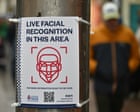
Police forces argue that placing posters near LFR zones gives the public a choice to walk away. Try avoiding a camera network placed across the main pedestrian artery between a central train station and a city's primary shopping district. Consent under coercion is not consent; it is compliance.
The Real Lever: Statutory Watchlist Caps
The only way to rein in biometric surveillance is to strip away operational discretion through hard statutory limits—the exact approach championed by legal scholars like Daragh Murray and Pete Fussey in their independent reviews of UK police trials.
- Ban broad "intelligence" watchlists: Restrict LFR strictly to individuals wanted for serious indictable offenses or immediate life-threatening emergencies—never minor public order offenses or vague "persons of interest."
- Mandate localized demographic impact assessments: Force police commanders to publish footfall-adjusted deployment metrics before and after every operation, justifying why a specific street corner was chosen over another.
- Criminalize threshold tampering: Lock match confidence thresholds at legally mandated minimums so operators cannot dial down sensitivity during slow shifts just to generate stops.
The Downside of Taking the Hard Line
Stripping human discretion and restricting watchlists to severe violent offenders carries an undeniable operational cost. Police forces will catch fewer prolific shoplifters, miss lower-level bail jumpers, and lose a rapid intelligence-gathering tool during chaotic public events. Detective squads operating under severe budget cuts will argue—with some justification—that automated scanning does the work of fifty officers on foot patrol.
That trade-off is the entire point of living in a constitutional democracy rather than an optimized security state. Efficiency is not the primary goal of law enforcement; legitimacy is.
Every time a headline reduces this debate to "racist algorithms," police chiefs simply point to their latest NIST benchmark scores, promise better vendor testing, and keep deploying the vans. Stop arguing with them about how well the cameras see. Start demanding to know who decides where they point.