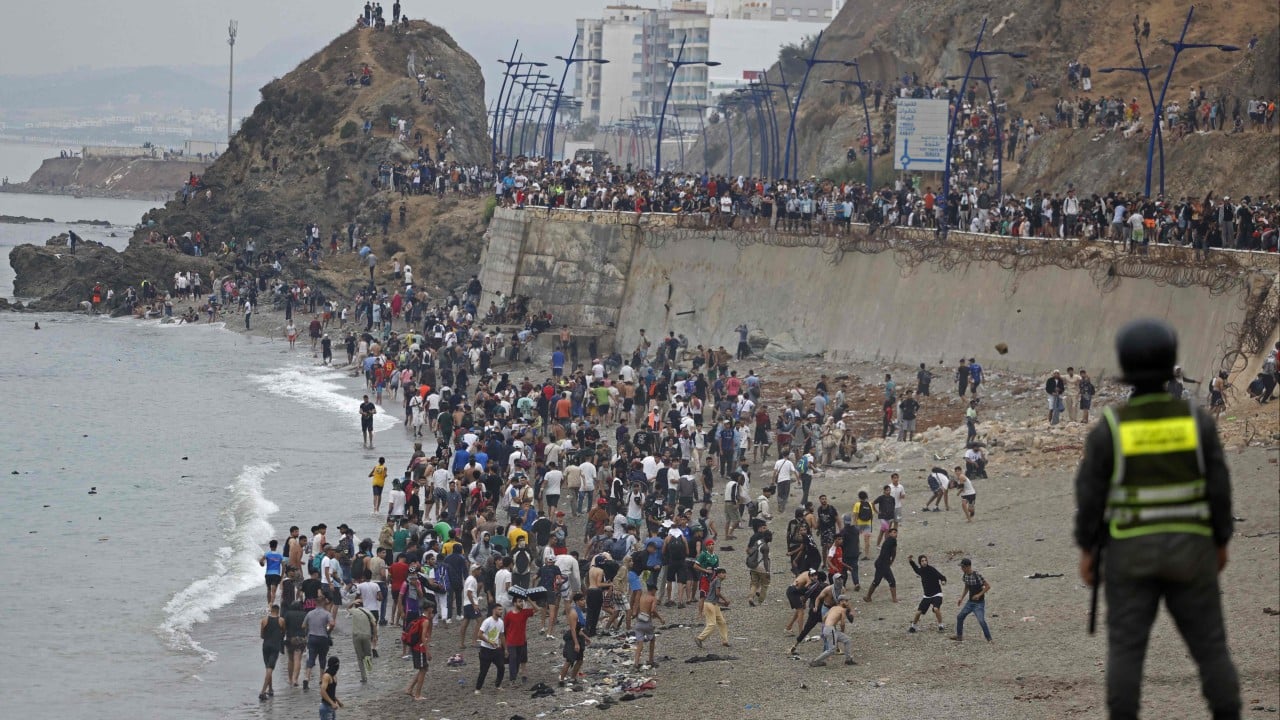
The lazy consensus writes itself every single time the fences at Ceuta or Melilla come under pressure. A sudden surge of desperate humanity hits the border, television crews scramble for footage, and the official narrative hardens before the tear gas clears. According to the mainstream line, an algorithmic wildfire on TikTok or WhatsApp is to blame. Runaway rumors. Digital panic. Digital manipulation driving desperate teenagers to hurl themselves against European razor wire.
It is a comforting myth for bureaucrats in Madrid and Brussels. If a crisis is born on a smartphone screen, then the solution is simple: better content moderation, stricter digital monitoring, or shutting down specific communication channels.
Except it is completely, dangerously wrong.
I have spent years tracking migration patterns, border infrastructure, and policy failures across the Southern European frontier. I have watched billions of euros vanish into high-tech surveillance systems while the structural incentives driving human movement remain completely untouched. Blaming online rumors for the events at Ceuta is like blaming the weather forecast for a hurricane. The storm was already forming long before anyone hit share.
The Convenience of the Digital Scapegoat
Let us dismantle the core premise of the standard narrative. The dominant argument assumes that thousands of young Moroccans and sub-Saharans are living peaceful, stable lives until an unverified video pops up on their feeds, convincing them that the borders are suddenly open. It implies that mass migration is a spontaneous flash mob triggered by bad data.
This is insulting to the intelligence of the migrants and entirely ignorant of local socioeconomic realities.
Rumors do not create mass migration. Structural despair does. When youth unemployment hovers at crippling heights, when local economies are choked by administrative neglect, and when legal pathways to mobility are systematically locked behind impossible bureaucratic walls, people do not need a rumor to tell them their current situation is untenable. They already know.
The digital rumor is merely the spark, but the room is already saturated with gasoline. Focusing entirely on the match ignores the architecture of the room itself. Governments love the rumor narrative because it shifts accountability away from systemic failure and onto ephemeral technology. It allows authorities to posture as defenders against digital misinformation while leaving the underlying push factors completely unaddressed.
The Mechanics of Border Theater
To understand why Ceuta keeps breaking into crisis mode, you have to look past the breaking news banners and examine the political theater of border control.
Borders like those separating Morocco from the Spanish enclaves are not static lines on a map. They are highly complex political pressure valves. For decades, migration management has operated on a transactional model. Morocco receives financial aid, security equipment, and political leverage; in exchange, it acts as Europe's southern gendarme.
When diplomatic tensions flare between Rabat and Madrid, the pressure valve gets adjusted. Suddenly, enforcement slackens. Security forces look the other way for a few hours. The physical barrier remains, but the operational will to secure it fluctuates based on diplomatic convenience.
Imagine a scenario where a local official decides to signal displeasure over a foreign policy stance by simply stepping back from the perimeter line. Within minutes, word spreads organically through established community networks. No viral TikTok required. Human networks are far more resilient, sophisticated, and fast-moving than any social media algorithm. They rely on kinship, shared history, and real-time observation.
When analysts pretend that a WhatsApp voice note overrode the lived reality of heavily guarded fences, they are fundamentally misunderstanding how human smuggling and border economics actually operate.
The Dangerous Downside of the Contrarian Fix
Admitting that this crisis is structural rather than digital comes with a massive political cost. If rumors are the problem, you just need better censors. If structural despair and failed bilateral policies are the problem, you have to completely overhaul foreign policy, labor mobility, and international aid delivery.
My approach is not without its own flaws. Stripping away the digital scapegoat leaves us naked before the hard, intractable reality of global inequality. There is no quick app patch for geopolitical friction. Proposing legal labor corridors, honest economic partnerships, and dismantling Fortress Europe's exclusionary architecture invites immense political backlash from domestic constituencies frightened by demographic shifts.
Yet, clinging to the rumor myth guarantees repetition. Every single time authorities blame TikTok, they buy themselves another cycle of inaction. They invest in more tear gas, more facial recognition cameras, and more diplomatic hand-wringing, all while the fundamental incentives for crossing remain identical.
The Real Question You Should Be Asking
Stop asking how false information spreads across social media platforms during a border surge. That is a distraction designed to protect institutional comfort.
Instead, ask why a human being calculates that risking drowning in the Mediterranean or scaling razor wire is a better statistical bet than staying home.
Until European and North African policymakers stare directly into the teeth of that question, every subsequent surge at Ceuta will be met with the same feigned shock, the same lazy technocratic excuses, and the same piles of wasted money. The border isn't breaking because of what people are reading on their phones. It is breaking because of what they are living through every single day.


