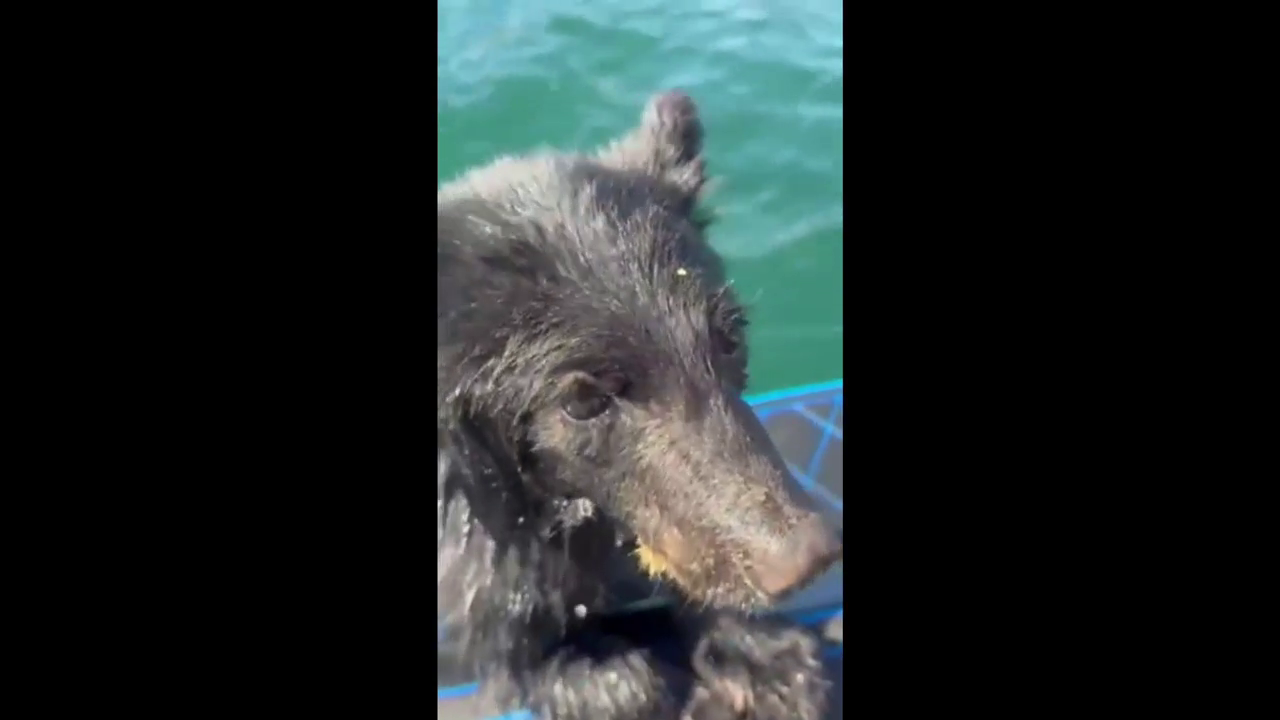
Picture yourself cruising on a scenic lake in British Columbia, expecting nothing more than a quiet weekend on the water. Then you spot something bobbing in the distance. You think it's a floating branch or maybe a stray dog. As you get closer, reality hits hard. It's a tiny bear cub, miles from shore, fighting a losing battle against the dark, deep water of Okanagan Lake.
That exact scenario unfolded for Christina Zamniuk and her family while boating between their Vernon lakehouse and Adventure Bay. What happened next highlights the unpredictable nature of wildlife encounters and the quick thinking required when animals face mortal peril. Discover more on a similar topic: this related article.
The Desperate Struggle in Open Water
Bears can swim, but they aren't marine mammals. When a young cub finds itself stranded far out in a massive lake like Okanagan, exhaustion sets in fast. By the time the Zamniuk family intercepted the animal, the little bear was at the absolute end of its rope.
The details are heartbreaking. Its nose kept dipping beneath the surface. It was blowing bubbles. Its hind legs had stopped kicking entirely, leaving it to paddle weakly with just its front paws. Further journalism by NPR delves into related views on the subject.
You can't just watch an animal drown if you have the means to help. Her son-in-law grabbed a length of rope, fashioned a gentle, makeshift noose, and managed to guide the terrified cub toward the boat. They hoisted the shivering, soaking animal aboard, naming him Boo-Boo after the cartoon character.
Comforting a Terrified Cub
Once on board, the reality of handling a wild animal set in. Boo-Boo was shaking uncontrollably from the cold lake water. The family cut the engine, let the boat drift, and focused on warming the cub up.
Lacking specialized wildlife first-aid kits, they improvised. They fed the hungry little bear some Cheetos they happened to have on hand, which the cub eagerly devoured. For about an hour, they let the bear rest, dry off, and recover its strength while they figured out their next move.
They reached out to the B.C. Conservation Service (COS) for guidance. According to the family, dealing with official channels brought its own set of frustrations. They felt left in the dark regarding what support, if any, authorities would provide on the ground. WildSafeBC notes that black bears are typically strong swimmers and human intervention is rarely required, but this specific case pushed the boundaries of normal wildlife behavior given the cub's extreme distance from safety.
Returning to the Wild
Keeping a wild animal as a pet is illegal, dangerous, and detrimental to the animal's survival. The goal was always to get Boo-Boo back to dry land.
The family navigated the boat toward the nearest shoreline in the direction the cub had originally been heading. But Boo-Boo had grown rather fond of his rescuers. Getting him off the vessel proved harder than getting him on. He gripped the boat with his small claws, refusing to budge.
It took a firm, loving shove to convince the cub to part ways with his human taxi service. Boo-Boo hit the water, swam the remaining distance to shore, and scrambled up the bank, disappearing safely into the thick B.C. timber.
Encounters like this remind us how fragile young wildlife can be when navigating human-inhabited landscapes. While authorities generally urge caution and minimal interference with wild animals to prevent habituation, this family's split-second intervention gave a struggling cub a second chance at life.
B.C. family rescues exhausted baby bear swimming in Okanagan Lake
This video captures the actual footage and local news coverage of the remarkable rescue mission on Okanagan Lake.